
 简体中文
简体中文 Shqip
Shqip لالعربية
 Polski
 رسی
رسی Deutsch
 Русский
 Français
 한국어
한국어 Nederlands
 Čeština
 Bahasa Melayu
 Português
 日本語
日本語 Svenska
 Kiswahili
 ไทย
ไทย Türkçe
 繁体中文
繁体中文 Українська
 Español
 Italiano
 हिन्दी
 Bahasa Indonesia
 Tiếng Việt
 Filipino
As one of the main food crops in our country, the safety and quality of corn are directly related to the safety of raw materials in the food industry and the health of consumers. In recent years, the problem of aflatoxin B (AFB) exceeding the standard has occurred at an intermediate frequency in the corn industry chain, which not only leads to economic losses of agricultural products, but also poses a potential threat to human liver health. To effectively prevent and control AFB pollution, it is necessary to start from the source of pollution and systematically sort out the risk links of the whole chain from field planting to warehousing management.
field planting: climate and agricultural operations bury hidden dangers of pollution
The environmental conditions in the early stage of corn planting directly affect the risk of AFB pollution. The high temperature and high humidity climate will accelerate the reproduction of mold spores, especially in rainy producing areas such as Jianghuai and South China. When the soil humidity is maintained above 80% for a long time, toxic molds such as Aspergillus flavus are more likely to breed. In addition, if the problem of germ carrying seeds is not strictly screened, it will lead to toxins in the seedling stage; if the irrigation water is polluted by moldy crop wastewater, it may also be absorbed into the grain through the root system. It is worth noting that if the mechanical damage in agricultural operations is not treated in time, the wound will easily become a mold invasion channel, especially in the period of high incidence of pests, the mechanical damage caused by pests such as corn borer will further increase the probability of pollution.
Harvesting and primary processing: Drying is not timely to accelerate the process of mildew
improper operation in the corn harvest process is an important turning point of AFB pollution. If the harvest cannot be completed when the water content of the grains is reduced to less than 14%, the humid environment will provide ideal conditions for the growth of molds. In actual production, some farmers ignore the drying process due to the rush of harvest progress, especially in rainy weather, when the ears of corn are stacked in the field for more than 48 hours, the contamination rate of the grain mold can rise to more than 35%. In addition, if the corn after threshing is not screened for impurity, the moldy kernels are mixed into the normal kernels, which will lead to local excess of toxin concentration; the equipment is not cleaned properly during the processing process, and the residual moldy kernels will also cause cross-contamination. In these links, moisture control and mildew seed separation are the key to prevention and control.
storage stage: runaway temperature and humidity accelerate the accumulation of toxins
after entering the storage link, corn still faces the risk of continuous pollution. At present, nearly 30% of the warehouses in our country's grain storage enterprises are still not equipped with intelligent temperature and humidity monitoring systems, resulting in long-term local regional humidity higher than 15%. When the temperature is maintained above 25 ° C, the mold reproduction rate increases exponentially. Studies have shown that when corn is stored at 28 ° C and 18% humidity for 15 days, the content of AFB can increase from 0.1 μg/kg to 2.3 μg/kg. In addition, the re-invasion of pests caused by damaged packaging, the cross-diffusion of mildew caused by the mixed storage of different batches of corn, and the accumulation of local moisture and heat caused by the design defects of the ventilation system are all pollution factors that need to be prevented and controlled in the storage process.
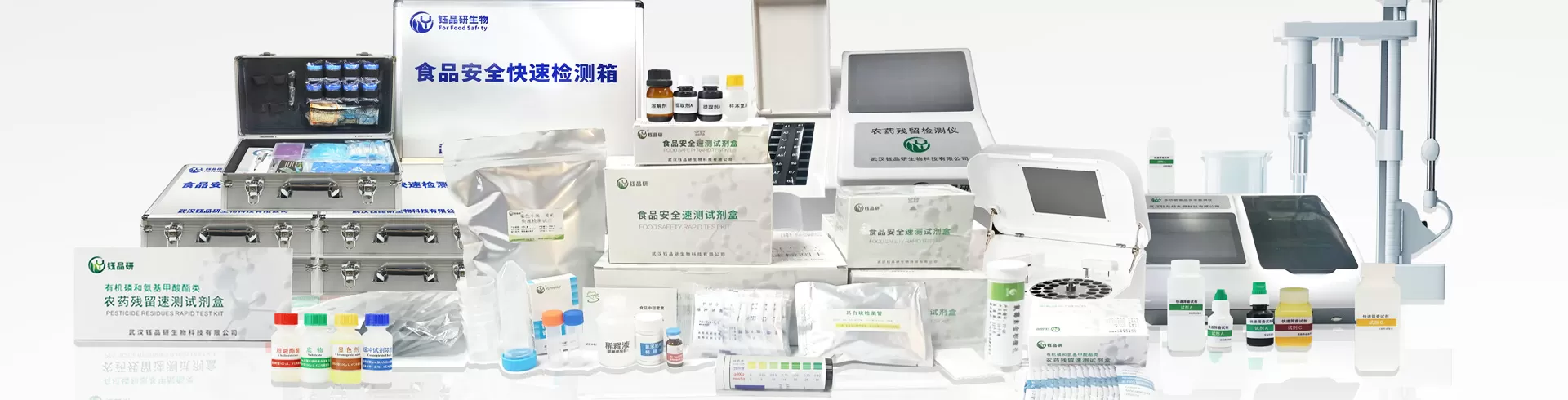
Faced with the risk of AFB pollution in all links of the corn industry chain, the food safety rapid detection reagent independently developed by Wuhan Yupinyan Bio can realize the rapid screening of field samples, purchased kernels, and warehoused finished products through colloidal gold immunochromatography, and accurate detection results can be obtained within 15 minutes. The reagent uses specific monoclonal antibodies, and the detection limit of AFB can reach 0.1 μg/kg, which is far lower than the national standard limit value, providing efficient technical support for the quality control of the whole chain of corn. Through accurate identification and rapid detection of pollution links, enterprises can optimize planting management, harvest processing processes and storage conditions, and reduce the risk of AFB excess from the source to ensure food safety.


