
 简体中文
简体中文 Shqip
Shqip لالعربية
 Polski
 رسی
رسی Deutsch
 Русский
 Français
 한국어
한국어 Nederlands
 Čeština
 Bahasa Melayu
 Português
 日本語
日本語 Svenska
 Kiswahili
 ไทย
ไทย Türkçe
 繁体中文
繁体中文 Українська
 Español
 Italiano
 हिन्दी
 Bahasa Indonesia
 Tiếng Việt
 Filipino
Chives and celery are common vegetables on the table, but many consumers report that some products have problems with cypermethrin residues that are difficult to remove. This phenomenon is related to various factors such as the characteristics of vegetables, the mechanism of pesticide action and detection technology, which will be analyzed in detail below.
The physiological structure of chives and celery is an important reason why cypermethrin residues are difficult to remove. The root system of chives is shallow, and the leaves close to the surface are directly in contact with the soil and leaf spray during the growth process. Pesticides are easy to adhere to the surface of the finely fibrous leaves; the leaves of celery are arranged in layers, with natural folds and waxy layers on the surface. These structures will absorb pesticide residues like "small pockets", and it is difficult to penetrate deep into the gaps during conventional cleaning. In addition, the "tillering growth" characteristics of chives make it possible for new leaves to be extracted from the residual area of old leaves, which indirectly leads to the accumulation of pesticide residues.
Cypermethrin's own chemical properties also enhance the residual stability. As a pyrethroid insecticide, it has strong fat solubility and is easy to combine with oils and waxes in plant tissues to form a residual layer that is difficult to separate. Even by rinsing or blanching with water, the structure of its binding to lipids is difficult to be destroyed, and some residues may be re-attached after evaporation of water. At the same time, the mode of action of cypermethrin is contact and stomach poison, and it needs to enter the body through the surface of the insect or feeding. This "osmotic" effect also makes it easier to penetrate into the inside of vegetable tissues, increasing the difficulty of removal.
The mismatch between the use of pesticides and the growth cycle of vegetables further leads to residue problems. In chives, in order to prevent root maggots, thrips and other pests, vegetable farmers often use a combination of "root irrigation + foliar spraying". Pesticides are easy to penetrate into the cell space through root absorption or leaf stomata; celery is often applied with protective pesticides during the growth cycle, and may be applied for a short time due to "rush cycle" near harvest, resulting in pesticides entering the market without sufficient metabolism. This "high frequency use + short interval harvesting" model makes the residue in the vegetable body remain high.
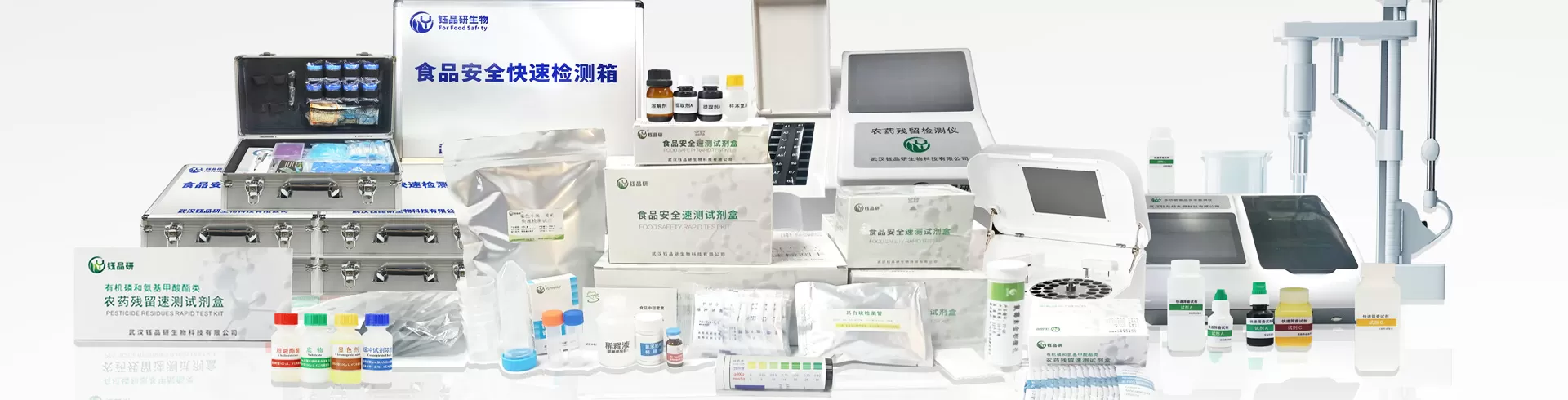
For such problems, rapid detection technology is the key means. As an enterprise focusing on the research and development of food safety rapid detection reagents, Wuhan Yupinyan Bio produces related detection products that can complete the qualitative screening of cypermethrin residues in vegetables within 10-15 minutes through rapid immunochromatography or colloidal gold labeling technology. The technology does not require complex instruments and is easy to operate. It can be widely used in agricultural product markets, catering enterprises and other scenarios to help quickly identify high residue risk products and provide support for consumer dietary safety and enterprise quality control.
To sum up, the difficulty in removing cypermethrin residues in chives and celery is the result of the combined effect of structural characteristics, pesticide characteristics and usage methods. By understanding these reasons, consumers can choose and process vegetables more scientifically, and with the help of professional rapid detection reagents, food safety risks can be controlled from the source, so that "eat with confidence" becomes the basic guarantee of daily diet.


