
 简体中文
简体中文 Shqip
Shqip لالعربية
 Polski
 رسی
رسی Deutsch
 Русский
 Français
 한국어
한국어 Nederlands
 Čeština
 Bahasa Melayu
 Português
 日本語
日本語 Svenska
 Kiswahili
 ไทย
ไทย Türkçe
 繁体中文
繁体中文 Українська
 Español
 Italiano
 हिन्दी
 Bahasa Indonesia
 Tiếng Việt
 Filipino
In recent years, with the large-scale development of the aquaculture industry, the problem of excessive veterinary drug residues has gradually become a problem plaguing farms. Once animal products are detected due to excessive veterinary drug residues, they will not only face product delisting, economic losses, but also may affect the reputation of breeding enterprises. In order to help farms effectively avoid this risk, self-inspection before slaughter is crucial. Through scientific self-inspection steps and professional testing tools, farms can detect hidden dangers in advance, rectify them in time, and ensure that slaughtered products meet safety standards.
Step 1: Establish a normalized self-inspection awareness and formulate a clear detection plan
farms need to incorporate veterinary drug residue self-inspection into their daily management processes to avoid "post-mortem remediation" thinking. It is recommended to develop a regular testing plan according to the breeding cycle and the types of veterinary drugs used. For example, 7-10 days before the critical slaughter, the slaughtered animals are treated for centralized self-inspection to ensure that the detection is completed and abnormal conditions are dealt with before the slaughter. During the self-inspection process, it is necessary to pay attention to the types of veterinary drugs commonly used in violation of regulations, such as antibiotics, hormonal drugs, etc. If these drug residues exceed the standard, it is easy to become the focus of the detection of regulatory authorities.
Step 2: Select efficient detection tools to cover key residue items
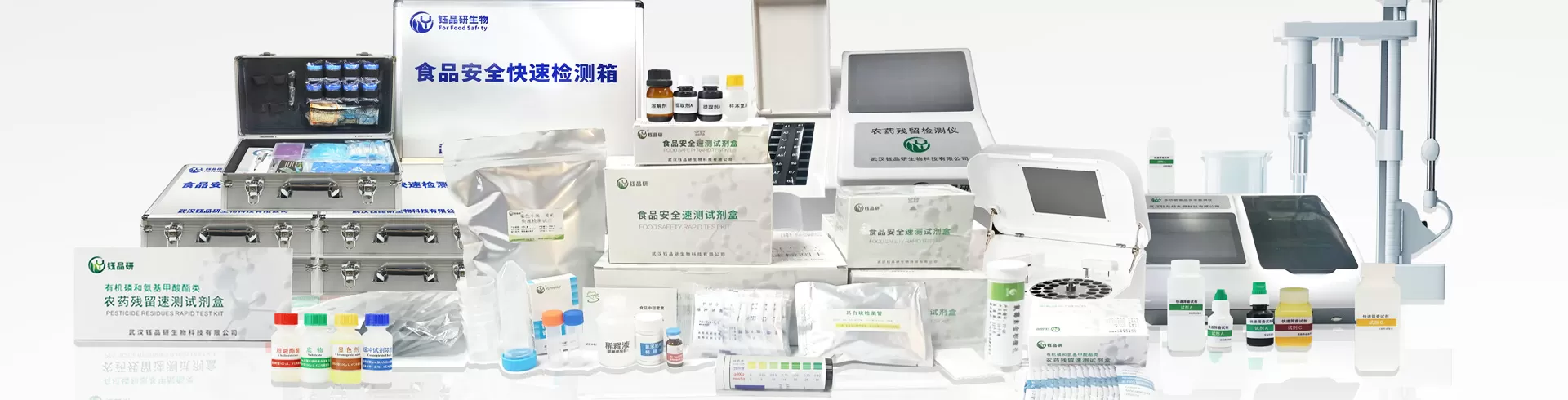
Selecting appropriate detection tools is the core of self-inspection. As an enterprise focusing on the rapid detection of food safety, Wuhan Yupinyan Bio has developed a rapid detection reagent that can complete the screening of veterinary drug residues in a short For example, for antibiotic residues such as tetracyclines and sulfonamides commonly used in farms, corresponding rapid test strips or kits can be used, and preliminary results can be obtained through simple operation. During the detection process, focus on covering the main types of veterinary drugs that may be used in the breeding process to ensure that there are no omissions and provide an accurate basis for subsequent decision-making.
Step 3: The test results are processed immediately to rectify and reduce risks in a timely manner
If the self-test finds that the veterinary drug residues exceed the standard, rectification measures need to be initiated immediately. For the case of slight residue exceeding the standard, the metabolism can be accelerated by suspending feeding and adjusting the medication cycle; if the excess is serious, the professional organization should be contacted in time to re-evaluate to avoid the product entering the market. It is worth noting that the self-test results also need to be kept in records for regulatory inspection. Through the rapid detection reagents of Wuhan Yupinyan Bio, the farm can quickly locate the problem and take action in the shortest time to minimize the risk of delisting.
The problem of excessive veterinary drug residues needs to be prevented from the source. The farm can effectively avoid the risk of delisting and ensure the benefit of breeding through scientific self-inspection before release and professional detection reagents. Wuhan Yupinyan Bio will continue to provide reliable detection solutions to help the healthy development of the aquaculture industry.


