简体中文
简体中文 Shqip
Shqip لالعربية
 Polski
 رسی
رسی Deutsch
 Русский
 Français
 한국어
한국어 Nederlands
 Čeština
 Bahasa Melayu
 Português
 日本語
日本語 Svenska
 Kiswahili
 ไทย
ไทย Türkçe
 繁体中文
繁体中文 Українська
 Español
 Italiano
 हिन्दी
 Bahasa Indonesia
 Tiếng Việt
 Filipino
As people pay more attention to food safety, pesticide residue detection has become an important part of ensuring table safety. Cypermethrin, as a highly efficient and broad-spectrum pyrethroid insecticide, is widely used in agricultural production, but excessive residues may pose latent risks to human health. In recent years, the controversy over the high-frequency category of its residue detection has continued, and many consumers have wondered: Why are cypermethrin residues detected in vegetables far more than in fruits?
The reason is that the differences in planting environment, growth cycle and use scenarios between vegetables and fruits directly affect the distribution of pesticide residues. Vegetables are mostly short-cycle crops, and the frequency of pests and diseases during the growth process is relatively high, especially leafy vegetables, nightshade fruits and other varieties. In order to ensure yield and quality, farmers usually apply pesticides including cypermethrin many times; while fruits have a long growth cycle, some varieties (such as citrus, apples) will also use bagging technology to reduce direct contact with pesticides, and the waxy layer or natural structure of the epidermis can hinder pesticide adhesion to a certain extent, making cypermethrin residues in fruits relatively low.
data show that in the daily food safety rapid testing carried out by Wuhan Yupin Research Biology, the detection rate of cypermethrin residues in vegetable samples is significantly higher than that in fruits. Taking the annual test data of a region as an example, the proportion of cypermethrin residues detected in vegetable samples reached 35%, while that in fruit samples was only 12%, a significant difference. This result also confirms the fact that vegetables are used as a high-frequency category for cypermethrin residue detection.
It is worth noting that cypermethrin residues are not without traces. Its short-term large intake may cause acute symptoms such as nausea and vomiting, and long-term accumulation may affect nervous system function. Therefore, the detection of cypermethrin residues in vegetables and other agricultural products is of great significance to protect public health.
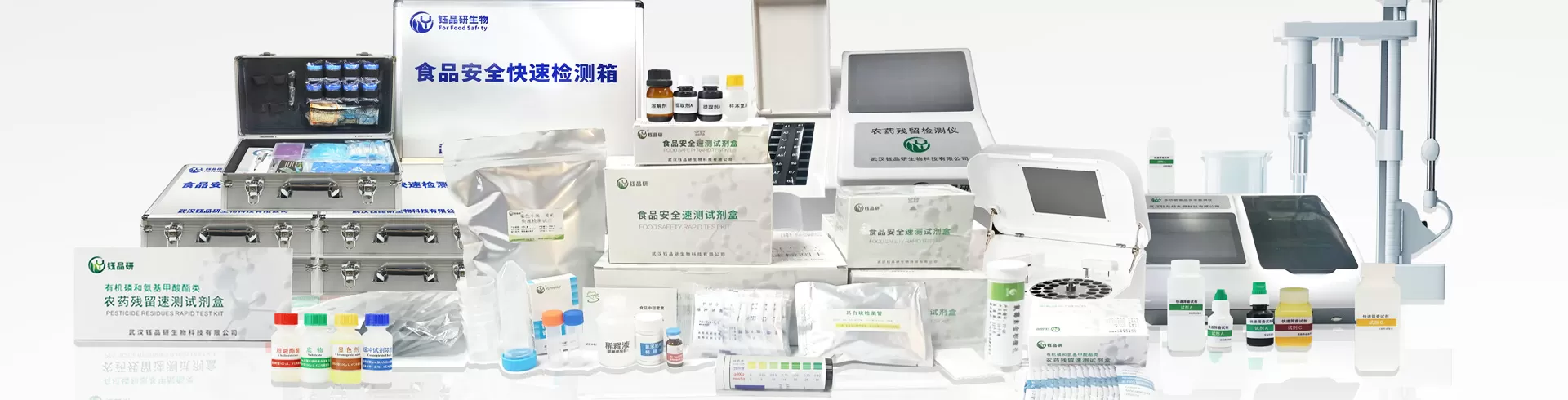
Wuhan Yupinyan Bio focuses on the research and development of food safety rapid detection reagents. Its related detection products can quickly and accurately complete the screening of cypermethrin residues, help enterprises, farmers and regulatory authorities grasp the product safety status in a short time, and provide reliable support for controlling food safety from the source. Through efficient detection technology, it can not only detect residual risks in time, but also promote the improvement and implementation of agricultural product Quality Standards.