
 简体中文
简体中文 Shqip
Shqip لالعربية
 Polski
 رسی
رسی Deutsch
 Русский
 Français
 한국어
한국어 Nederlands
 Čeština
 Bahasa Melayu
 Português
 日本語
日本語 Svenska
 Kiswahili
 ไทย
ไทย Türkçe
 繁体中文
繁体中文 Українська
 Español
 Italiano
 हिन्दी
 Bahasa Indonesia
 Tiếng Việt
 Filipino
Fruit and vegetable safety is an important link in food safety, and pesticide residues, as a key issue affecting the quality of fruits and vegetables, have always been the core challenge of pesticide residue prevention and control. Among them, cypermethrin, as a commonly used pyrethroid pesticide, is widely used in fruit and vegetable cultivation due to its significant insecticidal effect and wide application range. However, its residue characteristics are complex, and the absorption, metabolism and residue laws of different types of fruits and vegetables are quite different, making it one of the difficulties in pesticide residue prevention and control.
Leafy vegetables and fruits (such as green vegetables, spinach, lettuce, etc.) are easy to adhere to the surface of leaves by spraying, and even penetrate into the intercellular space or stomata. If these fruits and vegetables are not cleaned thoroughly after picking, the residue is high, and the leaf structure is dense, the residue is not easy to remove, and long-term consumption is easy to cause latent risks to human health.
Root fruits and vegetables (such as potatoes, radishes, carrots, etc.) mainly absorb pesticides from the soil or irrigation water through the root system, and their residue characteristics are closely related to soil texture, pH value, fertilization method and irrigation water quality. Generally speaking, the epidermis may absorb a certain amount of cypermethrin, while the fleshy part is relatively low due to its distance from the absorption source, but in some deep root varieties or continuous cropping soils, the residual risk may increase.
Cypermethrin residues in fruits and vegetables (such as apples, pears, citrus, etc.) are mainly concentrated in fruit peels. Fruit epidermis may be in direct contact with pesticide spray, and some fruits will be covered with waxy layer of epidermis or fruit powder in the later stage of growth, resulting in pesticide residues that are not easy to degrade; while the pulp is usually low due to the protection of the epidermis. However, if some varieties are planted in bags, the microenvironment in the bag may affect the decomposition of pesticides, and it is necessary to pay attention to the difference in residues under different treatment methods.
Berries and vegetables (such as strawberries, grapes, blueberries, etc.) are easy to adhere to and difficult to remove by conventional cleaning due to thin epidermis and special structure (such as the surface of strawberries is densely fluffy, and the grape epidermis is covered with fruit powder). In addition, berries and vegetables have a short storage period and strong respiratory effect. If they are not treated in time after picking, residual pesticides may migrate slowly over time, increasing
The difference in the residual characteristics of cypermethrin in different types of fruits and vegetables leads to multiple challenges in the prevention and control of pesticide residues: on the one hand, it is difficult to ensure the sample representation during testing (such as uneven residues in different parts of leaf vegetables); on the other hand, cypermethrin is chemically stable, and has a long residual period in fruits and vegetables. Different varieties of substrates (such as high moisture and high sugar) easily interfere with the detection accuracy. Traditional detection methods take a long time and are difficult to meet the needs of rapid screening.
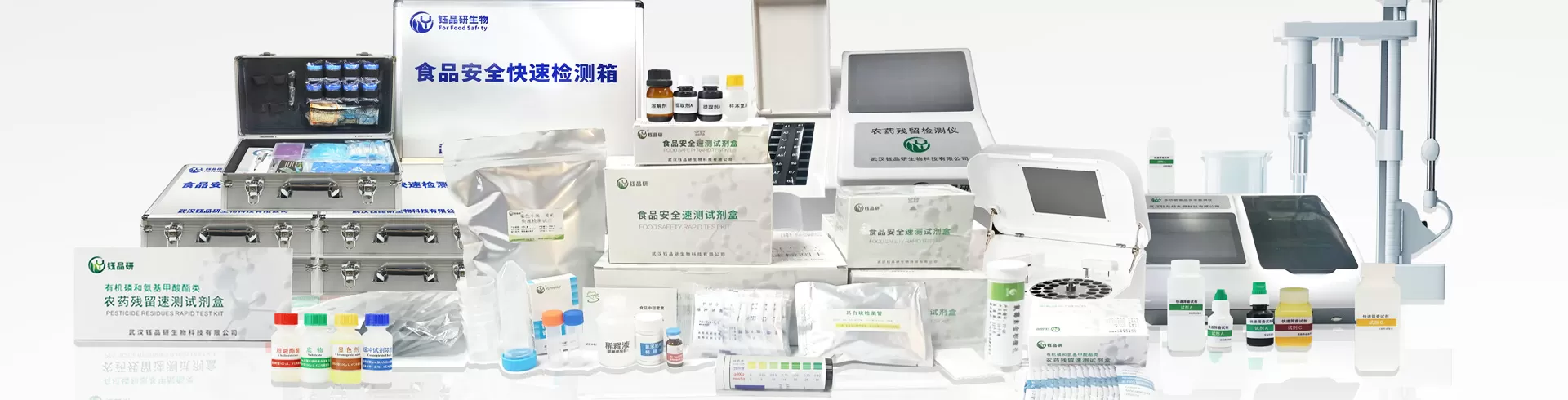
Wuhan Yupinyan Bio focuses on the research and development of rapid detection reagents for food safety. Relying on cutting-edge detection technology, it has developed a variety of specific detection reagents for cypermethrin and other pesticide residues in fruits and vegetables. These reagents have the characteristics of easy operation, fast detection speed and high accuracy, can accurately identify the residual amount and distribution law of cypermethrin in different types of fruits and vegetables, provide efficient technical support for the prevention and control of agricultural residues, help to establish a full chain quality and safety system from planting to circulation, and protect consumers "safety on the tip of the tongue".


