
 简体中文
简体中文 Shqip
Shqip لالعربية
 Polski
 رسی
رسی Deutsch
 Русский
 Français
 한국어
한국어 Nederlands
 Čeština
 Bahasa Melayu
 Português
 日本語
日本語 Svenska
 Kiswahili
 ไทย
ไทย Türkçe
 繁体中文
繁体中文 Українська
 Español
 Italiano
 हिन्दी
 Bahasa Indonesia
 Tiếng Việt
 Filipino
As an important source of vitamins and dietary fiber in the daily diet, green leafy vegetables have also attracted much attention due to the problem of pesticide residues. Among them, cypermethrin, as a commonly used pyrethroid insecticide, has always been the focus of the food safety field. Why has green leafy vegetables become the "hardest hit area" for cypermethrin pesticide residues? This is closely related to its growth characteristics, pesticide use habits and its own metabolic laws.
First of all, the physiological structure of green leafy vegetables makes it easier to absorb pesticide residues. The leaves are thin and large in area, and the waxy layer on the surface is tender, making it easy to directly contact the sprayed pesticides during planting. In particular, cypermethrin is often used to control common pests of green leafy vegetables such as cabbage caterpillars and aphids. If it is harvested before a safe interval is reached after application, or the concentration of use is too high, the risk of residue will increase significantly. In addition, some farmers have insufficient awareness of pesticide use norms, and there may be excessive and repeated application, which further exacerbates the accumulation of residues.
Secondly, the metabolic capacity of green leafy vegetables is weak, which affects the natural digestion of pesticides. After cypermethrin enters the plant body, it is mainly degraded by enzymatic reactions such as oxidation and hydrolysis. However, the enzyme system of green leafy vegetable leaves has relatively low degradation efficiency of such pesticides, and during transportation and storage, if the environment temperature and humidity are high, pesticide residues may accumulate slowly over time, rather than rapidly degrade. This characteristic of "low digestion capacity + high residue risk" makes green leafy vegetables a high-risk area for cypermethrin residues.
Regarding the digestion law of cypermethrin in green leafy vegetables, it can be analyzed from both time dimensions and environmental factors. Under natural conditions, the amount of pesticide residues decreases exponentially with time, and its "half-life" (the time required to reduce the residue by half) is usually 3-15 days, which varies depending on the variety (such as spinach, lettuce, rape, etc.), growth stage (seedling stage, mature stage), environmental temperature and humidity, and light intensity. For example, high temperature and strong light environment may accelerate pesticide degradation, while low temperature and high humidity environment may delay digestion, which is also an important reason for the difference of pesticide residues in green leafy vegetables in different seasons and different origins.
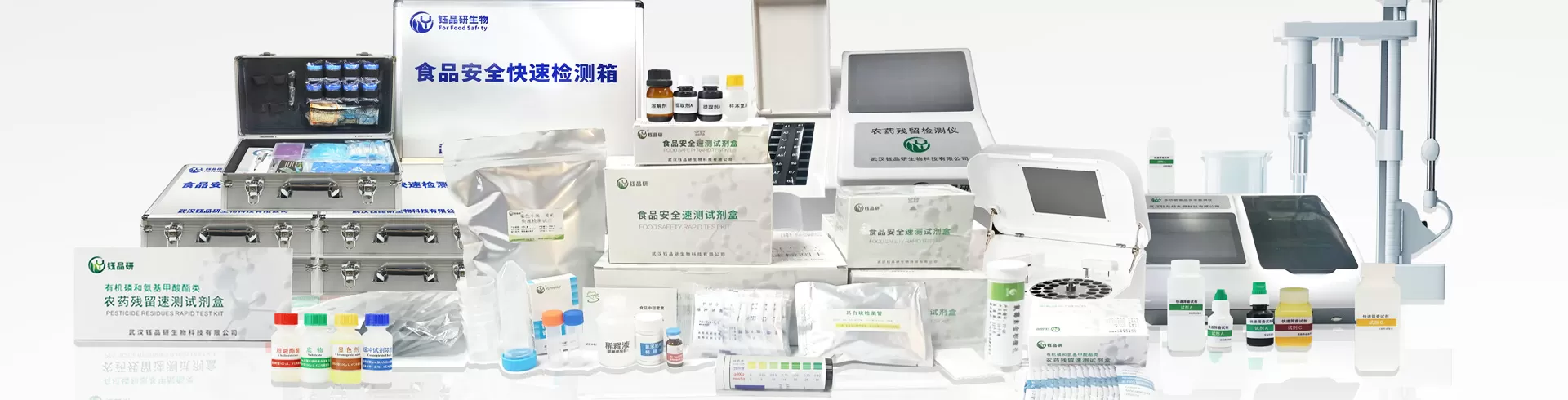
In the face of the potential threat of cypermethrin pesticide residues to food safety, timely detection and accurate control are essential. Wuhan Yupinyan Bio focuses on the research and development of food safety rapid detection reagents. For common pesticide residues such as cypermethrin, it has launched a colloidal gold immunochromatography rapid detection test paper card. The product is easy to operate and requires only a small amount of leaf sample grinding and extraction to complete the detection within 10-15 minutes. It does not require professional equipment. It is suitable for field sampling, market screening and enterprise self-inspection scenarios. It helps users quickly judge the risk of pesticide residues and provides technical support for controlling food safety from the source.
To sum up, it is the result of multiple factors that green leafy vegetables have become the "hardest hit area" for cypermethrin pesticide residues, and scientific understanding of its digestion law and the use of efficient detection technology are the keys to reducing the risk of pesticide residues and protecting consumer health. Wuhan Yupinyan Bio will continue to rely on rapid detection reagents to help build a pesticide residue prevention and control system covering the entire chain of planting, circulation and consumption, and escort food safety.


