简体中文
简体中文 Shqip
Shqip لالعربية
 Polski
 رسی
رسی Deutsch
 Русский
 Français
 한국어
한국어 Nederlands
 Čeština
 Bahasa Melayu
 Português
 日本語
日本語 Svenska
 Kiswahili
 ไทย
ไทย Türkçe
 繁体中文
繁体中文 Українська
 Español
 Italiano
 हिन्दी
 Bahasa Indonesia
 Tiếng Việt
 Filipino
Aflatoxin is a common mycotoxin pollutant in the process of grain storage. It has strong carcinogenicity and toxicity. Once it enters the food chain, it will pose a serious threat to human health. In recent years, with the increase of grain circulation and the extension of storage cycle, the problem of aflatoxin pollution has become increasingly prominent. How to establish an effective screening and early warning mechanism in the storage process has become a key issue to ensure food security.
Aflatoxins: Hidden Threat to Food Security
Aflatoxins are mainly produced by Aflatoxins and Parasitic Aspergillus, and are easy to breed in large quantities at suitable temperatures (25-30 ° C), humidity (more than 80%) and anaerobic environments. If grain is not dried in time after harvest, clean up impurities, or the storage environment is poorly ventilated, and the temperature and humidity are not properly controlled, it is highly susceptible to aflatox According to statistics, the rate of aflatoxins exceeding the standard during grain storage in some parts of our country has reached 15% -20%, which not only leads to the decline of grain quality, but also may cause acute poisoning or chronic health risks.
Analysis of pollution risks in grain storage links
The pollution risks in grain storage links mainly come from three aspects: First, improper post-harvest treatment, such as insufficient drying, leads to moisture residue, providing conditions for mold reproduction; second, storage facilities are aging, ventilation and moisture-proof systems fail, resulting in local humidity accumulation; third, long-term storage leads to the accumulation of mycotoxins, especially the content of aflatoxin B1 and other ingredients in aged grains increases over time. If these risks are not intervened in time, a vicious circle of "pollution-diffusion-exceeding the standard" will be formed, increasing the safety hazards in subsequent circulation and consumption.
Regular screening: build the first line of defense
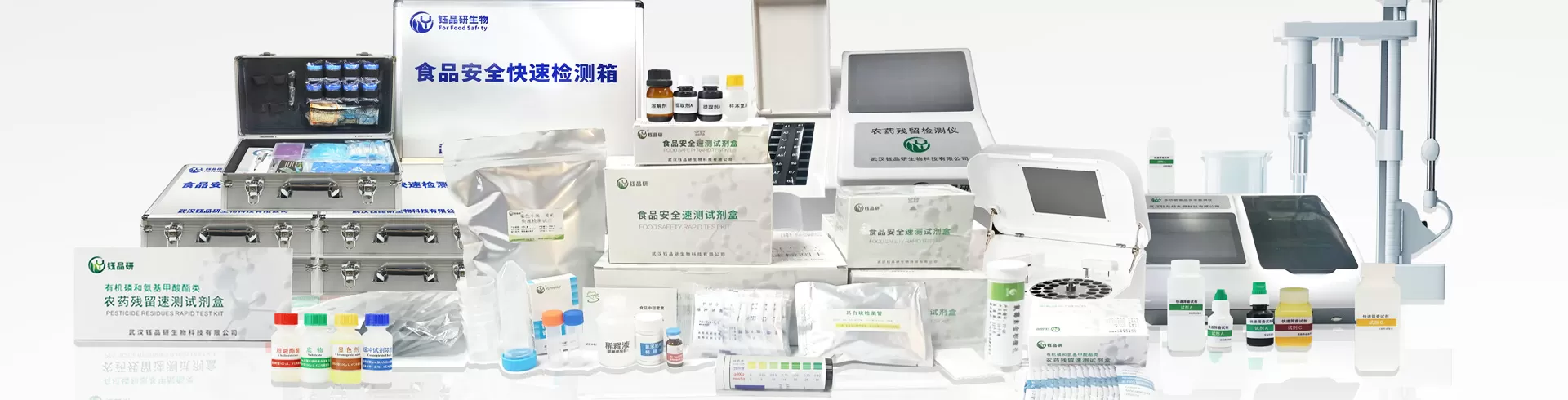
Regular screening is the core means to detect aflatoxin pollution in a timely manner. Relevant units need to establish a whole-cycle monitoring system for grain storage, and conduct regular sampling of grain samples in different batches and different storage conditions. Screening frequency should be dynamically adjusted in combination with storage cycle and environmental conditions. For example, high temperature and high humidity seasons can increase the frequency of detection. With the help of the food safety rapid detection reagent developed by Wuhan Yupinyan Bio, relevant units can complete the quantitative detection of aflatoxins in grain samples in a short time, providing accurate and efficient technical support for screening work.
the core strategy for building a whole-chain early warning program
The early warning program needs to combine screening data and storage environmental parameters to form a closed-loop management of "monitoring-analysis-early warning-disposal". First, establish aflatoxin pollution database, integrate historical detection data and storage environment (temperature, humidity, storage time, etc.) information, and anticipate pollution risk level through data analytics model; secondly, start priority early warning for high-risk batches of grain, and take isolation, detoxification or degradation treatment in time; finally, through the Internet of Things technology implementation storage environment real-time monitoring, once abnormal temperature and humidity are found, immediately start the emergency response mechanism to prevent the spread of pollution.
Conclusion
Faced with the problem of aflatoxin pollution, the regular screening and early warning plan of grain storage is a systematic project, which requires not only the support of technical means, but also the improvement of management mechanisms. Wuhan Yupinyan Bio will continue to deepen the field of food safety rapid detection, and help the industry build a solid safety barrier with more accurate and convenient reagent products to protect every link of food safety from the source to the table.