
 简体中文
简体中文 Shqip
Shqip لالعربية
 Polski
 رسی
رسی Deutsch
 Русский
 Français
 한국어
한국어 Nederlands
 Čeština
 Bahasa Melayu
 Português
 日本語
日本語 Svenska
 Kiswahili
 ไทย
ไทย Türkçe
 繁体中文
繁体中文 Українська
 Español
 Italiano
 हिन्दी
 Bahasa Indonesia
 Tiếng Việt
 Filipino
Aquaculture is an important industry to ensure the supply of aquatic products, but water pollution problems have occurred frequently in recent years. Malachite green, as a synthetic dye, has attracted much attention because it has been used illegally to prevent and control aquatic diseases. This substance has strong toxicity and residues, which will not only destroy the ecological balance of aquaculture water bodies, but also pose a potential threat to human health through food chain transmission. Therefore, establishing a dynamic monitoring and emergency response system of malachite green has become a key link in aquaculture safety management.
the status quo and harm of malachite green pollution
Malachite green pollution is mainly caused by illegal use in the breeding process. After entering the water body, it will accumulate in fish, shrimp and other bodies through biological enrichment. Under long-term exposure, malachite green can cause cell mutation, deformity and even death in aquatic animals. At the same time, the residual malachite green enters the human body through consumption, which may increase the risk of carcinogenesis and teratogenesis. In recent years, sampling data from many places have shown that the phenomenon of malachite green exceeding the standard in some aquaculture waters still occurs from time to time, and targeted monitoring and disposal methods are urgently needed.
dynamic monitoring: Accurate screening of malachite green in aquaculture water quality
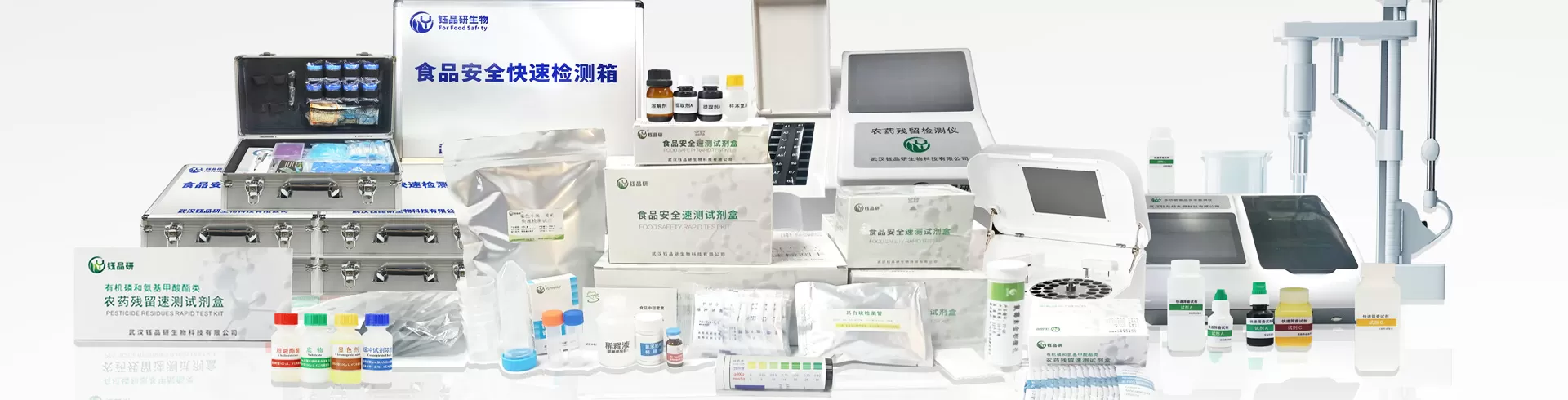
dynamic monitoring is the primary line of defense to prevent the spread of malachite green pollution. Although traditional detection methods can be accurately determined, there are problems such as complicated operation and time-consuming, which are difficult to meet the needs of rapid early warning in aquaculture sites. The food safety rapid detection reagent produced by Wuhan Yupinyan Bio can complete the qualitative or semi-quantitative detection of malachite green in a short time through the specific antigen antibody reaction or the principle of rapid color development. This detection reagent has the characteristics of simple operation, high sensitivity and short detection period. It is suitable for regular or real-time screening in breeding ponds, nursery farms and other scenarios to provide timely data support for water quality management.
emergency response: scientific response strategies after malachite green exceeds the standard
Once it is found that malachite green exceeds the standard in water quality, the emergency response process needs to be started immediately. First of all, the aquaculture activities of the polluted water body should be stopped and the pollution source should be cut off. Secondly, physical or ecological means such as activated carbon adsorption and biodegradation can be used to reduce the concentration of malachite green in the water body. At the same time, the rapid detection reagent of Wuhan Yupinyan Bio can continuously monitor the water quality changes to ensure the treatment effect. During the emergency treatment process, the rapid detection reagent can help farmers or regulators to confirm the degree of pollution in real time, avoid blind investment of resources, and improve the disposal efficiency.
To sum up, the dynamic monitoring and emergency treatment of malachite green are the core content of aquaculture water quality safety management. With the technical advantages of food safety rapid detection reagents, Wuhan Yupinyan Bio helps the industry to establish a more efficient pollution prevention and control system, and promotes the development of aquaculture in a green and healthy direction


