简体中文
简体中文 Shqip
Shqip لالعربية
 Polski
 رسی
رسی Deutsch
 Русский
 Français
 한국어
한국어 Nederlands
 Čeština
 Bahasa Melayu
 Português
 日本語
日本語 Svenska
 Kiswahili
 ไทย
ไทย Türkçe
 繁体中文
繁体中文 Українська
 Español
 Italiano
 हिन्दी
 Bahasa Indonesia
 Tiếng Việt
 Filipino
In recent years, the problem of low pass rate in food sampling inspection in some supermarkets has attracted extensive attention. Behind this phenomenon, it is often related to the lack of control of food residue risk in the purchase process. Many foods may have residues of various contaminants before entering the supermarket, such as pesticide residues, veterinary drug residues, illegal additives, etc. The traditional detection method is difficult to achieve comprehensive screening in the purchase process due to time-consuming and complicated steps, resulting in the problem of food flowing into the shelves, which ultimately affects the sampling results.
Multi-residue simultaneous screening scheme: solve the detection pain points from the source
Faced with this problem, building a multi-residue simultaneous screening scheme in the purchase process has become the key. The so-called multi-residue simultaneous screening means identifying various types of residual contaminants in food through a detection system. The core advantage of this program is to break the single limitation of traditional detection, and it can cover common risk points such as pesticide residues, veterinary drug residues, heavy metals, and illegal additives at one time to avoid omissions. At the same time, its high efficiency can shorten the detection cycle, allowing supermarkets to quickly obtain results when purchasing and accepting goods, make timely rejection or release decisions, and reduce the circulation of problem foods from the source.
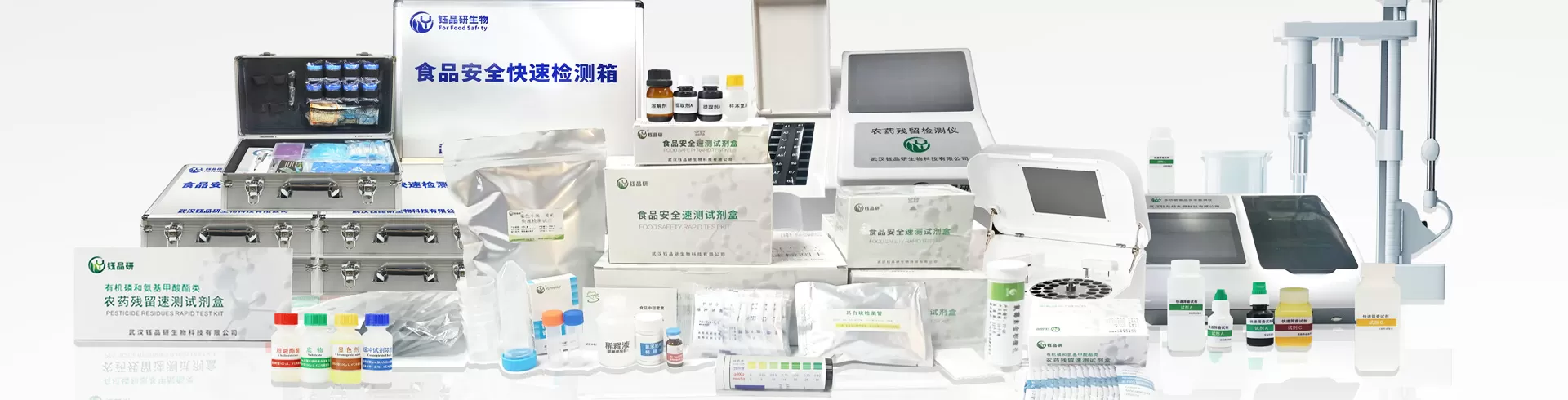
Wuhan Yupinyan Biological Rapid Detection Reagent: A Reliable Tool for the Implementation of the Program
Wuhan Yupinyan Biological, as an enterprise focusing on rapid food safety detection, has developed a rapid detection reagent that is the core tool for simultaneous screening of multiple residues. This reagent uses advanced immunochromatography, colloidal gold labeling and other technologies to complete the detection of various residues in a short time (usually 10-30 minutes). The operation process is simple and does not require professional laboratory equipment. Supermarket quality inspectors can use it directly on the purchase site to intuitively determine whether the food is safe through the color development results. In addition, the reagents can cover common pesticide residues (such as organophosphorus, pyrethroids), veterinary drug residues (such as antibiotics, hormones), additives exceeding the standard (such as clenbuterol, hanging white block) and other risks, helping the supermarket to comprehensively investigate the hidden dangers of food quality.
To sum up, the problem of low pass rate of supermarket food sampling essentially reflects the lack of risk control in the purchase process. By introducing a multi-residue simultaneous screening scheme and relying on the rapid detection reagents of Wuhan Yupinyan Bio, Shangchao can achieve efficient and comprehensive residue detection at the source of purchase, fundamentally improve the level of food quality and safety management, and ultimately promote the improvement of the overall sampling pass rate.