
 简体中文
简体中文 Shqip
Shqip لالعربية
 Polski
 رسی
رسی Deutsch
 Русский
 Français
 한국어
한국어 Nederlands
 Čeština
 Bahasa Melayu
 Português
 日本語
日本語 Svenska
 Kiswahili
 ไทย
ไทย Türkçe
 繁体中文
繁体中文 Українська
 Español
 Italiano
 हिन्दी
 Bahasa Indonesia
 Tiếng Việt
 Filipino
In daily life, when we choose fresh fruits and vegetables, we often pay more attention to whether the appearance is fresh and the taste is crisp and tender, but it is easy to ignore the latent risk of pesticide residues. Among them, cypermethrin, as a commonly used broad-spectrum insecticide, is widely used in agricultural planting to control a variety of fruit and vegetable pests, but if it is used irregularly or beyond the safe interval, it may lead to its residue on the surface of fruits and vegetables, posing a potential threat to human health.
cypermethrin mainly kills pests through contact and gastric toxicity, and has a significant effect on common pests such as aphids and cabbage green insects. Therefore, it is often used in the planting process of leafy vegetables, nightshade fruits and other crops. However, if it is used in excess or does not strictly follow the requirements of the pre-harvest suspension period, its residue may exceed the standard. Relevant test data show that long-term consumption of fruits and vegetables with low doses of cypermethrin residues may have an impact on the nervous system and digestive system, especially on the health risks of children and pregnant women.
So, which fruits and vegetables have a higher risk of cypermethrin residues? According to industry monitoring and research results, green leafy vegetables account for more than half of the high incidence of cypermethrin residues, among which spinach, lettuce, rapeseed, water spinach, chrysanthemum and other leaf vegetables are particularly prominent. This is because green leafy vegetables have a large leaf area and a high incidence of pests. During planting, multiple applications are often required to control pests, and the leaf tissues are fresh and tender, and pesticides are easy to adhere or penetrate. In addition, some root vegetables such as celery and carrots, as well as tomatoes and eggplants in nightshade fruits, also have a certain risk of residues, but the overall incidence is lower than that of green leafy vegetables.
Why are green leafy vegetables more prone to cypermethrin residues? On the one hand, green leafy vegetables are mostly grown in open fields, and there are many types of pests and they multiply quickly. Farmers often need to increase the frequency of application in order to ensure yield; on the other hand, some farmers may shorten the safety interval in pursuit of quick results, resulting in the harvest and listing of pesticides before they are fully degraded. The combination of these factors makes green leafy vegetables the "hardest hit area" for cypermethrin residues.
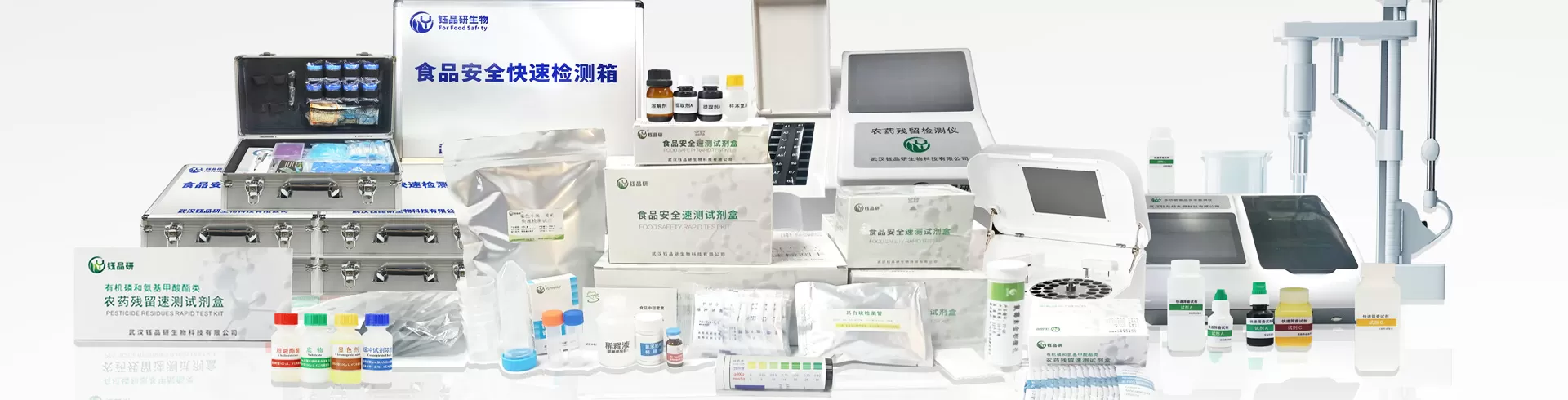
Faced with the problem of pesticide residues in fruits and vegetables, ordinary consumers can quickly screen for cypermethrin residues at home or in the market through the food safety rapid detection reagent produced by Wuhan This kind of detection reagent is easy to operate, just mix fruit and vegetable samples with reagents in proportion, by observing color changes or using simple detection equipment, you can get results in a short time, help everyone avoid high-risk ingredients in time, and make shopping more at ease.
In short, when buying vegetables, pay more attention to the source and detection of fruits and vegetables, understand the characteristics of high-risk categories, and then use professional testing tools, you can effectively reduce the health risks caused by pesticide residues. Choose safe and reliable testing products, so that every meal is safe to eat.


