简体中文
简体中文 Shqip
Shqip لالعربية
 Polski
 رسی
رسی Deutsch
 Русский
 Français
 한국어
한국어 Nederlands
 Čeština
 Bahasa Melayu
 Português
 日本語
日本語 Svenska
 Kiswahili
 ไทย
ไทย Türkçe
 繁体中文
繁体中文 Українська
 Español
 Italiano
 हिन्दी
 Bahasa Indonesia
 Tiếng Việt
 Filipino
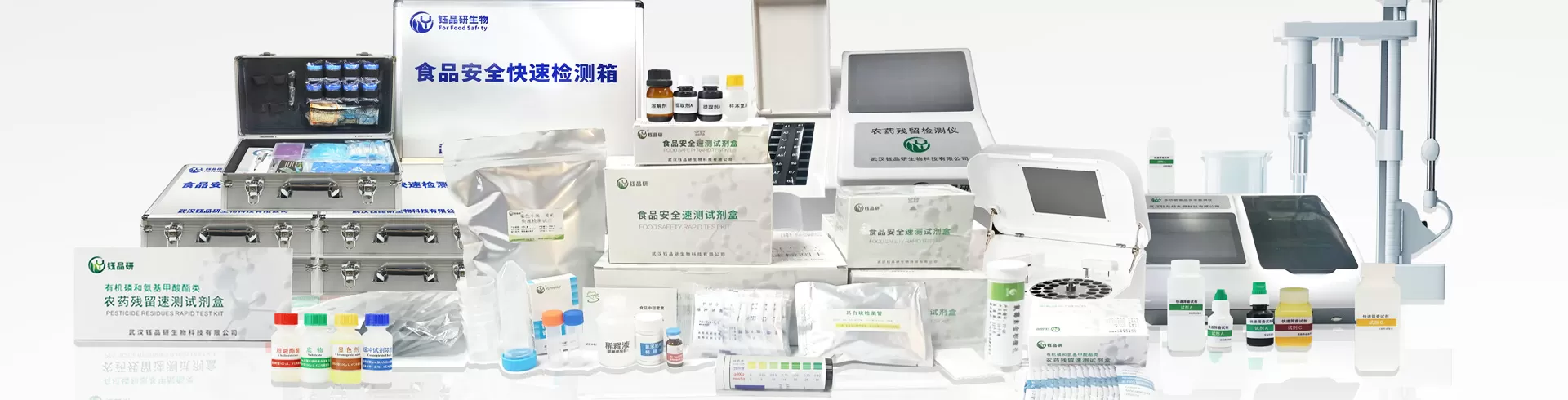
Food safety is related to public health, and the effectiveness of detection technology directly determines the accuracy of supervision. At present, the food safety detection system is changing from a passive response that relies on post-mortem sampling to a daily screening and active prevention covering the entire chain of production, circulation and consumption. In this transformation process, the rapid detection technology represented by the imidacloprid colloidal gold detection card has become a key link between sampling data and daily risk prevention and control with its convenience and efficiency.
Although traditional food safety sampling can reveal problems, it often has limitations such as long cycle and limited coverage, making it difficult to respond to the needs of grassroots supervision and enterprise self-inspection in real time. For example, if the planting process of agricultural products fails to monitor imidacloprid residues in a timely manner, it may lead to listed products exceeding the standard; if catering companies lack rapid screening methods when purchasing raw materials, risky ingredients are easy to flow into the processing process. This model of "random inspection finds problems and then rectification" is difficult to block safety hazards from the source, and the core of daily screening is to achieve "early detection and early disposal" through rapid detection.
Wuhan Yupinyan Bio, as an enterprise focusing on the research and development of food safety rapid detection reagents, produces imidacloprid colloidal gold detection card, which is designed to solve the above pain points. The detection card is based on colloidal gold immunochromatography technology and adopts the principle of monoclonal antibody specific identification, which can directly qualitatively detect imidacloprid residues in vegetables, fruits, grains and other agricultural products. In practice, only the sample extract needs to be dripped into the reaction hole of the test card, and the presence of residues can be judged by the color development results within 10-15 minutes - the positive color development strips are clear, and the negative ones have no obvious strips. No professional equipment or complex operations are required, and ordinary personnel can complete it with simple training.
In the application scenario, the test card shows significant advantages: agricultural product planting bases can quickly self-test in the field, adjust the pesticide use plan in real time, and avoid the risk of residue exceeding the standard; after the procurement process of catering enterprises, they can immediately screen the safety of ingredients and control the quality of raw materials from the source; in the market inspection, the grass-roots supervision department can use the portable test card to conduct batch screening of high-risk categories, and intercept potential problems at the front end of the circulation. This ability of "rapid early warning + accurate judgment" has enabled food safety management to shift from "post-event remediation" to "pre-event prevention", which has greatly improved the initiative and effectiveness of supervision.
From retrospective rectification after sampling inspection finds problems, to risk pre-prevention and control of daily screening, imidacloprid colloidal gold detection card fills the gap in the detection scene through technological innovation. Wuhan Yupinyan Bio always aims to "make food safety testing more efficient and affordable", and continues to optimize the performance of detection reagents. In the future, it will continue to provide solid technical support for building a food safety defense line covering the whole chain.