简体中文
简体中文 Shqip
Shqip لالعربية
 Polski
 رسی
رسی Deutsch
 Русский
 Français
 한국어
한국어 Nederlands
 Čeština
 Bahasa Melayu
 Português
 日本語
日本語 Svenska
 Kiswahili
 ไทย
ไทย Türkçe
 繁体中文
繁体中文 Українська
 Español
 Italiano
 हिन्दी
 Bahasa Indonesia
 Tiếng Việt
 Filipino
Aflatoxin B is a highly toxic metabolite produced by fungi such as Aspergillus flavus. It has strong carcinogenicity and hepatotoxicity. Long-term intake may pose a serious threat to human health. As an important raw material of traditional Chinese medicine, Chinese herbal medicines are prone to mold growth due to environmental humidity, temperature and other factors during planting, harvesting, processing and storage. Among them, oil-based Chinese herbal medicines such as bergamot kernels and peanuts have become high-risk varieties of aflatoxin B pollution due to their rich fat and protein. In recent years, the quality and safety of Chinese herbal medicines have received extensive attention. Accurate detection of aflatoxin B is of great significance for ensuring the safety of traditional Chinese medicine and promoting the standardized development of the Chinese herbal medicine industry. The core requirements of
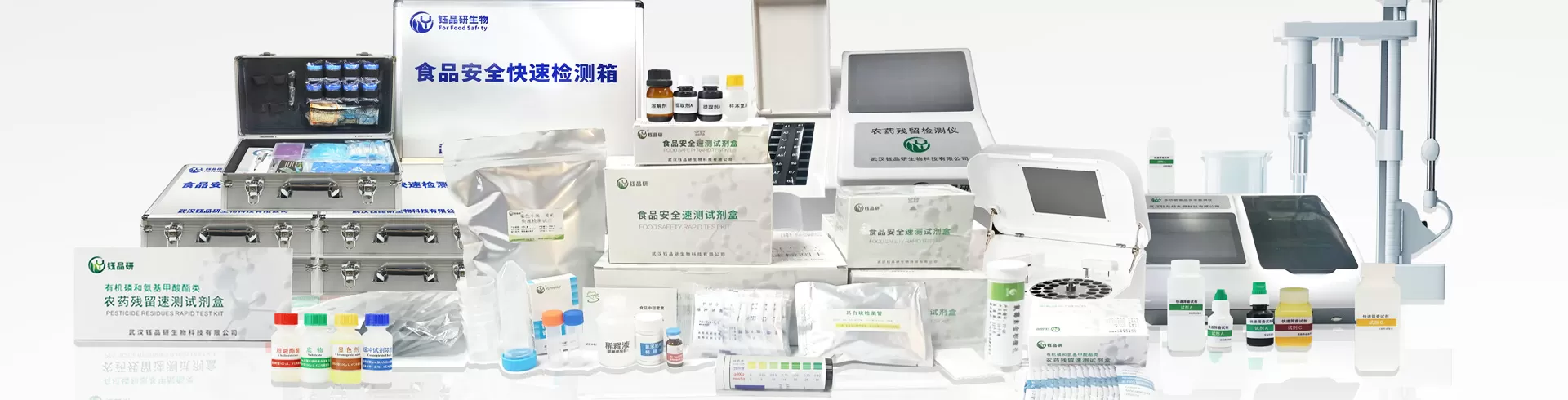
precision detection scheme lie in high sensitivity, high specificity and fast response. Traditional detection methods such as high-performance liquid chromatography have high accuracy, but the operation is cumbersome and time-consuming, making it difficult to meet the needs of enterprises and regulatory authorities for on-site rapid screening. Wuhan Yupinyan Bio, as an enterprise specializing in the research and development of food safety rapid detection reagents, has developed an efficient and accurate detection scheme for the detection difficulties of aflatoxin B in Chinese medicinal materials. By optimizing the antigen-antibody reaction system, it can effectively reduce the interference of Chinese medicinal materials matrix on the detection results and ensure the accuracy and stability of the detection data.
The detection process of aflatoxin B in Chinese medicinal materials such as bergamot seed is mainly divided into three key links: sample pretreatment, reagent reaction and result interpretation. In the sample pretreatment stage, after the sample of Chinese medicinal materials to be tested is ground, an appropriate amount of extract is added for shaking extraction, and impurities are removed by centrifugation or filtration to obtain a clarified extract; then an appropriate amount of extract is mixed with the detection reagent in proportion, and the antigen-antibody specific binding principle is used to combine aflatoxin B with the antibody in the reagent to form a complex; after the reaction is completed, the content of aflatoxin B in the sample can be quickly determined by observing the color development results of the test strip or the reading of the instrument. The detection reagent of Wuhan Yupinyan Biological adopts colloidal gold immunochromatography technology, which does not require complicated equipment, and the operation only takes 5-10 minutes. The detection limit can be as low as 0.1 μg/kg, which fully meets the industry standard requirements for the safety detection of Chinese medicinal materials.
Wuhan Yupinyan's rapid detection reagent is not only suitable for cypress, but also widely used in peanuts, corn, peppers and other easily contaminated Chinese herbal medicines and food raw materials. The reagent has strong stability and can be stored for a long time at 4-30 ° C, which is convenient for grassroots inspectors or enterprise quality inspectors to operate on site. Through this program, Chinese herbal medicine manufacturers can quickly produce qualified batches of filter filters in the procurement of raw materials to avoid drug risks caused by contaminated raw materials; regulatory authorities can also use this technology to improve sampling efficiency, detect and deal with illegal products in a timely manner, and ensure the quality and safety of Chinese herbal medicines from the source. In the future, Wuhan Yupinyan Bio will continue to deepen the field of food safety testing, provide customized testing solutions for more Chinese herbal medicine varieties through technological innovation, and help build a quality and safety assurance system for the whole chain from planting to medication.