
 简体中文
简体中文 Shqip
Shqip لالعربية
 Polski
 رسی
رسی Deutsch
 Русский
 Français
 한국어
한국어 Nederlands
 Čeština
 Bahasa Melayu
 Português
 日本語
日本語 Svenska
 Kiswahili
 ไทย
ไทย Türkçe
 繁体中文
繁体中文 Українська
 Español
 Italiano
 हिन्दी
 Bahasa Indonesia
 Tiếng Việt
 Filipino
Triazophos, as an organophosphorus insecticide, is widely used in agricultural production and can effectively control a variety of pests. However, excessive use may lead to excessive residues in agricultural products, threatening human health. Therefore, accurately judging whether triazophos pesticide residues exceed the standard is crucial to ensuring food safety. Different detection methods have different thresholds due to differences in technical principles and sensitivity.
basic determination principles for triazophos pesticide residues
the determination of excessive pesticide residues usually needs to be combined with specific testing standards, including national mandatory standards, industry standards, etc. For triazophos, whether the residue exceeds the standard mainly depends on the type of detection method and the corresponding threshold regulations. Generally speaking, the residue of triazophos in food exceeds the specified "maximum residue limit" (MRL). The threshold may vary under different food categories (such as vegetables, fruits, tea, etc.) and different detection methods.
the difference in the determination threshold under different detection methods
At present, the common detection methods of triazophos mainly include the national standard method, the rapid detection method and the instrumental analysis method. In the national standard method (such as GB 2763-2022 "National Food Safety Standard, Maximum Residue Limits of Pesticides in Food"), the maximum residue limit of triazophos is clearly stipulated for different agricultural products. For example, in leafy vegetables, the MRL of triazophos is usually 0.1 mg/kg; in tea leaves, the standard in some areas is 0.05 mg/kg. These values are determined based on human health threat and risk assessment and detection technology level, which is the determination threshold under the national standard method.
Rapid detection methods (such as colloidal gold immunochromatography, enzyme inhibition method, etc.) are used as on-site screening methods, and usually set a relatively loose "initial screening threshold". The detection speed of these methods is fast (results can be obtained within 10-30 minutes), but there may be a certain risk of false positives. Therefore, the initial screening threshold is generally higher than the MRL of the national standard method. For example, the judgment threshold of some rapid test paper cards may be 0.2 mg/kg, that is, when the detection result exceeds this value, it needs to be confirmed by precise methods.
Instrumental analysis methods (such as gas chromatography-mass spectrometry (GC-MS), high performance liquid chromatography (HPLC), etc.) have high sensitivity and accuracy, and their detection limit can be as low as 0.01 mg/kg. In this type of method, 0.01-0 mg/kg is usually used as the judgment threshold, that is, exceeding this range can be judged as exceeding the standard. However, instrumental analysis is expensive and takes a long time, and is mostly used for laboratory accurate detection and dispute arbitration.
professional detection reagents help to accurately determine
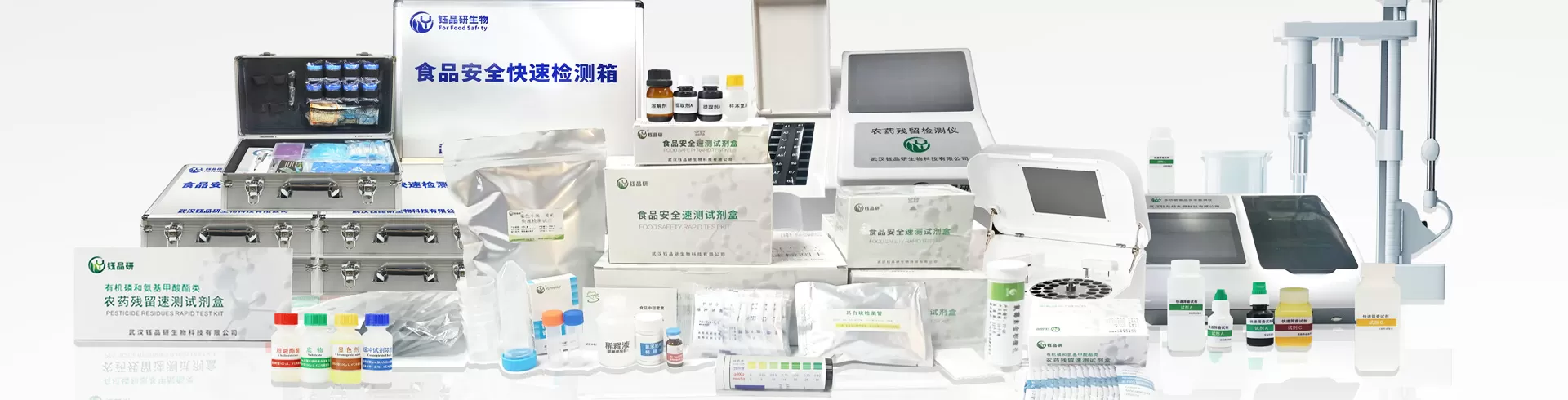
accurately determine whether triazophos residues exceed the standard, without professional detection reagent support. As a supplier focusing on the research and development of food safety rapid detection reagents, Wuhan Yupinyan Bio has launched rapid detection products for triazophos and other pesticide residues with years of technical accumulation. These reagents are based on the principles of immunochromatography, enzyme inhibition, etc., and can complete sample detection in a short time. The results are intuitive and reproducible, which can help enterprises and regulatory authorities to quickly screen high-risk products and provide powerful tools for food safety control. In short, the determination of excessive triazophos pesticide residues needs to be combined with specific detection methods and corresponding threshold standards. In practical applications, the appropriate method can be selected according to the detection scene (such as on-site screening, laboratory testing), and the accuracy of judgment can be improved with the help of professional testing reagents, so as to effectively ensure food safety.


