
 简体中文
简体中文 Shqip
Shqip لالعربية
 Polski
 رسی
رسی Deutsch
 Русский
 Français
 한국어
한국어 Nederlands
 Čeština
 Bahasa Melayu
 Português
 日本語
日本語 Svenska
 Kiswahili
 ไทย
ไทย Türkçe
 繁体中文
繁体中文 Українська
 Español
 Italiano
 हिन्दी
 Bahasa Indonesia
 Tiếng Việt
 Filipino
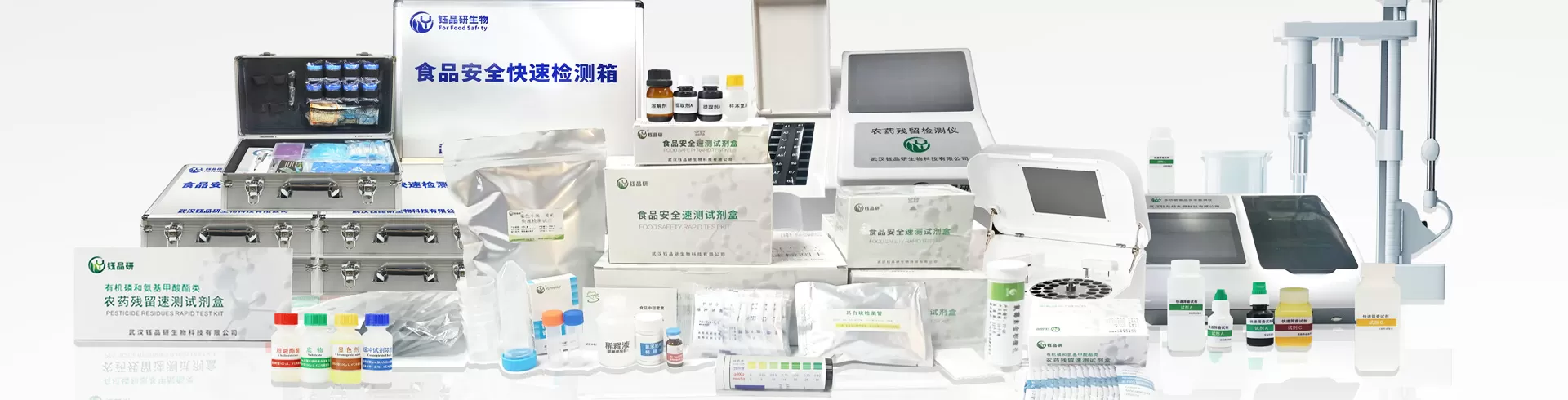
As an important part of traditional Chinese medicine, the quality and safety of Chinese herbal medicines are directly related to the safety and efficacy of medication. Among them, aflatoxins are harmful substances that are easily contaminated during the planting and storage of Chinese herbal medicines. Long-term ingestion may cause liver damage and even increase the risk of cancer. Therefore, the detection of aflatoxins in Chinese herbal medicines is crucial. This article will focus on the main points of aflatoxins detection in two common Chinese herbal medicines, wolfberry and Salvia miltiorrhiza. Combined with actual detection scenarios, it will provide practical guidance for relevant practitioners. In the actual detection work, the food safety rapid detection reagent produced by our company (Wuhan Yupinyan Biological) has become the preferred tool for the screening of Chinese herbal medicines aflatoxins due to its simple operation, short detection cycle and high accuracy. Sampling and operation points of
Lycium barbarum aflatoxin testing
The aflatoxin pollution of Lycium barbarum is mostly caused by mildew in humid environment, and the sampling should follow the principles of representativeness and randomness. First, multiple sampling points should be randomly selected from the batches of Lycium barbarum to be tested, and the sampling amount of each sampling point should not be less than 50 grams to ensure that the particles of different parts and colors are covered. Subsequently, the samples collected at multiple points are fully mixed and reduced to the required detection amount by four-point method to avoid errors caused by the concentration of mildew particles. During the sampling process, clean and contaminant-free tools, such as stainless steel shovels or ceramic plates, should be used to prevent the sampling container itself from being contaminated by mold. At the same time, the sampling time, location, sample number and other information need to be recorded for easy traceability.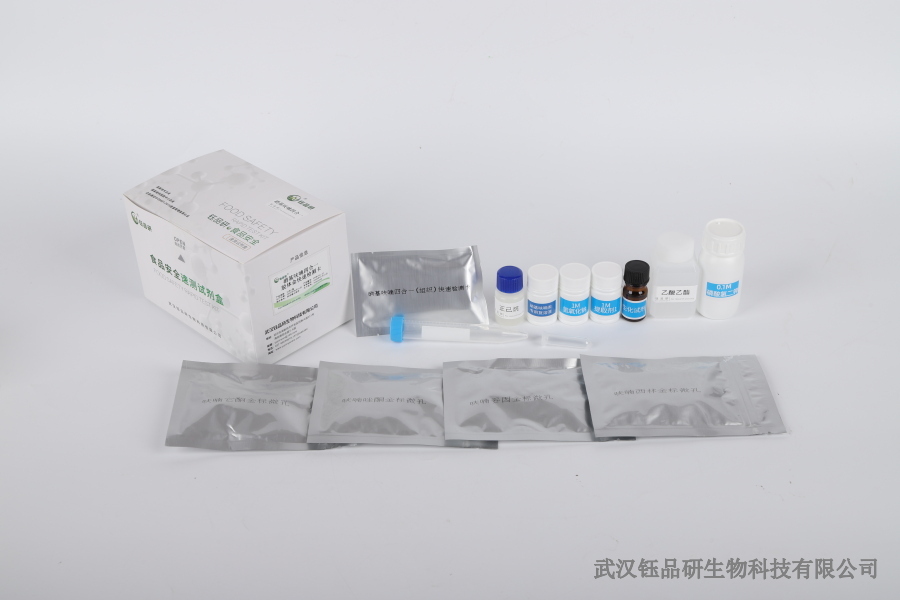
in terms of detection operation, when using the rapid detection reagent of Wuhan Yupinyan Biology, the following steps can be carried out: First, the sample is pretreated, and the reduced wolfberry sample is removed from obvious impurities (such as branches and leaves, moth-eaten particles). Take an appropriate amount (about 10 grams) in a clean container, add 10 times the volume of the extract (configured according to the reagent instructions), shake the extraction for 10 minutes and let stand for 5 minutes, and take the supernatant as the detection sample. Subsequently, add 5 drops of the extract sample to the reaction hole of the detection card, and add one drop of each of the supporting reagents A and B to ensure that the liquid is completely infiltrated into the reaction area. The detection card is placed at room temperature (about 25 ° C) for 15 minutes, during which direct light or pollution are avoided. After the reaction, observe the quality control line and the color development of the test line on the test card: if the quality control line is clear, the color development of the test line is positive (aflatoxin exceeds the standard), and the color development without the test line is negative (in line with safety standards).
Sampling and operation points for aflatoxin detection of Salvia miltiorrhiza
Salvia miltiorrhiza is used as a rhizome Chinese medicinal material, and its surface is easy to adhere to soil, dust or mildew spots. Sampling should take into account integrity and uniformity. Sampling should select complete root of Salvia miltiorrhiza without damage and insect moth, and 5-8 typical samples should be selected at each sampling point, and the total sampling amount should not be less than 100 grams. During the mixing process, the root of Salvia miltiorrhiza needs to be washed off the surface floating soil (if necessary) to avoid microorganisms in the soil interfering with the test results, and then reduced to the pulverized sample required for detection by the four-point method (if the whole root or pulverized particles need to be detected, they need to be adjusted according to the actual reagent requirements). After sampling, it needs to be sealed and stored to prevent the sample from mildew changes before transportation or detection.In the detection operation, according to the characteristics of the dense tissue of Salvia miltiorrhiza, the pre-treatment can appropriately extend the extraction time: Weigh 5 grams of Salvia miltiorrhiza sample (if the whole root needs to be sliced or pulverized first), add 50 ml of extract, ultrasonic extraction for 20 minutes (or shock extraction for 30 minutes), so that the aflatox After filtering the supernatant, proceed with the reagent reaction and result interpretation according to the above Lycium barbarum detection steps. It should be noted that the ingredients such as tanshinone contained in Salvia miltiorrhiza may interfere with some detection methods, and the rapid detection reagent of Wuhan Yupinyan Bio effectively avoids such interference by optimizing the reaction system and ensures the accuracy of the test results.
Key Precautions in the Detection Process
During the entire detection process, environmental control and reagent operation specifications are the core to ensure reliable results. The laboratory should be kept clean to avoid contamination of samples by mold spores in the air, and the operating table should be regularly disinfected. Before testing, the shelf life and storage conditions of the reagents should be checked to ensure that the reagents are in an effective state (such as reagents stored in refrigeration need to be warmed back to room temperature in advance). Each test needs to set up a positive control and a negative control. The positive control can choose a sample of Chinese herbal medicines known to be contaminated, and the negative control uses a blank substrate to verify the performance of the reagent and the accuracy of the detection system. In addition, the operator needs to undergo professional training and operate in strict accordance with the reagent instructions to avoid results deviation due to human errors (such as insufficient sample amount and too short reaction time).To sum up, Lycium barbarum and Salvia miltiorrhiza are common varieties in Chinese herbal medicines, and their aflatoxin testing needs to be strictly controlled from three aspects: sampling representativeness, reagent selection, and operation standardization. The food safety rapid detection reagent produced by Wuhan Yupinyan Bio plays an important role in the screening of Chinese herbal medicine aflatoxins due to its high efficiency and convenience. It can significantly shorten the detection cycle, help enterprises and regulatory authorities to quickly identify risks, and ensure the quality and safety of Chinese herbal medicines. In the future, with the continuous optimization of detection technology, we will continue to provide more reliable solutions for the industry to protect the healthy development of the Chinese herbal medicine industry chain.


