简体中文
简体中文 Shqip
Shqip لالعربية
 Polski
 رسی
رسی Deutsch
 Русский
 Français
 한국어
한국어 Nederlands
 Čeština
 Bahasa Melayu
 Português
 日本語
日本語 Svenska
 Kiswahili
 ไทย
ไทย Türkçe
 繁体中文
繁体中文 Українська
 Español
 Italiano
 हिन्दी
 Bahasa Indonesia
 Tiếng Việt
 Filipino
Triazophos is an organophosphorus insecticide widely used in agricultural production, which is often used to control various pests on crops such as cotton, rice, and vegetables. With the use of agricultural inputs, the public has become more and more concerned about its residues in agricultural products. Among them, whether there will be residues after triazophos is sprayed on the leaf surface and the distribution law of residues applied on the leaf surface are important research directions to ensure the quality and safety of agricultural products.
will there be residues after triazophos is sprayed on the leaf surface?
From the perspective of theory and practice, there is usually a certain degree of residue after triazophos is sprayed on the leaf surface of crops. This is because after application, some of the agents will adhere to the surface of the leaves through physical adsorption, some will be absorbed by the crop epidermis into the tissue, and some may not be completely degraded due to environmental factors (such as light, temperature, humidity). The amount of residue is related to a variety of factors: first, the concentration and frequency of application, the higher the concentration and the more frequent the number of applications, the greater the relative risk of residue; second, the difference in crop varieties, different crop leaf structure and physiological characteristics are different, there are differences in the absorption and adsorption capacity of the agent; third, the environmental conditions after application, such as high temperature and high humidity environment may accelerate the decomposition of the agent, but when the light is strong, it may also cause some components to evaporate. The specific residual amount needs to be judged in combination with the actual situation.
What are the residual distribution rules of foliar application?
foliar application, the residue distribution of triazophos is not uniform, and its laws are mainly reflected in the following aspects: First, the residue is mainly concentrated on the leaf surface and epidermal cell level, especially in the area where the agent is directly contacted during application. Due to the difference in leaf surface structure (such as waxy layer, stomatal distribution), there may be differences in the residue amount on the front and back of the leaf, and the residue amount on the more direct side of the application direction is usually relatively high. Secondly, over time, the residue will gradually change: some agents will reduce the content through degradation reactions (such as hydrolysis and oxidation), some will initialize with rain and reduce natural volatilization, and some may enter the internal tissues (such as leaf veins and intercellular spaces) through crop metabolism. Therefore, the residue amount and distribution position at different time points will be dynamically adjusted. In addition, the method of application (such as the size of the spray droplets and the coverage area) will also affect the residue distribution. Fine spray may make the agent adhere more evenly, while coarse fog droplets may lead to excessive local residue concentrations.
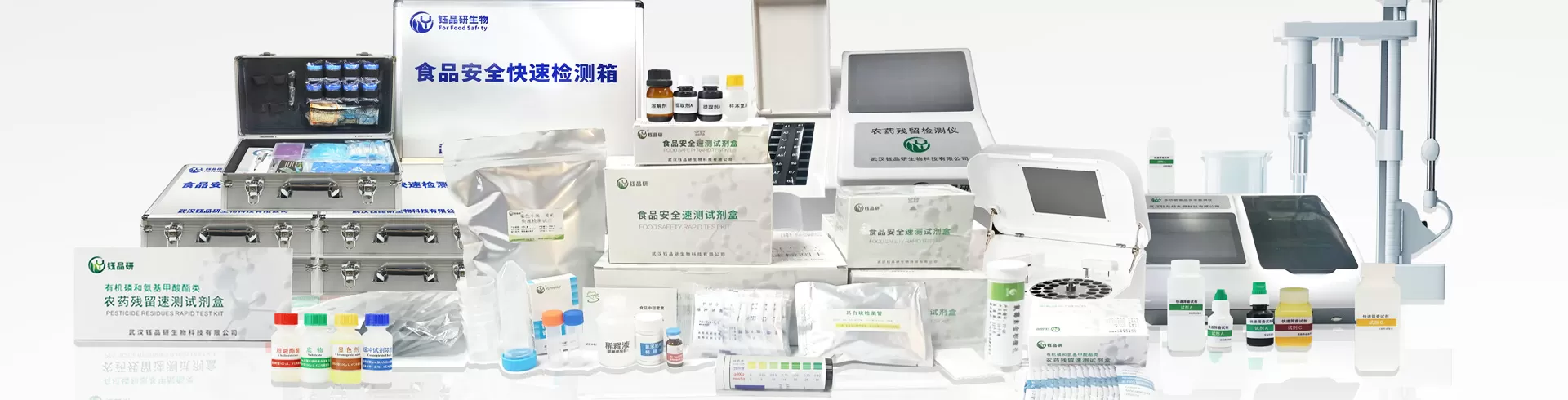
As a professional food safety rapid detection reagent manufacturer, Wuhan Yupinyan Bio knows the importance of accurate detection of triazophos residues to ensure the safety of agricultural products. Our series of rapid detection reagents can help agricultural producers and regulatory authorities quickly screen for triazophos residues in agricultural products through a simple and efficient detection process, provide strong technical support for the quality and safety of agricultural products, and help control food safety from the source.