简体中文
简体中文 Shqip
Shqip لالعربية
 Polski
 رسی
رسی Deutsch
 Русский
 Français
 한국어
한국어 Nederlands
 Čeština
 Bahasa Melayu
 Português
 日本語
日本語 Svenska
 Kiswahili
 ไทย
ไทย Türkçe
 繁体中文
繁体中文 Українська
 Español
 Italiano
 हिन्दी
 Bahasa Indonesia
 Tiếng Việt
 Filipino
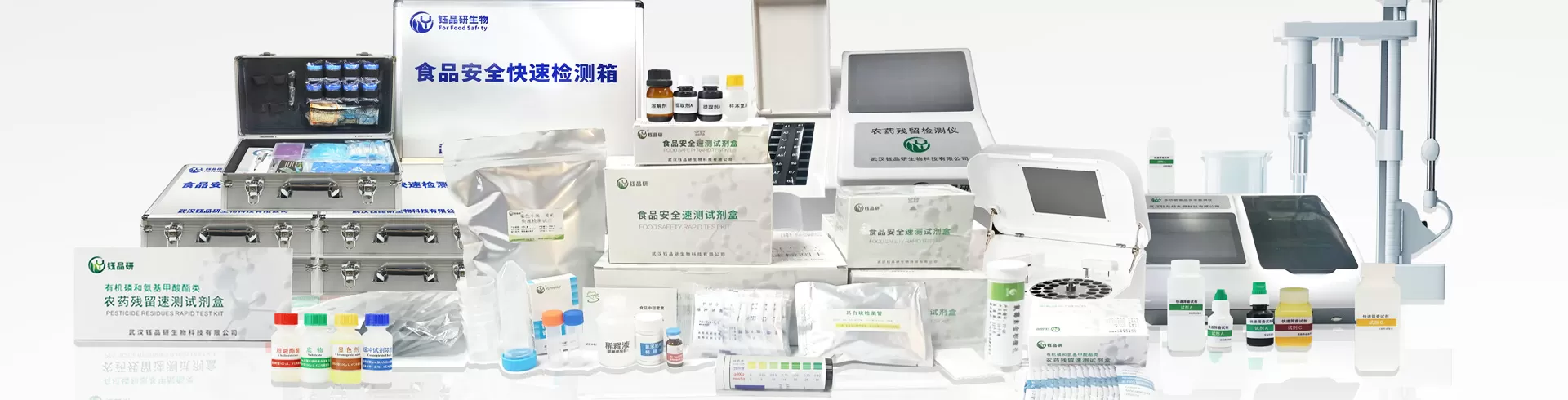
With the strengthening of food safety supervision, pesticide residue detection has become a key link to ensure food quality. Triazophos, as a broad-spectrum organophosphorus insecticide, is widely used in agricultural product cultivation. If it is found to exceed the standard, it is necessary to start the scientific disposal process immediately to avoid threats to consumer health. From the confirmation of test results to the final problem handling, every step needs to be strictly standardized. As a professional food safety rapid detection reagent provider, Wuhan Yupinyan Bio has always been committed to building a safety line for food companies and regulatory authorities through reliable testing methods.
sample review: the key link to eliminate detection errors
When the test initially shows that triazophos exceeds the standard, the sample review is first required. The core of this step is to rule out false positive results due to detection operation errors, instrument failures or omissions in the preprocessing process. Specifically, the original sample needs to be re-sampled, and the operation needs to be repeated in strict accordance with standard detection methods to ensure that the pretreatment process (such as extraction, purification, etc.) is free of deviation. At the same time, cross-validation is carried out using detection methods of different principles - for example, initial screening with colloidal gold rapid detection test strips, and then further confirmation by precision instruments such as high-performance liquid chromatography or gas chromatography. Wuhan Yupinyan Bio's food safety rapid detection reagent plays an important role in this process. Its simple operation and short detection time can quickly lock in suspected excessive samples and buy time for review.
follow-up disposal: scientific and standardized, reduce risk
If the review results confirm that triazophos does exceed the standard, the follow-up disposal process needs to be started immediately. First, the sales and circulation of the products involved should be suspended, and the problem products should be physically isolated to prevent them from flowing into the market; secondly, it is necessary to contact a qualified third-party testing agency, use standard methods to conduct a comprehensive quantitative analysis of the samples, clarify the degree of exceeding the standard and the residual amount, and provide a basis for subsequent treatment; at the same time, enterprises need to trace the source of the problem products, check the risk of pollution in production, processing, transportation and other links, and control the occurrence of similar problems from the source. For products that have entered the market, it is necessary to cooperate with the regulatory authorities to carry out recall or destruction work, and strictly follow the "Food Safety Law" In this process, rapid detection reagents can continue to play the advantages of "early detection and early intervention" to help enterprises and regulatory authorities grasp the current situation of the problem in the shortest time and take precise measures.
Food safety is related to people's livelihood, and the handling of triazophos exceeding the standard needs to be based on the principle of "scientific rigor and rapid response". Wuhan Yupinyan Bio will continue to rely on professional technology to develop more accurate and efficient rapid detection reagents to help the food industry improve safety control capabilities and jointly protect consumers' "safety on the tip of the tongue".