简体中文
简体中文 Shqip
Shqip لالعربية
 Polski
 رسی
رسی Deutsch
 Русский
 Français
 한국어
한국어 Nederlands
 Čeština
 Bahasa Melayu
 Português
 日本語
日本語 Svenska
 Kiswahili
 ไทย
ไทย Türkçe
 繁体中文
繁体中文 Українська
 Español
 Italiano
 हिन्दी
 Bahasa Indonesia
 Tiếng Việt
 Filipino
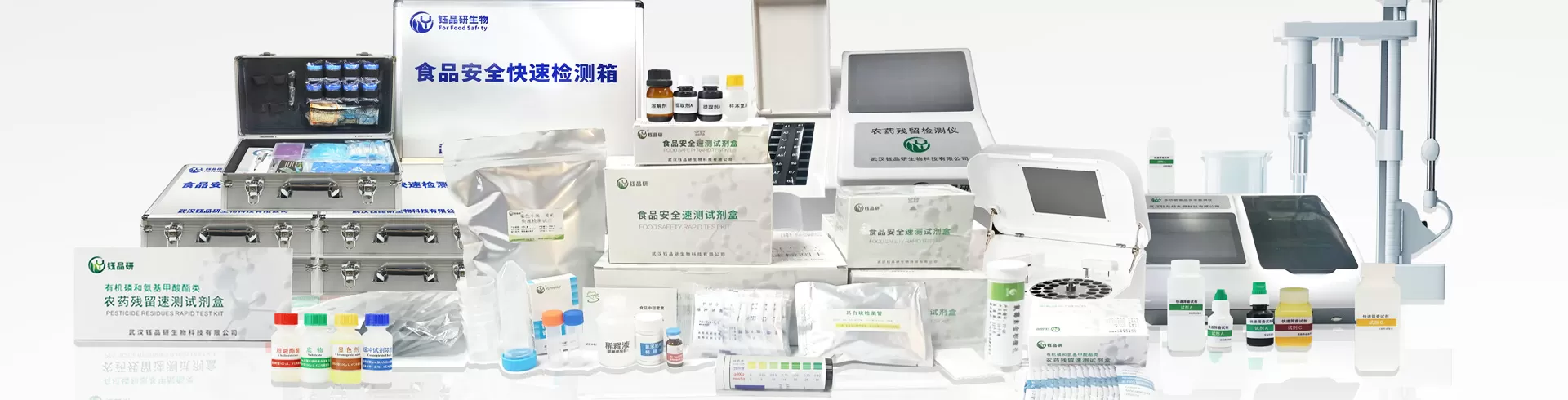
Triazophos is a commonly used organophosphorus insecticide in agricultural production, and is widely used to control a variety of pests on crops such as rice, vegetables, and fruits. However, if it is used improperly or the residue exceeds the standard, it will pose a threat to the quality and safety of agricultural products, and may also affect human health through the food chain. Therefore, solving the problem of excessive triazophos and clarifying the coping strategies of different crops have become the key links to ensure food safety. As an enterprise focusing on the research and development of food safety rapid detection reagents, Wuhan Yupinyan Bio has launched a series of detection products that can quickly and accurately screen triazophos residues in various agricultural products, providing a scientific basis for solving the problem of excessive standards.
the core idea of triazophos exceeding the standard
the solution of triazophos exceeding the standard needs to be advanced simultaneously from the three dimensions of "detection and positioning, source control, and exceeding the standard". First, through scientific testing to clarify the situation of exceeding the standard, which is the premise of solving the problem. Wuhan Yupinyan Bio's food safety rapid detection reagent is easy to operate, requiring only a small amount of samples to complete the detection in a short time, helping farmers, enterprises or regulatory authorities to quickly lock in batches or areas that exceed the standard and avoid blind investment; secondly, reduce the risk of triazophos use from the source, such as rationally controlling the amount of pesticides, strictly observing the safety interval, prioritizing biological control methods instead of chemical control, or rotating the use of pesticides with different mechanisms of action to reduce the risk of residue accumulation; finally, for agricultural products that have exceeded the standard, targeted treatment measures need to be taken according to crop characteristics, such as cleaning, processing and detoxification, etc., but the premise is to accurately judge the degree of exceeding the standard and ensure the treatment effect.
the targeted response plan for different crops to exceed the standard of triazophos
different crops have different growth characteristics and different eating methods, and the treatment strategies of triazophos residues also have differences, which need to be flexibly adjusted in combination with the test results.
Leafy vegetable crops (such as green vegetables, spinach, lettuce, etc.): This kind of crops have a short growth cycle, and some farmers may apply pesticides in a short period of time due to frequent insect pests, resulting in excessive triazophos residues. If excessive standards are detected, surface residues can be reduced by physical cleaning: soak in water for 10-15 minutes and then rinse, or add a small amount of edible salt (concentration 0.5% -1%) to enhance the cleaning effect; for directly imported leafy vegetables, it is recommended to blanch fully before cooking, and use high temperature to destroy The continuous use of triazophos should be avoided in the planting process, and it should be stopped more than 15 days before harvesting, or physical measures such as insect-proof nets and insect-trapping boards should be used to reduce insect pests and reduce the risk of residues from the source.
Melon and fruit crops (such as tomatoes, cucumbers, citrus, strawberries, etc.): The fruit epidermis is the main part of triazophos residues, and the epidermis of some crops is thin or cannot be peeled. For cucumbers and tomatoes with thicker epidermis, peeling can be used to reduce residues; for strawberries with sensitive epidermis, baking soda solution (concentration 0.5%) can be soaked for 5-8 minutes and then rinsed, or gently wiped with a special cleaning agent for fruits and vegetables; for citrus, the pulp can be When planting, attention should be paid to the selection of low-residue pesticides. If triazophos is used, the dosage should be strictly controlled and stopped 10-15 days before the fruit ripens to avoid residue exceeding the standard.
Food crops (such as rice, wheat, corn, etc.): Such crops may cause triazophos to exceed the standard due to soil residues or late top-dressing, and its residues are mainly concentrated in grains, bran and other parts. Rice can be processed and milled to remove some surface residues. It is recommended to choose milled rice for processing; wheat can be removed from the bran by fine grinding; corn needs to be fully cooked or baked to reduce toxicity by high temperature. Planting should avoid planting in plots that may have triazophos pollution, or reduce soil residue accumulation through crop rotation (such as rotation with non-sensitive crops).
the importance of detection and prevention of excessive triazophos
To solve the problem of excessive triazophos, detection is the foundation, and prevention is the key. Wuhan Yupinyan Bio's food safety rapid detection reagent can realize on-site detection of fields and market stalls, help farmers and buyers find problems in time, and avoid excessive agricultural products entering the market; at the same time, it is recommended to establish a quality traceability system for agricultural products, record the use of pesticides from planting to sales, and optimize the planting management plan based on the detection data. Only through the closed-loop management of "detection and early warning - source control - targeted treatment" can the risk of triazophos residues be effectively reduced and consumers' "safety on the tip of the tongue" can be guaranteed.