
 简体中文
简体中文 Shqip
Shqip لالعربية
 Polski
 رسی
رسی Deutsch
 Русский
 Français
 한국어
한국어 Nederlands
 Čeština
 Bahasa Melayu
 Português
 日本語
日本語 Svenska
 Kiswahili
 ไทย
ไทย Türkçe
 繁体中文
繁体中文 Українська
 Español
 Italiano
 हिन्दी
 Bahasa Indonesia
 Tiếng Việt
 Filipino
Triazophos, as a broad-spectrum organophosphorus insecticide, is widely used in pest control of various economic crops such as rice, cotton, and fruit trees. In the process of agricultural production, its use may lead to residue problems in agricultural products and affect food safety. Understanding the residue characteristics of triazophos and the residue differences of different preparations is of great significance to ensure the quality and safety of agricultural products.
The main types of triazophos pesticide residues include original drug residues, metabolite residues and degradation product residues. Original drug residues refer to unmetabolized triazophos parent compounds. Metabolite residues usually include their derivatives generated by oxidation, hydrolysis and other reactions in organisms, while degradation products are the products of their natural decomposition in the environment. There are differences in the performance of these residual forms in different crops and under different use conditions, which need to be identified by professional testing methods.
Residue Difference Analysis of Single Agent and Compound

Single agent triazophos usually refers to preparations containing only one active ingredient of triazophos, and its residual behavior is mainly affected by its own chemical properties, application methods and crop absorption characteristics. In actual testing, the residual amount of a single agent of triazophos is relatively stable, and the detection method is relatively mature. It can be accurately quantified by conventional pretreatment and instrumental analysis.
Compound agents such as methylcyanotriazophos and octanotriazophos are preparations composed of triazophos and other pesticides or auxiliaries. The residual differences of such compounding agents are mainly reflected in the following aspects: First, the interaction with other active ingredients may change the chemical stability of triazophos, causing its degradation rate to accelerate or slow down, thereby affecting the duration of the residue; Second, the additives added during the compounding process may increase the adhesion of triazophos on the surface of crops, or promote its conduction in plants, making the residue distribution more complex; Third, under different compounding proportions, the synergistic effect of triazophos and other ingredients may change the chromatographic response or enzyme inhibition effect during detection, increasing the difficulty of detection.
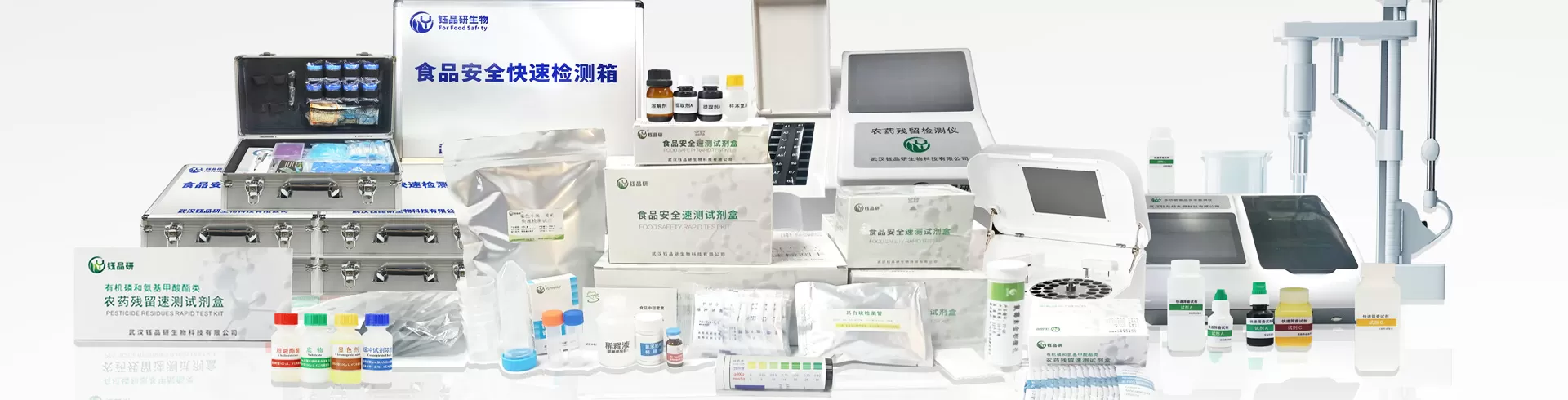
Wuhan Yupinyan Bio, as a professional food safety rapid detection reagent R & D and production enterprise, has developed a supporting rapid detection scheme for the residual characteristics of triazophos single agents and compounding agents. By specifically identifying triazophos and its metabolites, the detection reagent can effectively distinguish the residue differences of different preparation types, provide fast and accurate technical support for the quality and safety supervision of agricultural products, and help control food safety risks from the source.


