简体中文
简体中文 Shqip
Shqip لالعربية
 Polski
 رسی
رسی Deutsch
 Русский
 Français
 한국어
한국어 Nederlands
 Čeština
 Bahasa Melayu
 Português
 日本語
日本語 Svenska
 Kiswahili
 ไทย
ไทย Türkçe
 繁体中文
繁体中文 Українська
 Español
 Italiano
 हिन्दी
 Bahasa Indonesia
 Tiếng Việt
 Filipino
As organophosphorus pesticides commonly used in agricultural production, aziphos and triazophos are widely used in crop pest control such as cotton and fruit trees. However, excessive or unreasonable use can easily lead to excessive residues in agricultural products, and long-term intake may cause health risks such as nervous system damage and endocrine disorders. Therefore, establishing a rapid and accurate residue detection system and supporting a scientific disposal plan is of great significance to ensure food safety.
Detection requirements and technical characteristics of water amine and triazophos residues. In actual production, the two pesticides often coexist in agricultural products due to overlapping use cycles or mixed formula application, and a single detection method is difficult to comprehensively identify risks. Traditional detection technologies such as gas chromatography-mass spectrometry have high accuracy, but the equipment is complex and the operation is cumbersome, which is difficult to meet the needs of on-site rapid screening. A technical means that can synchronize detection and intuitive results is urgently needed to provide real-time data support for enterprise self-inspection and market supervision.
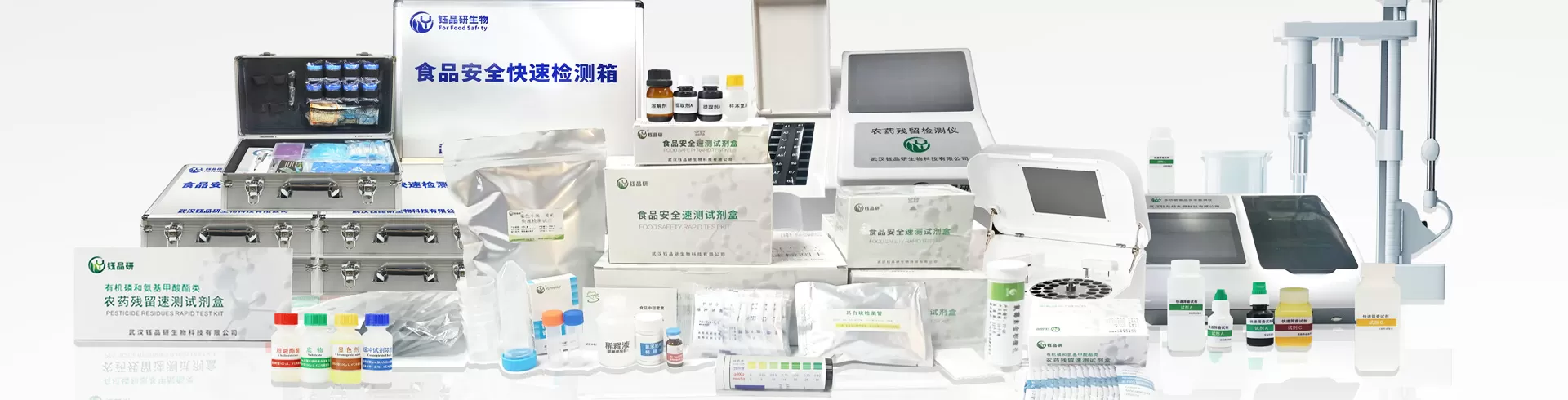
Wuhan Yupinyan Biological Rapid Detection Reagent helps synchronize detection. Based on the principle of colloidal gold immunochromatography technology, the food safety rapid detection reagent developed by our company can realize the simultaneous screening of water amine and triazophos residues. The reagent forms a color-developing strip on the test strip through the immune reaction between specific antibodies and the target, and the detection results are clear and intuitive. The operation process is simple. It only needs sample pretreatment (such as extraction and dilution) and then added dropwise to the test card. The results can be interpreted in 5-10 minutes. The detection limit can meet the requirements of the national standard limit, and it can be adapted to various matrix samples such as vegetables, fruits, and grains.
Scientific disposal plan: full chain management from detection to control. When the detection finds that the residue exceeds the standard, differentiated disposal measures should be taken in combination with the risk level. For low-risk batches, the residue can be reduced by physical methods such as sorting and cleaning; for medium and high-risk batches, they should be isolated and sealed immediately, traceability investigation should be started, and harmless destruction should be carried out if necessary. At the same time, enterprises need to establish a complete pesticide use ledger and testing records, and control risks from the source through regular self-inspection and supplier qualification review. Wuhan Yupinyan Bio's rapid detection reagents can not only provide a fast basis for disposal decisions, but also help enterprises optimize the testing process, reduce long-term testing costs, and improve food safety management efficiency.
With the increasing attention of consumers to food safety, the control of water amines and triazophos residues has become the core link of the food industry chain. Through the combination of accurate detection and scientific disposal, risk transmission can be effectively blocked and end point product safety can be guaranteed. Wuhan Yupinyan Bio will continue to deepen the research and development of rapid detection technology, provide more reliable detection tools for the industry, and help build a food safety protection net from farmland to table.