
 简体中文
简体中文 Shqip
Shqip لالعربية
 Polski
 رسی
رسی Deutsch
 Русский
 Français
 한국어
한국어 Nederlands
 Čeština
 Bahasa Melayu
 Português
 日本語
日本語 Svenska
 Kiswahili
 ไทย
ไทย Türkçe
 繁体中文
繁体中文 Українська
 Español
 Italiano
 हिन्दी
 Bahasa Indonesia
 Tiếng Việt
 Filipino
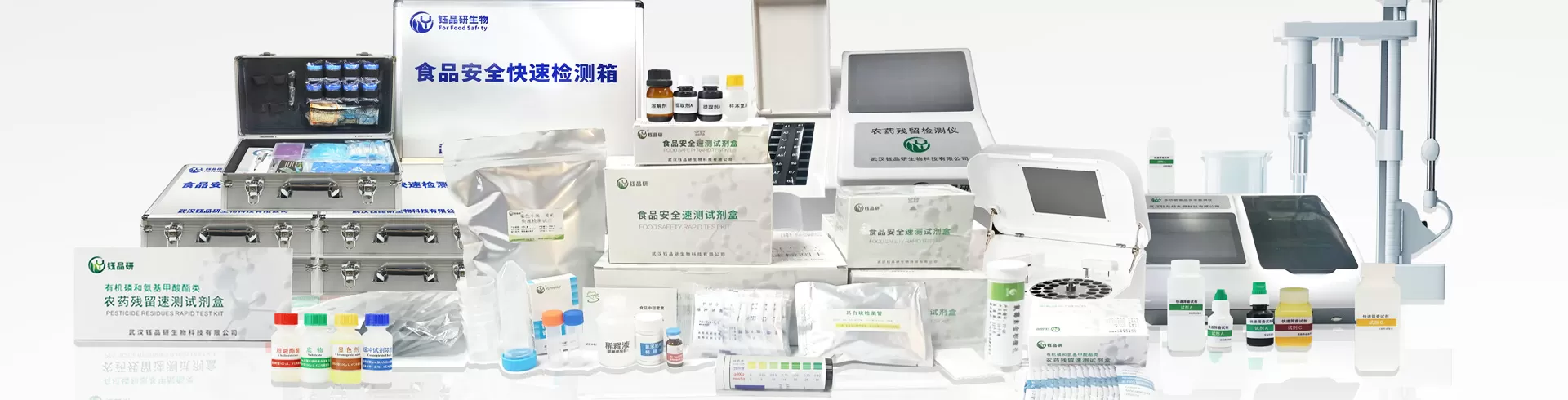
Avertriazophos, as a common compound insecticide, is widely used in agricultural production to control pests of various crops due to the mechanism of action of both avermectin and triazophos. Such pesticides achieve insecticidal effect by inhibiting the nervous system function of pests, especially in the planting process of fruits, vegetables, grains and other cash crops, which can effectively improve yield and quality. However, with the increase in the frequency of use, its residues in agricultural products have gradually attracted attention, and the establishment of residue characteristics and accurate detection methods has become a key link in ensuring food safety.
Avertriazophos: Application and Residue Background of Compound Insecticides
Avertriazophos is prepared by compounding abamectin and triazophos in a specific ratio, among which abamectin has the effect of contact and gastric toxicity, and has a significant effect on lepidoptera pests; triazophos is based on organophosphorus insecticides, which have both internal absorption and fumigation. The combination of the two can expand the insecticidal spectrum and prolong the effective period. However, due to the compounding characteristics, its residual behavior in the environment is more complicated, and may accumulate in soil, water and agricultural products. If the specified limit is exceeded, it will cause latent risk to human health and ecological environment. Relevant institutions at home and abroad have formulated strict maximum residue limit (MRL) standards for avertriazophos. For example, our country GB 2763-2022 "National Food Safety Standard, Maximum Residue Limits of Pesticides in Food" clarifies its residue limits in a variety of crops, which requires the industry to establish an efficient detection system to ensure compliance.
Residue Characteristics of avertriazophos: Multi-dimensional residue law analysis
The residue characteristics of avertriazophos are affected by many factors. In soil, its degradation rate is closely related to soil moisture, organic matter content and microbial activity. Generally, the half-life is about 10-30 days, and it degrades slightly faster in sandy soil than in clay soil. In crops, the amount of residues varies greatly due to the application period, the number of times of application and the variety of crops. For example, leafy crops have a relatively high risk of residues due to direct contact with pesticides, while tuber crops may accumulate over time due to long growth cycle and root absorption. In addition, the residue distribution of avertriazophos in different substrates is also regular. For example, the amount of residues in the fruit epidermis is usually higher than that in the pulp, which is related to the attachment mode and penetration ability of pesticides. Understanding these characteristics can provide data support for formulating targeted detection strategies.
Avertriazophos detection methods: the technical path of traditional and rapid detection
At present, the detection methods of avertriazophos are mainly divided into traditional instrument analysis and rapid detection. The traditional methods are mainly gas chromatography-mass spectrometry (GC-MS/MS) and liquid chromatography-tandem mass spectrometry (LC-MS/MS). Qualitative and quantitative analysis is carried out after complex pretreatment (such as extraction, purification, and concentration), which has the advantages of high sensitivity and accuracy. However, the equipment cost is high, the operation process is cumbersome, and the detection cycle usually takes several hours to a day. Rapid detection methods are more suitable for on-site screening, such as colloidal gold immunochromatography test strips, enzyme-linked immunosorbent assay (ELISA) kits, etc., which achieve rapid detection through the principle of specific binding of antigens and antibodies, and can produce results within a few minutes to dozens of minutes.
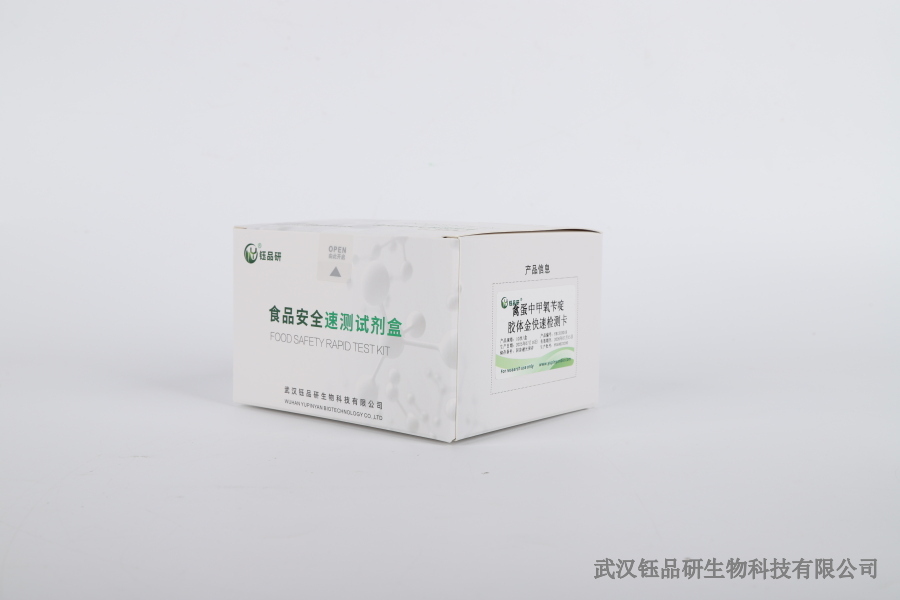
Wuhan Yupinyan Bio, as an enterprise focusing on the research and development of food safety rapid detection reagents, relies on its own technical advantages to develop a rapid detection product for avertriazophos. The reagent adopts the principle of competitive inhibition immunochromatography, and only needs simple sample pretreatment (such as direct dropwise addition of extract) to realize qualitative screening of avertriazophos residues in agricultural products. The detection limit is as low as 0.1μg/kg, which meets the regulatory requirements of national residue standards. Its ease and speed of operation can effectively support field sampling, market circulation sampling and enterprise self-inspection scenarios, help regulatory authorities and enterprises to quickly identify risks, and provide powerful tools for the control of the whole chain of food safety.
research on the residual characteristics and detection methods of avertriazophos is an important topic in the field of food safety. With the advancement of technology, the combination of traditional and rapid detection methods will further improve the detection efficiency and accuracy. Wuhan Yupinyan Bio will continue to deepen the rapid detection technology, contribute more to the protection of food safety lines, and help build a quality and safety barrier from farmland to dining table.


