
 简体中文
简体中文 Shqip
Shqip لالعربية
 Polski
 رسی
رسی Deutsch
 Русский
 Français
 한국어
한국어 Nederlands
 Čeština
 Bahasa Melayu
 Português
 日本語
日本語 Svenska
 Kiswahili
 ไทย
ไทย Türkçe
 繁体中文
繁体中文 Українська
 Español
 Italiano
 हिन्दी
 Bahasa Indonesia
 Tiếng Việt
 Filipino
Carrots are a daily vegetable loved by the public. In recent years, discussions on their pesticide residues have occasionally appeared in the newspapers. Among them, the statement of "excessive phosphamide" has attracted the attention of many consumers. As an organophosphorus insecticide, phosphamide is often used to control underground pests in crops. Will its residual risk appear in carrots? What about the actual test data of carrots circulating in the market? We can analyze it from the perspective of scientific testing and combined with the industry situation.
What is phosphamide? Why should we pay attention to its residues in carrots?
phosphamide is a highly effective internal absorption insecticide. It is mainly used to control underground pests of crops through soil application, and can also be used for seed treatment. It can effectively kill aphids, thrips and other pests, but due to its high toxicity and long residual period, long-term intake may cause adverse effects on the human nervous system, liver, etc. Carrots, as root crops, are easy to absorb residual substances in the soil during the growth process. Therefore, the risk of phosphorus formate residue needs to be paid attention to, and testing is the key means to judge whether it exceeds the standard.
Detection data of carrots circulating in the market: How is the situation of exceeding the standard?
In recent years, market regulatory authorities and third-party testing agencies in various places have regularly conducted random inspections of carrots in circulation. According to public information, the results of sampling in most regions show that the phosphorus formate residue of carrots normally planted and standardized management meets the national standards, and no large-area exceeding the standard has been found. However, there are also individual sampling cases where some growers do not strictly abide by the pesticide use specifications, or the accumulation of soil residues, resulting in a small number of samples with excessive phthalate. Such situations usually occur in small-scale and non-large-scale planting areas. Overall, the risk of excessive phthalate in carrots circulating in the market is within a controllable range, and scientific testing is an important guarantee for timely detection of problems.
How to effectively detect phthalate residues in carrots?
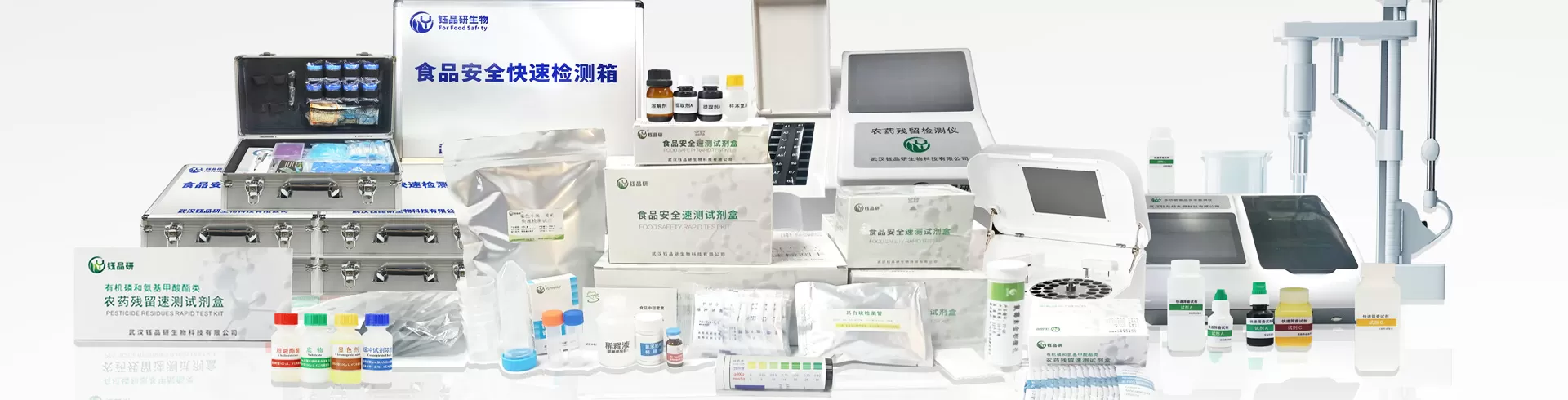
Accurate detection of phthalate residues requires professional testing equipment and reagents. As an enterprise focusing on the field of food safety rapid detection, Wuhan Yupinyan Bio produces food safety rapid detection reagents that can efficiently and accurately screen phthalate residues in agricultural products such as carrots. This kind of reagent is easy to operate, does not require complex equipment, and can issue test results in a short time, providing strong support for market supervision, enterprise self-inspection and consumer rights protection. Through scientific and standardized testing methods, the risk of substandard products entering the market can be effectively reduced, ensuring public dietary safety.
As consumers pay more attention to food safety, the detection of pesticide residues in vegetables such as carrots has received increasing attention. Whether the residues of methyl mixed phosphorus exceed the standard should be based on authoritative test data, not a single rumor. Wuhan Yupinyan Bio is committed to helping all links control the quality of carrots through reliable and rapid testing reagents, so that consumers can eat with confidence and peace of mind.


