
 简体中文
简体中文 Shqip
Shqip لالعربية
 Polski
 رسی
رسی Deutsch
 Русский
 Français
 한국어
한국어 Nederlands
 Čeština
 Bahasa Melayu
 Português
 日本語
日本語 Svenska
 Kiswahili
 ไทย
ไทย Türkçe
 繁体中文
繁体中文 Українська
 Español
 Italiano
 हिन्दी
 Bahasa Indonesia
 Tiếng Việt
 Filipino
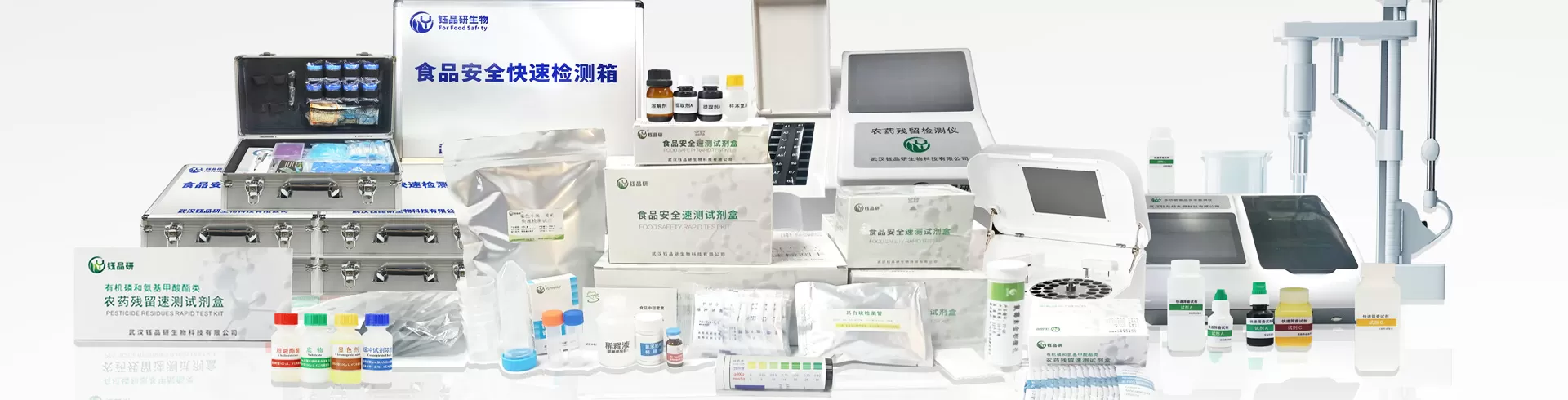
Triazophos is a broad-spectrum organophosphorus insecticide, which is widely used in agricultural production to control pests in litchi and other fruits. As consumers pay more attention to food safety, the detection of pesticide residues in fruits has become an important link to ensure food safety, among which the detection of triazophos residues in litchi pulp is particularly critical. Due to the special structure and high water content of litchi pulp, many details need to be paid attention to during the detection process. Wuhan Yupinyan Bio, as a professional provider of food safety rapid detection reagents, shares the core precautions for fruit pulp residue detection here to help efficient and accurate detection work.
Sample pretreatment: to ensure that the detection substrate is pure and uniform
litchi pulp has a soft texture and high moisture content, and sample pretreatment is the basis for accurate detection. First of all, it is necessary to pay attention to the storage conditions after the sample is collected. It is recommended to store it at a low temperature (about 4 ° C) for a short time, and complete the detection as soon as possible to avoid changes in the structure of pesticide residues or microbial reproduction affecting the results due to temperature increase. During the pretreatment process, the homogenization step should ensure that the pulp is evenly broken to avoid uneven distribution of local residues; during centrifugation, the speed and time should be controlled to prevent excessive impurities in the supernatant from interfering with the detection; if extraction is required, the extract should be added in strict accordance with the proportion of the reagent instructions, and fully shaken or sonicated to ensure that the target substance is fully dissolved. In addition, for possible mixed fruit pits, peels, etc., it should be removed before homogenization to avoid interference substances in non-pulp
detection reagent selection: suitable residue characteristics and detection requirements
The detection of triazophos residues in fruits is usually carried out by immunochromatography, enzyme inhibition method or liquid chromatography, among which the rapid detection method is more suitable for on-site or grassroots detection scenarios. The food safety rapid detection reagent of Wuhan Yupinyan Bio is developed for this type of organophosphorus pesticide residues. It has the characteristics of specific identification of targets, high sensitivity (up to μg/kg level detection limit) and easy operation. It can complete the detection in a short time to avoid the problem of residual degradation caused by long-term detection. When selecting, it is necessary to pay attention to whether the scope of application of the reagent is clearly marked for the litchi pulp matrix to ensure compatibility with the test sample. At the same time, the stability and batch consistency of the reagent also need to be considered to ensure the reliability of the detection results.
operating environment and instrument calibration: reduce external interference factors
During the detection process, ambient temperature, humidity and reagent storage conditions will affect the accuracy of the results. For example, some rapid test strips need to be operated in a constant temperature environment of 25 ° C to 2 ° C. Too high or too low temperature may lead to abnormal reaction speed or reagent failure. For instruments, if instrument-assisted testing is used (such as spectrophotometer, colloidal gold reader), the instrument parameters need to be regularly calibrated to ensure that the light source intensity and colorimetric dish cleanliness meet the requirements. In addition, inspectors need to wear clean lab clothes and gloves, and the operating table needs to be disinfected to avoid cross-contamination; pipettes, centrifugal tubes and other consumables should ensure that there is no residual pollution and reduce external interference from the source.
result interpretation and data recording: Strictly control the whole process of testing
The interpretation of test results should be carried out in strict accordance with the time node of the reagent manual to avoid false positives/false negatives due to late or premature observation. For example, colloidal gold test strips need to be observed within 15-20 minutes, and non-specific color rendering may occur beyond this time; if using instrumentation, the standard curve should be compared with the blank control to ensure that the data is within a reasonable range. For positive results, it is recommended to use more accurate methods (such as gas chromatography-mass spectrometry) for review to rule out reagent cross-reactions or operational errors. At the same time, it is necessary to completely record the test date, sample number, reagent batch number, instrument parameters and other information to facilitate follow-up traceability and quality control. Wuhan Yupinyan's detection reagent supporting instructions also provide detailed result interpretation guidance to help users complete the test efficiently.
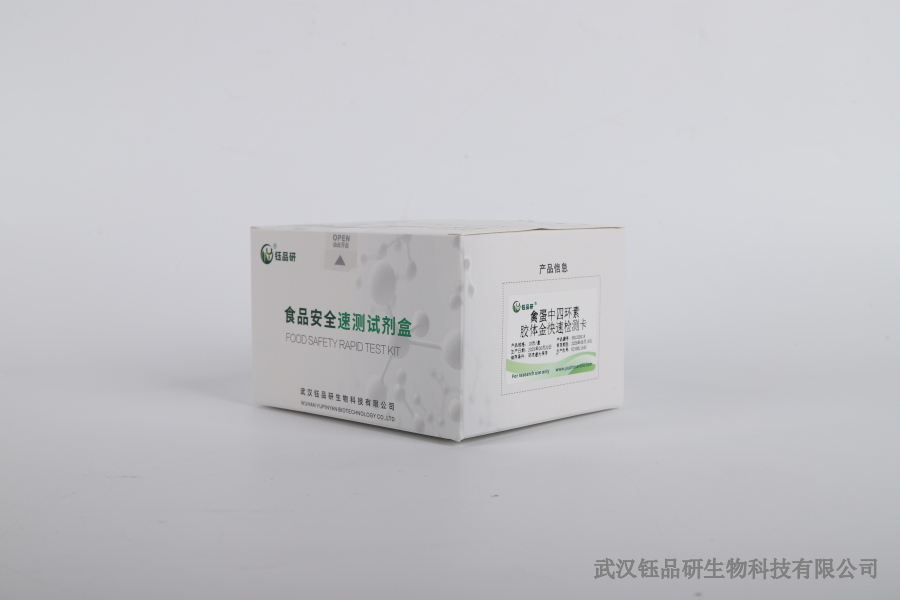
The detection of pesticide residues in fruit pulp is an important line of defense to protect food safety. The detection of triazophos residues in lychee and other fruits needs to be strictly controlled from sample pretreatment, reagent selection to operation specifications. With years of technical accumulation in the field of food safety testing, Wuhan Yupinyan Bio has always been committed to providing reliable and convenient rapid detection solutions to help relevant units efficiently screen pesticide residues and escort the safety of consumers on the tip of their tongues


