
 简体中文
简体中文 Shqip
Shqip لالعربية
 Polski
 رسی
رسی Deutsch
 Русский
 Français
 한국어
한국어 Nederlands
 Čeština
 Bahasa Melayu
 Português
 日本語
日本語 Svenska
 Kiswahili
 ไทย
ไทย Türkçe
 繁体中文
繁体中文 Українська
 Español
 Italiano
 हिन्दी
 Bahasa Indonesia
 Tiếng Việt
 Filipino
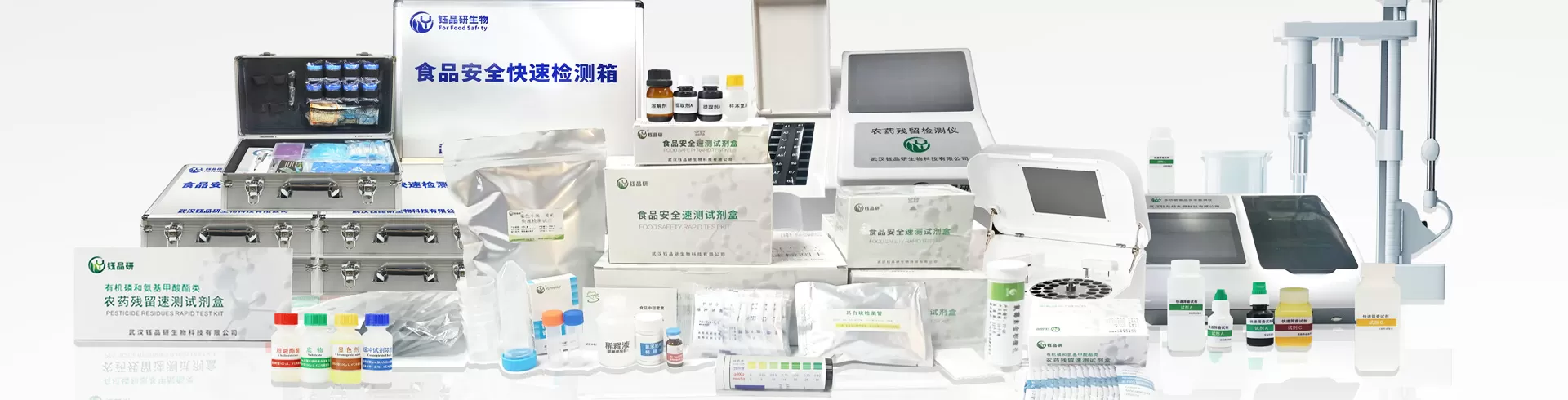
Triazophos, as a common organophosphorus pesticide, is widely used in agricultural production, and its residue detection is directly related to the quality and safety of agricultural products. In the process of pesticide residue determination, the collection rate is the core indicator to measure the accuracy of the detection method. Especially for low-residue pesticides such as triazophos, the stable control of the collection rate directly affects the reliability of the detection results. As an enterprise focusing on the research and development and production of rapid food safety detection reagents, Wuhan Yupinyan Bio has always been committed to optimizing the detection technology to help the precise development of pesticide residue detection work.
the relationship between the definition of collection rate and the detection accuracy
collection rate refers to the proportion of target substances (such as triazophos) that are effectively extracted and detected during sample pretreatment and detection, usually expressed as a percentage. Ideally, the closer the collection rate is to 100%, the smaller the loss or interference of the target substance during the detection process, the more accurate the result. If the collection rate fluctuates greatly, the actual residue may be misjudged as exceeding or not exceeding the standard, which directly affects the subsequent quality judgment, threat and risk assessment and regulatory decisions. Therefore, controlling the triazophos collection rate within a reasonable range is a key prerequisite for improving the accuracy of pesticide residue detection.
the key factors affecting the collection rate of triazophos
The collection rate of triazophos is affected by multiple factors: First, the sample pretreatment process, such as the selection of extraction solvent, oscillation time, centrifugal efficiency, etc., if triazophos is adsorbed on the container wall during the extraction process or lost due to oxidative degradation, it will lead to a low collection rate; if the impurities are not sufficiently removed during the purification step, it may compete with the detection reagent to bind the target, resulting in a fluctuation in the collection rate. Second, the detection reagent performance, if the specificity of the reagent is insufficient, it may cross-react with the analogues in the matrix, affecting the identification efficiency of the target; if the reagent stability is poor, the active ingredient decays over time, which will also lead to unstable collection rate. Third, the instrument operation and environmental conditions, such as the temperature control of the detection instrument, the reaction time setting, the stability of the light source and other parameter deviations, or the experimental environment humidity, temperature fluctuations, may interfere with the detection reaction, and then affect the collection rate.
improve the collection rate control practice points
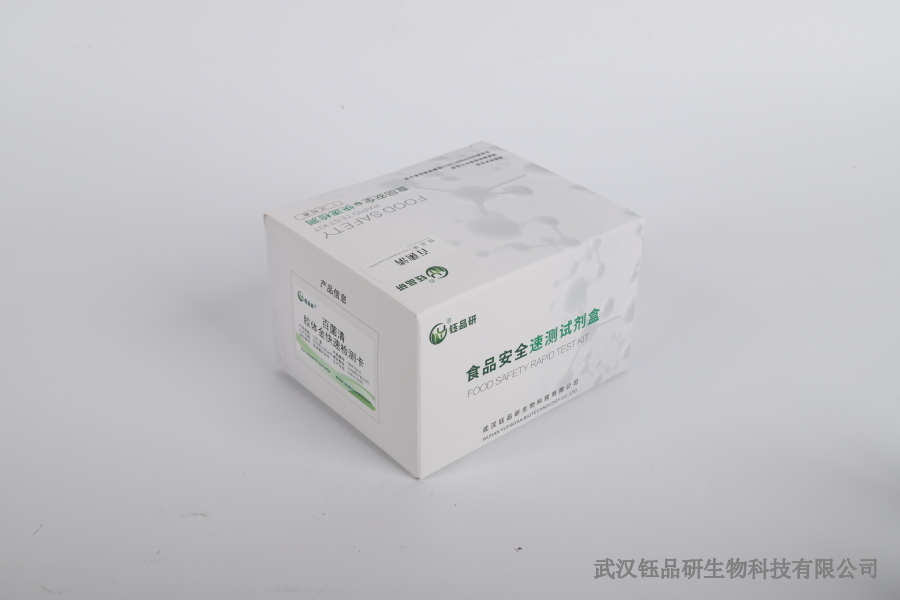
For the above factors, the whole process needs to optimize the collection rate control: in the sample pre-processing stage, standardized methods should be used, such as by optimizing the oscillation frequency, extraction temperature or solvent ratio, to ensure the full release of triazophos; purification steps Strictly remove pigments, oils and other interfering substances to reduce the adsorption of detection reagents competition. In the selection of detection reagents, the triazophos rapid detection reagent of Wuhan Yupinyan Bio improves the specific identification ability of the target substance, reduces the matrix interference, and provides a basic guarantee for the stable collection rate by optimizing the formula design. The operation process needs to strictly follow the detection process specifications to ensure the accurate setting of instrument parameters, the accurate control of reaction time, and the regular calibration and maintenance of equipment. At the same time, establish a quality monitoring system to verify the stability of the collection rate through blank control and parallel experiments, and timely troubleshoot the operation deviation or reagent failure problems.
technical support and application value of Wuhan Yupinyan Bio
Wuhan Yupinyan Bio is deeply involved in the field of food safety rapid detection. The triazophos rapid detection reagent developed by it has unique advantages: First, the reagent formula has been strictly screened to accurately capture triazophos molecules, minimize non-specific reactions, and reduce the risk of collection rate fluctuations; Second, the product has excellent stability, and can maintain consistent detection performance under different batches and storage conditions, reducing the result deviation caused by reagent differences; Third, the supporting detection process is simple and efficient, simplifying the complex pretreatment steps in traditional testing, shortening the detection time, and further improving the controllability of the collection rate through standardized operations. These characteristics enable the reagent to effectively help users stabilize the collection rate of triazophos in actual detection scenarios, providing reliable support for the accuracy of pesticide residue detection.
In summary, the stable control of triazophos collection rate is the core link to improve the accuracy of pesticide residue detection. By optimizing the pretreatment process, selecting high-specific reagents, standardizing operation and environmental management, combined with the technical support of Wuhan Yupinyan Bio and other professional enterprises, it can effectively reduce the fluctuation of collection rate, ensure that the test results truly reflect the quality and safety of agricultural products, and build a strong technical defense line for food safety supervision.


