简体中文
简体中文 Shqip
Shqip لالعربية
 Polski
 رسی
رسی Deutsch
 Русский
 Français
 한국어
한국어 Nederlands
 Čeština
 Bahasa Melayu
 Português
 日本語
日本語 Svenska
 Kiswahili
 ไทย
ไทย Türkçe
 繁体中文
繁体中文 Українська
 Español
 Italiano
 हिन्दी
 Bahasa Indonesia
 Tiếng Việt
 Filipino
Citrus is widely cultivated as a cash crop in our country, and its fruit quality and food safety are directly related to consumer health. Triazophos, as an organophosphorus insecticide, is often used to control citrus red spiders, aphids and other pests, but excessive or illegal use may lead to excessive residues in the fruit. In the inspection of citrus triazophos exceeding the standard, building a scientific detection process to control the whole process from the source of the orchard to the market circulation is the key to ensuring food safety.
Orchard sampling inspection focuses on
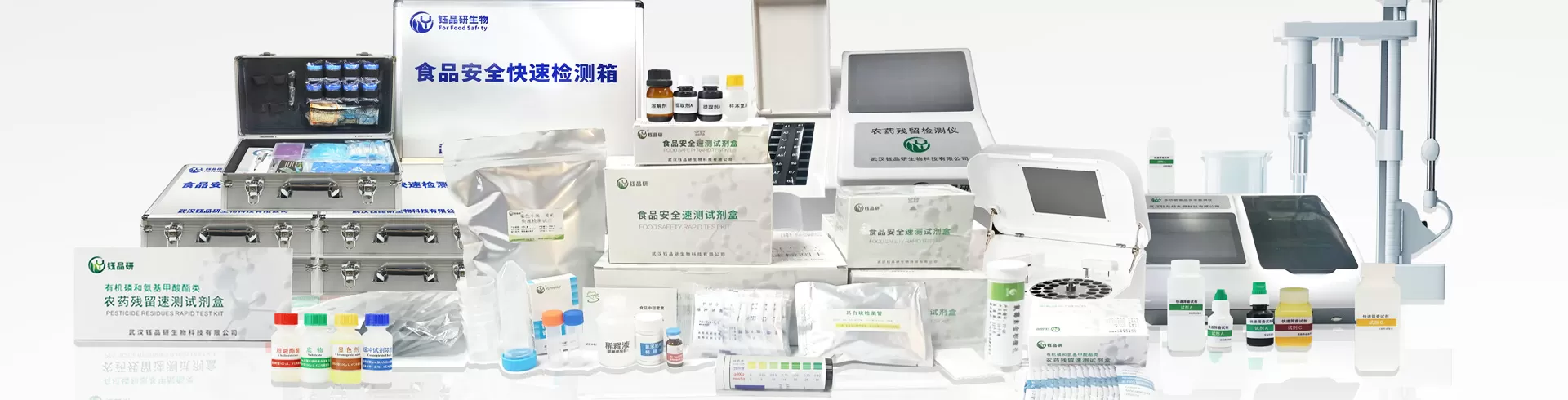
Orchard is the source of citrus planting, and the sampling inspection needs to cover the whole chain of planting, focusing on pesticide use compliance and residue risk. When sampling, the principle of "random + representative" should be followed. Fruits of different tree ages, fruit hanging volume, and growth stages should be selected. At the same time, environmental samples such as orchard soil and irrigation water should be taken into account to comprehensively investigate the hidden dangers of triazophos residues. In the detection process, the food safety rapid detection reagent developed by Wuhan Yupinyan Bio can play an efficient role: through simple sample pretreatment (such as extraction and filtration), the treated samples and reagents can be mixed and reacted, and the existence and content of triazophos can be preliminarily determined within 15-30 minutes. This on-site detection mode does not require professional laboratory equipment, and can help growers and regulators to quickly identify high-risk areas, adjust pesticide use plans in a timely manner, and reduce the risk of exceeding the standard from the source
market access testing focus
market access testing focuses on the circulation link to ensure that unqualified citrus cannot enter the consumer market. Buyers, wholesale markets, supermarkets and other links need to conduct random inspections of batches of citrus, focusing on whether the triazophos residues in the fruit meet national standards. Wuhan Yupinyan Bio's rapid detection reagent can be used as a primary screening tool in this link: randomly select 5% -10% of each batch of citrus samples to quickly complete the pesticide residue screening; if the initial screening is positive, immediately start laboratory confirmation testing to avoid risk expansion. At the same time, the low-cost and high-efficiency characteristics of rapid detection can significantly reduce market supervision costs, improve sampling inspection coverage, ensure "unqualified products do not enter the market, and products that have entered the market can be traced back", and build a full chain of safety defense from planting to sales.
Whether it is the preventive detection of orchards or the liquidity detection of the market, the inspection of citrus triazophos exceeding the standard needs to be supported by accurate and efficient detection tools. Wuhan Yupinyan Bio is deeply engaged in the field of food safety rapid detection. With technological innovation, it continuously optimizes the detection plan to provide a reliable guarantee for the protection of consumers' "tongue safety" and help the healthy and sustainable development of the citrus industry.