简体中文
简体中文 Shqip
Shqip لالعربية
 Polski
 رسی
رسی Deutsch
 Русский
 Français
 한국어
한국어 Nederlands
 Čeština
 Bahasa Melayu
 Português
 日本語
日本語 Svenska
 Kiswahili
 ไทย
ไทย Türkçe
 繁体中文
繁体中文 Українська
 Español
 Italiano
 हिन्दी
 Bahasa Indonesia
 Tiếng Việt
 Filipino
Rice is one of the main food crops in our country, and its quality and safety are directly related to subsequent processing and consumer health. Triazophos, as a commonly used organophosphorus insecticide, can easily lead to residues exceeding the standard if used improperly or excessively during the planting process of rice. As a key node in source control, the acquisition process is crucial to the rapid screening and accurate determination of rice triazophos residues, which can effectively avoid unqualified rice flowing into the processing process and ensure food safety from the source.
the necessity of rapid screening in the acquisition process
In the rice acquisition process, rapid screening of triazophos exceeding the standard has multiple necessities. On the one hand, the acquisition volume is large and the batch is large, and the traditional laboratory testing takes a long time, which is difficult to meet the needs of rapid decision-making. The rapid screening technology can give preliminary results within a few minutes, which is convenient for the acquirer to adjust the acquisition strategy in time. On the other hand, if the excess rice is not found in time at the time of acquisition, the residual triazophos in subsequent processing may enter the food chain with rice processing, increasing consumer health risks. Therefore, the acquisition process needs to rely on efficient detection methods to realize the rapid identification and preliminary evaluation of triazophos residues.
the selection and implementation of rapid screening methods
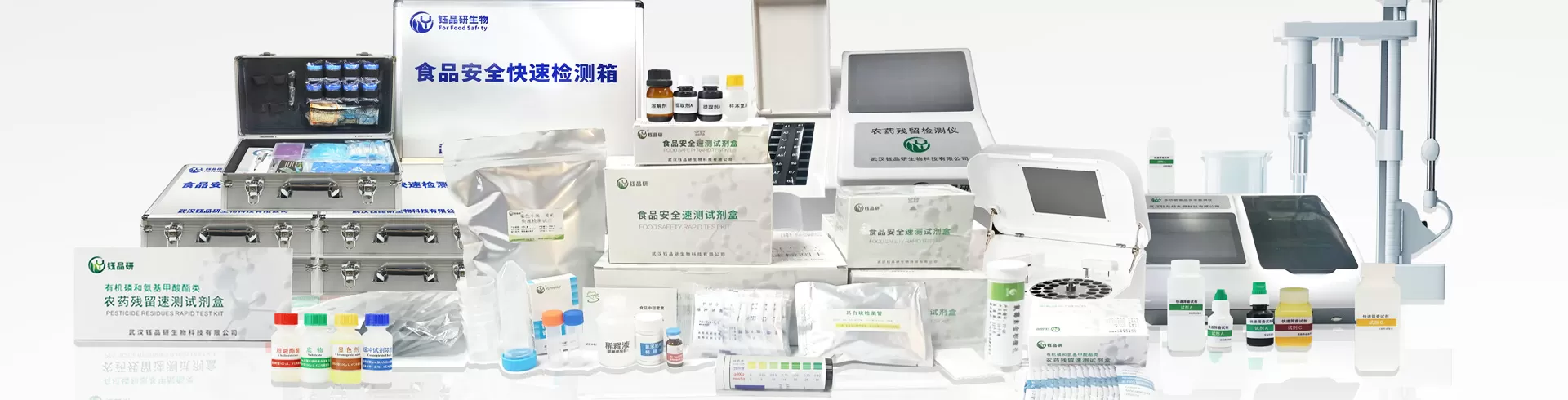
to realize the rapid screening of rice triazophos residues, it is necessary to choose a method that is easy to operate, has strong specificity and has fast detection speed. The food safety rapid detection reagent produced by Wuhan Yupinyan Bio is based on the principle of immunochromatography or enzyme inhibition. It is designed for triazophos residues and can be quickly detected at the acquisition site. In the specific operation, only a small amount of rice samples (such as whole grains or after grinding) need to be taken, pretreated according to the reagent instructions (such as extraction, centrifugation, etc.), and the sample liquid is added to the detection card or reaction tube. By observing the color change or instrument reading, the preliminary judgment result of whether it is positive can be obtained within 10-30 minutes. The method does not require complicated equipment, and the testers can operate it after simple training. It is suitable for the on-site rapid screening needs of the acquisition process.
the standard and process of accurate judgment
The rapid screening result is only a preliminary judgment, and the accurate judgment needs to be combined with standard methods and laboratory verification When the rapid screening result is positive, the review process needs to be initiated immediately: first, laboratory confirmation is carried out by standard gas chromatography-mass spectrometry (GC-MS) or high-performance liquid chromatography (HPLC) methods to ensure the accuracy of the results; secondly, refer to the national standard "GB 2763-2022 National Food Safety Standard, Maximum Residue Limits of Pesticides in Food" for the limit of triazophos in rice (for example, the residue limit of triazophos in rice is 0.05 mg/kg), and compare the test results with the standard value to determine whether it exceeds the standard. At the same time, the negative samples also need to be sampled regularly for inspection to avoid the risk of missed inspection, and form a complete judgment process of "rapid screening-positive review-standard verification" to ensure that the control of triazophos residues in the acquisition process is implemented.
To sum up, the acquisition process of rice triazophos exceeding the standard inspection needs to control the quality from the source through a combination of rapid screening and accurate judgment. The rapid detection reagent developed by Wuhan Yupinyan Bio, with its efficiency and accuracy, has become a reliable tool for rapid screening on the acquisition site, helping enterprises to achieve early identification and risk avoidance of triazophos residues. On the road to ensuring food safety and consumer health, strict inspection in the acquisition process is not only a responsibility, but also an inevitable requirement for the development of the industry.