
 简体中文
简体中文 Shqip
Shqip لالعربية
 Polski
 رسی
رسی Deutsch
 Русский
 Français
 한국어
한국어 Nederlands
 Čeština
 Bahasa Melayu
 Português
 日本語
日本語 Svenska
 Kiswahili
 ไทย
ไทย Türkçe
 繁体中文
繁体中文 Українська
 Español
 Italiano
 हिन्दी
 Bahasa Indonesia
 Tiếng Việt
 Filipino
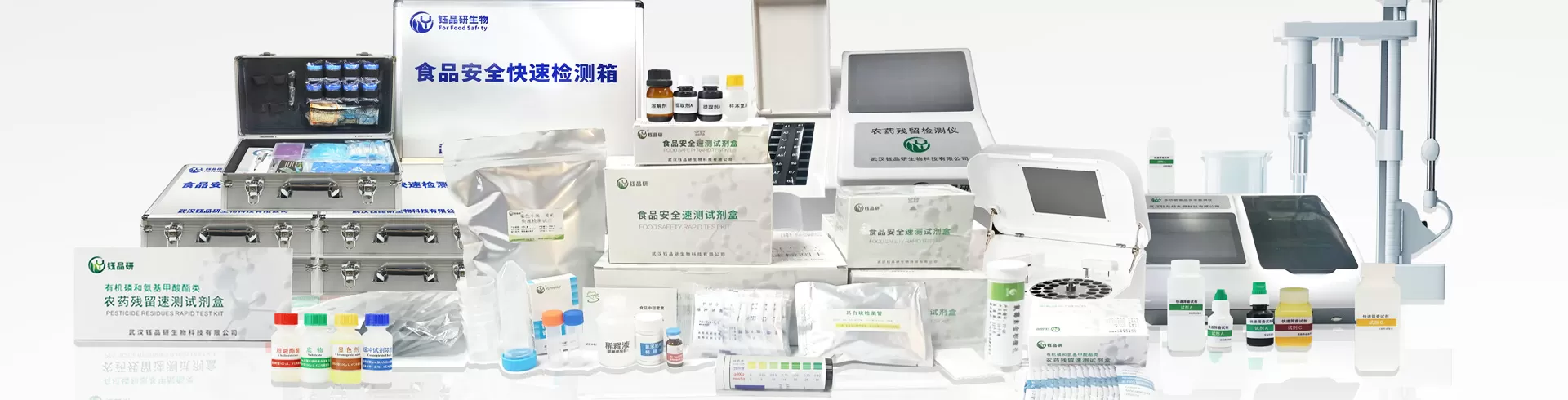
With the improvement of food safety awareness, supermarkets are an important link in food circulation, and purchase testing has become the key to ensuring consumer dietary safety. Traditional testing methods often take a long time and are difficult to meet the needs of supermarket filters quick. The colloidal gold card has become a practical tool for daily purchase testing in supermarkets due to its simple operation, fast detection and intuitive results. Take the colloidal gold card developed by Wuhan Yupinyan Bio as an example. Through the principle of specific binding of antigens and antibodies, it can complete the preliminary screening of common food contaminants (such as pesticide residues, veterinary drug residues, illegal additives, etc.) in a short time, helping supermarkets quickly identify non-compliant products and avoid entering the market.
advantages of colloidal gold card detection technology
Compared with the complex detection process in the laboratory, colloidal gold card detection has significant advantages. The first is that the operation threshold is low, and professional equipment and complex operation skills are not required. Supermarket purchasing personnel or quality inspection personnel can get started after simple training. Secondly, the detection speed is fast, usually results can be produced within 10-15 minutes, which can guide the purchase decision in real time and avoid the backlog of substandard products due to detection delays. In addition, the colloidal gold card detection cost is low, and the cost of single detection consumables is much lower than that of laboratory equipment testing, which is suitable for large-scale and high-frequency daily screening. The colloidal gold card developed by Wuhan Yupinyan Bio strictly follows industry standards, with strong reagent stability and high repetition of test results, which can effectively reduce the risk of misjudgment.
colloidal gold card rapid verification operation steps
supermarket purchase detection operation, the use of colloidal gold card should follow the standard process. The first is sample pretreatment, liquid samples (such as edible oil, beverages) can be directly taken to take an appropriate amount of samples; solid samples (such as vegetables, meat) need to be ground and added to the extract (according to the proportion of the instructions), shaken for 1-2 minutes and then left to stand for 5 minutes, take the supernatant for later use. If the sample contains more impurities, the residue can be filtered to remove. Secondly, the sample addition operation, tear open the colloidal gold card packaging, and slowly drop the processed sample supernatant into the sample addition hole to ensure that the liquid level does not overflow, until the liquid completely penetrates into the reaction zone. Then wait 10-15 minutes to observe the test card results.
test result judgment and follow-up processing
result judgment must be completed within the specified time. If the quality control area (C line) and the detection area (T line) of the test card are clear in color, it is determined to be negative, that is, sample compliance; if only the C line is colored and the T line is not colored, it is determined to be positive, indicating that there is a potential problem with the sample. If the C line does not develop color, it means that the reagent is invalid and needs to be re-tested. Positive samples should be isolated immediately, suspended for sale, and reported to the management department or contact the supplier for processing according to relevant regulations. At the same time, keep samples and test records for easy traceability.
Precautions and Suggestions for Use
Pay attention when using colloidal gold cards: make sure that the reagent is at room temperature (2-30 ° C) before testing, avoid direct sunlight or high temperature environment; strictly follow the instructions, and the amount of sample added and the standing time need to be accurately controlled; the reagent needs to be sealed and stored after testing, and the remaining reagents cannot be reused; it is recommended to regularly check the valid period of the reagent, and the expired or deteriorated reagents need to be replaced in time. Wuhan Yupinyan Biological reminds that the colloidal gold card test is a preliminary screening method. If the result is positive, it still needs to be sent to the laboratory for further confirmation to ensure that the test results are foolproof.

In short, colloidal gold cards have become the right assistant for supermarket purchase testing due to their fast, convenient and economical Through standardized operation and strict control, it can not only effectively reduce the risk of food safety, but also improve the efficiency of supermarket operations, and build a strong line of defense for consumer food safety.


