
 简体中文
简体中文 Shqip
Shqip لالعربية
 Polski
 رسی
رسی Deutsch
 Русский
 Français
 한국어
한국어 Nederlands
 Čeština
 Bahasa Melayu
 Português
 日本語
日本語 Svenska
 Kiswahili
 ไทย
ไทย Türkçe
 繁体中文
繁体中文 Українська
 Español
 Italiano
 हिन्दी
 Bahasa Indonesia
 Tiếng Việt
 Filipino
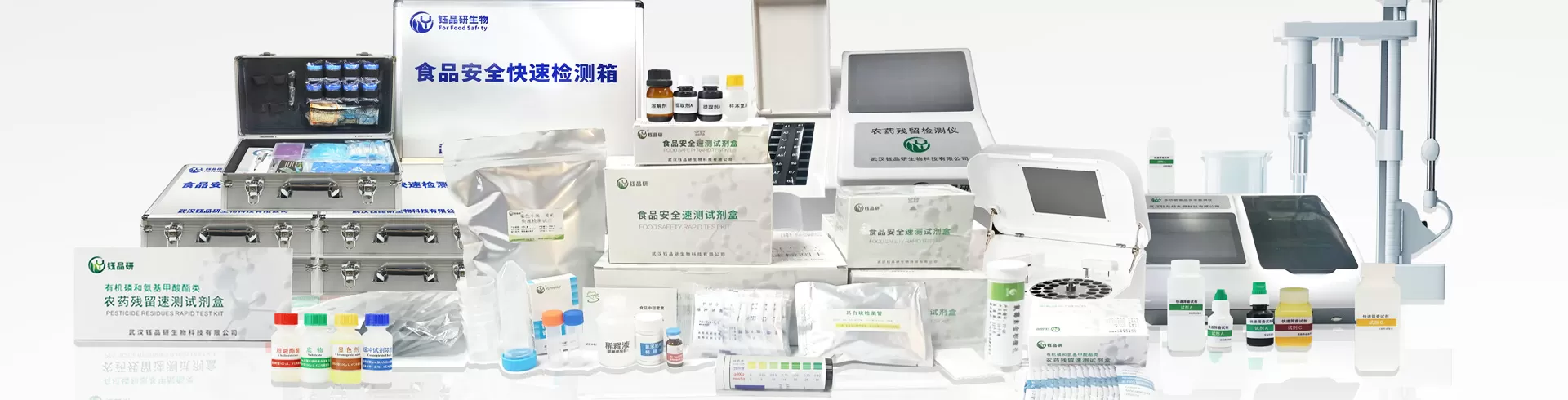
In the grain and oil processing industry, the safety and quality of raw materials are directly related to the quality of end point products and the health of consumers. Among them, aflatoxin B1, as a common mycotoxin pollutant, is easy to breed in peanuts, corn, rice and other grain and oil raw materials. Its toxicity and carcinogenicity are high, and it poses a serious threat to human health. Therefore, the rapid screening of aflatoxin B1 before the raw materials enter the processing link is a key link to ensure production safety. The aflatoxin B1 detection card has become a common tool for pre-inspection work in grain and oil processing plants due to its simple operation and fast detection.
The harm of aflatoxin B1 to grain and oil raw materials and the significance of pre-inspection
Aflatoxin B1 is mainly produced by fungi such as Aspergillus flavus and parasitic Aspergillus, which is easy to contaminate food crops in a warm and humid environment. Once the raw materials are contaminated, it is difficult to completely remove the toxins even after subsequent processing. Eating contaminated grain and oil products may lead to acute poisoning, chronic liver injury, and even liver cancer. For grain and oil processing plants, raw material pre-inspection can not only prevent unqualified raw materials from entering the production process, reduce the risk of downstream product recalls, but also reduce food safety accidents and legal liabilities caused by toxin pollution.
Aflatoxin B1 Test Card: Technical Advantages of Rapid Screening
Aflatoxin B1 Test Card is based on the principle of immunochromatography and uses colloidal gold labeling technology to achieve qualitative or semi-quantitative detection through the binding reaction of specific antibodies to toxins. Compared with traditional laboratory testing methods, the test card has significant advantages: first, it is easy to operate, does not require professional equipment, and can be mastered by front-line operators after brief training, requiring only a small amount of samples, supporting reagents, and a few minutes to complete the detection; second, the detection speed is fast, from sample pre-processing to result interpretation usually does not exceed 30 minutes, which can meet the needs of factory batch testing; third, the specificity is strong, and the monoclonal antibody against aflatoxin B1 can accurately identify the target substance, with few interfering factors and high reproducibility of test results; fourth, it has a wide range of applications and can directly detect the extracts of various grain and oil raw materials such as corn, peanuts, and wheat, without the need for complicated pretreatment processes.
Batch screening operation skills of the test card in the pre-inspection of grain and oil raw materials
In practical applications, in order to improve the detection efficiency and ensure the accuracy of batch screening, the following operation skills need to be mastered: First, the sample pre-processing is standardized. After the grain and oil raw materials are pulverized, add the extract (usually phosphate buffer or normal saline) proportionally, let it stand for 5-10 minutes after full shaking, and take the supernatant as the test sample. If the sample contains many impurities, the precipitation can be removed by centrifugation or filtration to ensure the clarification of the test solution. Secondly, the detection process is standardized. Before testing, the test card needs to be restored to room temperature, and the sample volume (usually 3-5 drops) is added dropwise according to the instructions to ensure that the liquid completely penetrates into the reaction zone. After adding the sample, it is necessary to strictly control the reaction time to avoid false negative results due to too short time, or non-specific binding caused by too long time. Again, the results are interpreted consistently. It is necessary to complete the result determination within 10 minutes after the color development of the test card, and observe the color development of the quality control line (C line) and the detection line (T line): if the color development of the C line is normal, the color development of the T line is positive, indicating that aflatoxin B1 exceeds the standard; if the color development of the C line is normal but the color development of the T line is not, it is negative; if the C line does not develop color, the test is invalid and needs to be re-operated. Finally, establish a recording and traceability mechanism. Register the test results of each batch, and mark the source of raw materials, batch, test time and other information to facilitate subsequent quality traceability and problem investigation.
choose reliable detection reagents to ensure the safety of grain and oil processing
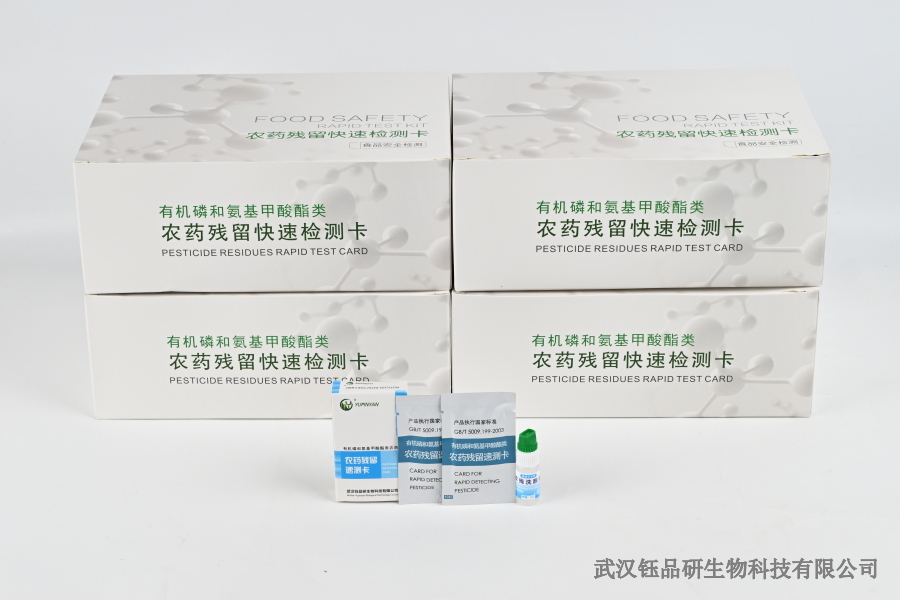
Wuhan Yupinyan Bio focuses on the research and development of food safety rapid detection reagents. Its aflatoxin B1 detection card adopts an optimized antigen-antibody system with high sensitivity (detection limit up to 1ppb) and stability, which can effectively respond to the detection needs of different types of grain and oil raw materials. The company's products can provide stable technical support for grain and oil processing plants through strict quality control to ensure accurate and reliable test results. In actual production, with standardized operation procedures and regular maintenance of testing equipment, it can significantly improve the efficiency and accuracy of raw material pre-inspection, block the threat of aflatoxin B1 to food safety from the source, and help enterprises build a safe and compliant grain and oil processing system.


