
 简体中文
简体中文 Shqip
Shqip لالعربية
 Polski
 رسی
رسی Deutsch
 Русский
 Français
 한국어
한국어 Nederlands
 Čeština
 Bahasa Melayu
 Português
 日本語
日本語 Svenska
 Kiswahili
 ไทย
ไทย Türkçe
 繁体中文
繁体中文 Українська
 Español
 Italiano
 हिन्दी
 Bahasa Indonesia
 Tiếng Việt
 Filipino
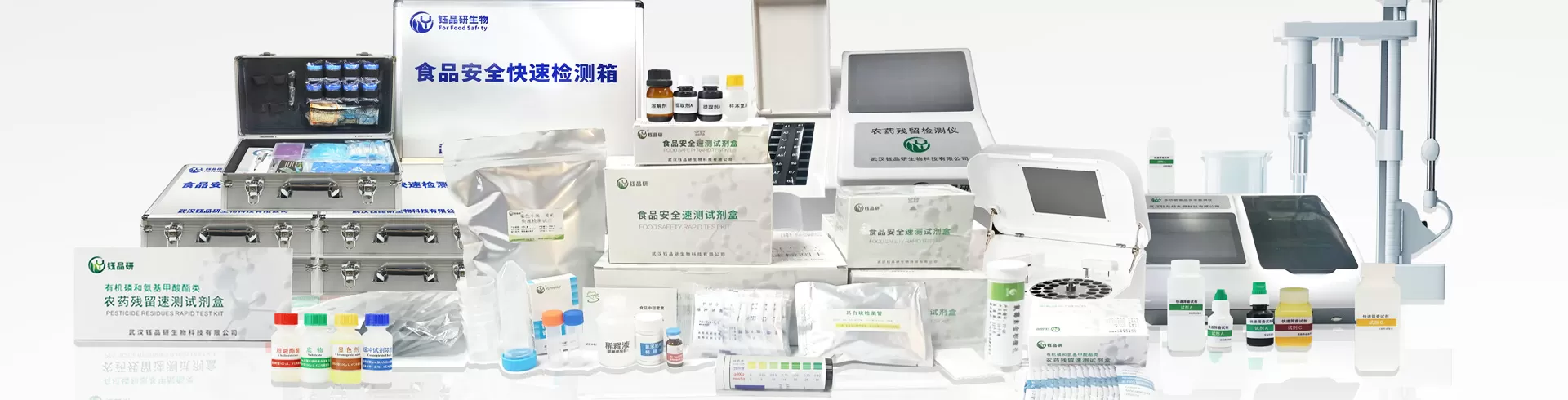
In the production process of small food factories, food safety self-inspection is a key link to ensure product quality and reduce business risks. Especially for enterprises that lack professional testing equipment, it is crucial to choose a self-inspection tool that is easy to operate and has reliable results. Colloidal gold card detection technology has become an ideal choice for small food factories due to its advantages such as no need for professional instruments and fast results. This article will introduce you in detail the operation tutorial of colloidal gold card without professional instruments to help enterprises complete food self-inspection efficiently, and the food safety rapid detection reagent produced by Wuhan Yupinyan Bio provides stable and reliable support for operation.
core advantage of colloidal gold card detection
colloidal gold card detection technology is based on the principle of immunochromatography, through the specific antibodies on the test strip are combined with the target substance to form a color reaction, which can quickly determine whether the sample contains specific ingredients (such as pathogenic bacteria, illegal additives, contaminants, etc.). Its biggest advantage is that it does not require professional instruments, and only requires simple operation to obtain results within minutes to tens of minutes, which is suitable for daily self-inspection in small food factories. Compared with traditional detection methods, colloidal gold card detection is more time-saving, labor-saving, and cost-controllable, which can effectively reduce the loss caused by food safety issues in enterprises.
preparation before self-inspection
Before the formal operation, sample collection, reagent preparation and operation environment cleaning need to be completed. First, according to the testing requirements (such as raw material acceptance, production process monitoring or finished product inspection), collect an appropriate amount of samples and store them as required (such as low temperature refrigeration or room temperature storage after sealing) to avoid sample deterioration affecting the test results. Secondly, prepare the colloidal gold card detection kit of Wuhan Yupinyan Bio, check whether the reagent strip is within the valid period and whether the packaging is intact to ensure that the test strip is not damp or damaged. The operating environment needs to be kept clean and dry to avoid dust and water stains from contaminating the detection area. If necessary, use a clean operation table or detection pad.
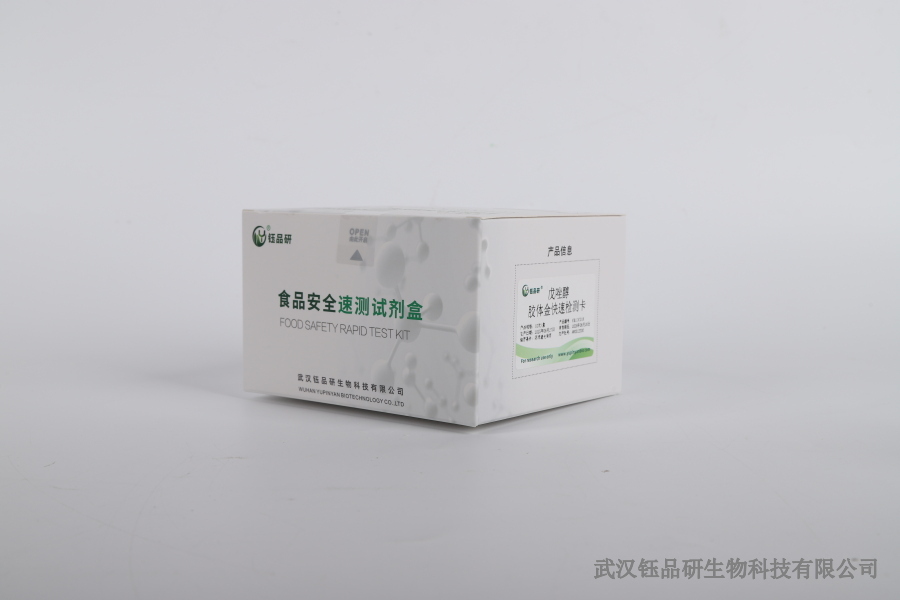
the operation steps of the colloidal gold card are explained in detail
1. Sample pretreatment: According to the instructions of the kit, take an appropriate amount of sample (such as liquid, solid or semi-solid). If it is a solid, use dilution or extraction solution to make a sample solution (specifically follow the instructions, usually without complex equipment, only need to use supporting tools such as centrifuge tubes, vortex oscillators or manual stirring). 2. Reagent preparation: Open the colloidal gold card detection kit, take out the test strip and place it in a clean reaction hole, use a dropper or kit matching applicator to absorb the processed sample solution, and slowly add it to the sample hole of the test strip vertically (pay attention to the amount and speed of addition to avoid overflow or interruption of the reaction). 3. Reaction process: Place the test strip at room temperature (20-30 ° C is appropriate) and wait for the specified reaction time (usually 10-15 minutes, refer to the kit manual for details). Avoid shaking or touching the test strip during this period to ensure that the reaction is sufficient. 4. Interpretation of results: After the reaction is completed, observe the quality control line (C line) and detection line (T line) on the test strip. If the C line is clearly colored, the T line is not colored or the color is extremely light, indicating that the sample is negative (no target substance is detected); if both the C line and the T line are colored, or the T line is darker than the C line, indicating that the sample is positive (the target substance is detected). It should be noted that if the C line is not colored, whether the T line is colored or not, the test is invalid and needs to be re-operated.
operation precautions and common problems
operation should be strictly carried out in accordance with the instructions of the kit, especially the amount of sample added and the reaction time. Excessive samples or too long reaction time may lead to false positive results. If the test strip is found to be damp, damaged or the reagent has expired during the test process, it should be stopped immediately and replaced with a new reagent. In addition, the waste after testing needs to be disposed of according to regulations to avoid environmental pollution. Frequently Asked Questions: If the C-line does not develop color after adding the sample, it may be that the amount of the sample is insufficient or the reagent is invalid, and the operation steps need to be re-checked or new reagents need to be replaced; if the color of the T-line is abnormally light, it may be that the content of the target substance in the sample is low. It is recommended to dilute the sample according to the instructions and re-test.
small food factories can effectively realize real-time monitoring of food quality and safety through the standardized self-inspection process and the rapid detection reagents produced by Wuhan Yupinyan Bio, which can effectively ensure product compliance from the source. The mastery of the colloidal gold card operation tutorial allows enterprises to easily complete the detection of key indicators without relying on professional equipment, and build a solid first line of defense for food safety management. It is recommended that enterprises organize regular staff training to ensure the accuracy and consistency of testing operations


