
 简体中文
简体中文 Shqip
Shqip لالعربية
 Polski
 رسی
رسی Deutsch
 Русский
 Français
 한국어
한국어 Nederlands
 Čeština
 Bahasa Melayu
 Português
 日本語
日本語 Svenska
 Kiswahili
 ไทย
ไทย Türkçe
 繁体中文
繁体中文 Українська
 Español
 Italiano
 हिन्दी
 Bahasa Indonesia
 Tiếng Việt
 Filipino
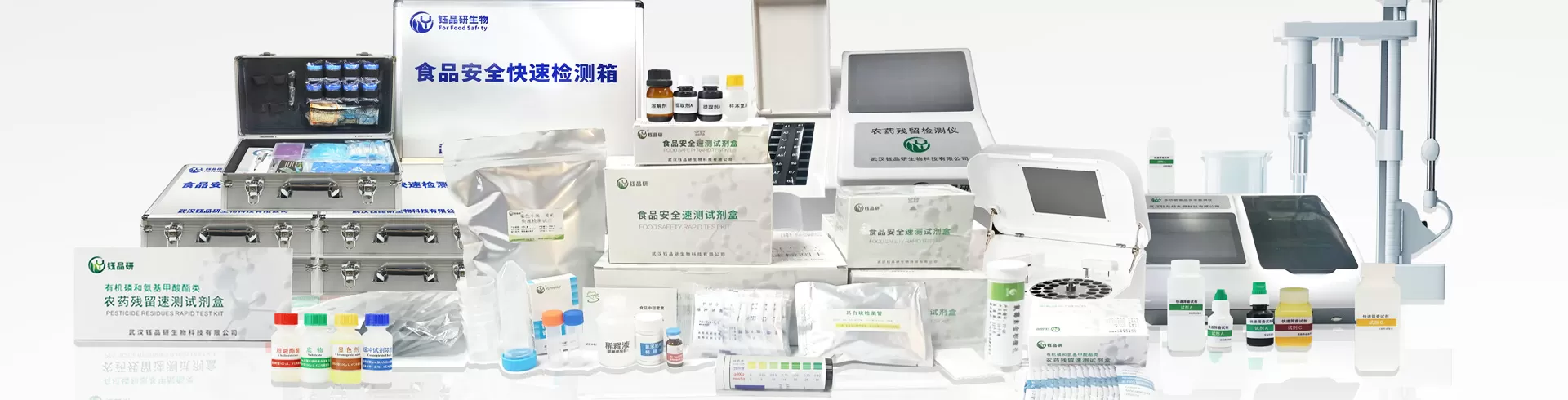
Before export aquatic products enter the international market, pre-inspection is the key link to control quality and safety. Especially the European Union has strict standards for imported aquatic products, which not only involve agricultural and veterinary drug residues, microbial indicators, but also have clear limit requirements for heavy metals and other pollutants. In order to ensure fast and accurate detection results, colloidal gold card detection technology has become a common tool in the pre-inspection stage of many enterprises with its advantages of simple operation and strong specificity. In practical applications, Wuhan Yupinyan Biological's colloidal gold card provides reliable detection support for export aquatic product enterprises with stable performance and accurate color rendering results.
the core objective of the pre-inspection process of export aquatic products
The core of the pre-inspection of export aquatic products is to identify potential quality hazards in advance to avoid problems such as return and destruction due to non-compliance with the test results, which directly affect the export efficiency and cost of enterprises. The safety requirements of the European Union standards for aquatic products are refined to specific ingredients, such as the limited standards for prohibited substances such as chloramphenicol and malachite green, as well as the detection of physical and chemical indicators such as volatile base nitrogen, which need to be strictly checked in the pre-inspection stage. Through the standardized pre-inspection process, enterprises can adjust the production process or eliminate substandard products in time to ensure that the final export products meet the European Union market access requirements.Advantages of colloidal gold card detection technology
Colloidal gold card detection technology does not need to rely on large instruments and equipment, and can quickly complete the detection in the field or laboratory. Compared with traditional detection methods, its operation process is more concise, and the detection time is usually controlled within 20 minutes, which can meet the needs of enterprises for rapid results. After the antibody labeled with colloidal gold is specifically combined with the target substance, the result can be intuitively judged through the color strip, which is especially suitable for grassroots detection scenarios or emergency sampling. The colloidal gold card developed by Wuhan Yupinyan Bio has been optimized in sensitivity and stability, which can accurately capture the trace target substance specified in the European Union standard, reducing the probability of false positive or false negative results.practical skills: sample pretreatment and detection operation
Sample pretreatment is the basis for ensuring the accuracy of detection. According to the type of aquatic products (such as fish, shrimp, shellfish, etc.), the appropriate pretreatment method should be selected: if it is a whole fish, the supernatant can be extracted by centrifugation after homogenization; if it is a processed product (such as shrimp), it needs to be removed and diluted directly. During the treatment process, it is necessary to avoid the introduction of interfering substances, such as fat, protein and other components that may affect the binding of colloidal gold, so the filtration step is essential. When adding samples, the amount of samples should be strictly controlled to ensure that the liquid evenly covers the reaction area of the detection card. The reaction time should be 15-20 minutes, and direct light or vibration should be avoided during this period.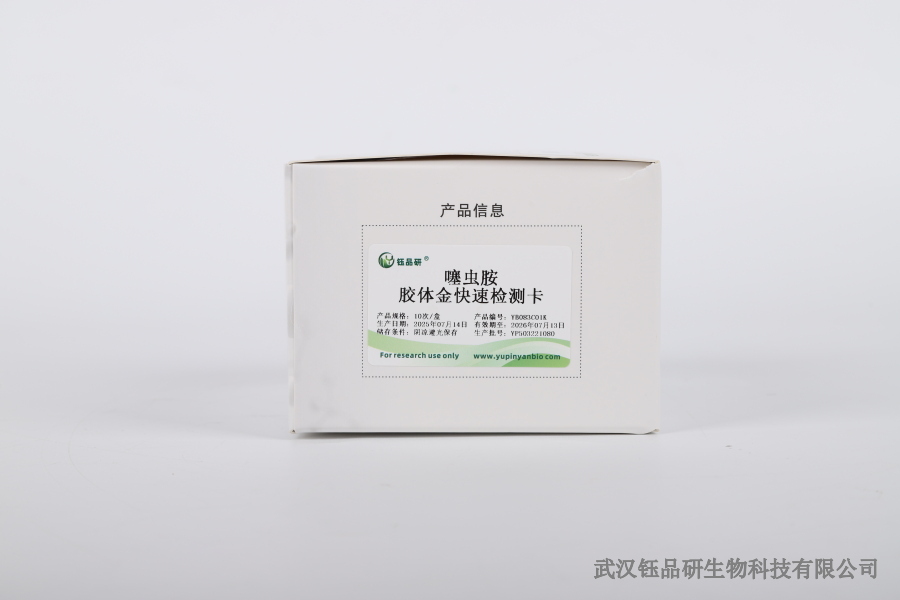
Key points of the European Union standard
The European Union standard has clear limit requirements for different test items, and the colloidal gold card test needs to match these standards. For example, when detecting veterinary drug residues, it is necessary to confirm whether the target substance targeted by the antibody in the card is within the European Union standard limit range; for microbiological testing, the colloidal gold card color intensity needs to be verified with the logarithmic relationship of colony number. The interpretation of the test results should follow the "double control principle": the positive control belt must be clearly colored, and the negative control belt must be free of interference. If the test belt is colored and the contrast is normal, it is judged to meet the standard; if the test belt and the positive control belt are both colored, the test needs to be repeated or other methods should be reviewed to avoid misjudgment caused by a single result.Quality control and precautions in the pre-inspection process
During the test process, the environmental conditions should be strictly controlled, the temperature should be kept at 15-35 ° C, and the humidity should be avoided exceeding 80% to prevent the reagent from being damp and failing. Operators need to be trained to be familiar with the sampling sequence and time nodes to avoid deviation of results due to operation errors. Wuhan Yupinyan Bio recommends that companies regularly verify the performance of colloidal gold cards, such as comparing known positive and negative samples to ensure that the equipment and reagents are in a stable state. In addition, the test records need to be completely retained, including sample information, test time, result judgment, etc., for traceability and subsequent re-inspection.Through the standardized pre-inspection process of export aquatic products, combined with the precise application of colloidal gold card detection technology, companies can effectively control product quality and meet the strict import standards of the European Union. Wuhan Yupinyan Bio has always been committed to developing rapid detection reagents that are more suitable for market demand, helping export companies to move forward steadily in the international market.


