简体中文
简体中文 Shqip
Shqip لالعربية
 Polski
 رسی
رسی Deutsch
 Русский
 Français
 한국어
한국어 Nederlands
 Čeština
 Bahasa Melayu
 Português
 日本語
日本語 Svenska
 Kiswahili
 ไทย
ไทย Türkçe
 繁体中文
繁体中文 Українська
 Español
 Italiano
 हिन्दी
 Bahasa Indonesia
 Tiếng Việt
 Filipino
With the expansion of honey market demand, consumers' attention to food safety continues to increase, among which the issue of veterinary drug residues has become the focus of supervision. Lomefloxacin, as a fluoroquinolone antibiotic, may be used in the process of bee breeding for the prevention and control of pests and diseases. Its residues not only affect the quality and safety of honey, but also may pose latent risks to human health. Therefore, it is of great significance for honey processing enterprises to establish a self-test system to effectively detect Lomefloxacin residues. As a key link in the detection process, matrix treatment directly affects the accuracy and reliability of the detection results, and it is necessary to pay attention to its operation skills.
Particularity and key challenges of honey matrix treatment. The composition of honey is complex, mainly composed of glucose, fructose, sucrose and other carbohydrates, and also contains a small amount of protein, amino acids, vitamins and minerals, and the sugar content is as high as 70% or more, showing high viscosity and high osmotic pressure characteristics. This substrate environment can easily interfere with the extraction and purification of lomefloxacin during the detection process. For example, high sugar may cause the sensitivity of the detection instrument to decrease, and complex ingredients are easy to co-precipitate or adsorb with the target analyte. In addition, naturally occurring pigments and polyphenols in honey may also interfere with the detection signal. Therefore, the treatment process needs to be optimized according to the characteristics of the honey matrix to ensure the efficient extraction and purification of the target analyte.
Core skills for substrate treatment for lomefloxacin residue detection. Sample pretreatment is the first step in matrix treatment, which requires both extraction efficiency and purification effect. Usually, the oscillating extraction method is used, that is, a certain amount of honey sample is taken, and an appropriate amount of water is added for dilution (the dilution multiple needs to be adjusted according to the honey concentration, generally 1:1 to 1:5), in order to reduce the viscosity and facilitate subsequent operation. Then add protein precipitators, such as acetonitrile or zinc acetate-potassium ferrocyanide solution, to achieve precipitation by destroying the protein structure and avoid the formation of complexes with lomefloxacin affecting the separation. After precipitation, centrifugation operation is required. The speed is recommended to be controlled at 4000-6000 rpm, and the centrifugation time is 5-10 minutes to ensure the complete separation of the supernatant and the precipitation.
The purification step is the key to improve the specificity of detection For the interference of high sugar and impurities in honey, solid-phase extraction (SPE) or liquid-liquid extraction is commonly used to purify. When using a C18 solid-phase extraction column, it needs to be activated with methanol first, then balanced with ultrapure water, and the centrifuged supernatant is loaded. Lomefloxacin and high-concentration sugar are separated by adsorption, and then the target analyte is eluted with an appropriate concentration of methanol-water mixture. If conditions are limited, n-hexane degreasing-liquid-liquid extraction can also be used to remove oil and lipid impurities in honey by n-hexane, and then lomefloxacin is extracted by weakly alkaline aqueous solution, and then dehydrated to obtain the purified liquid.
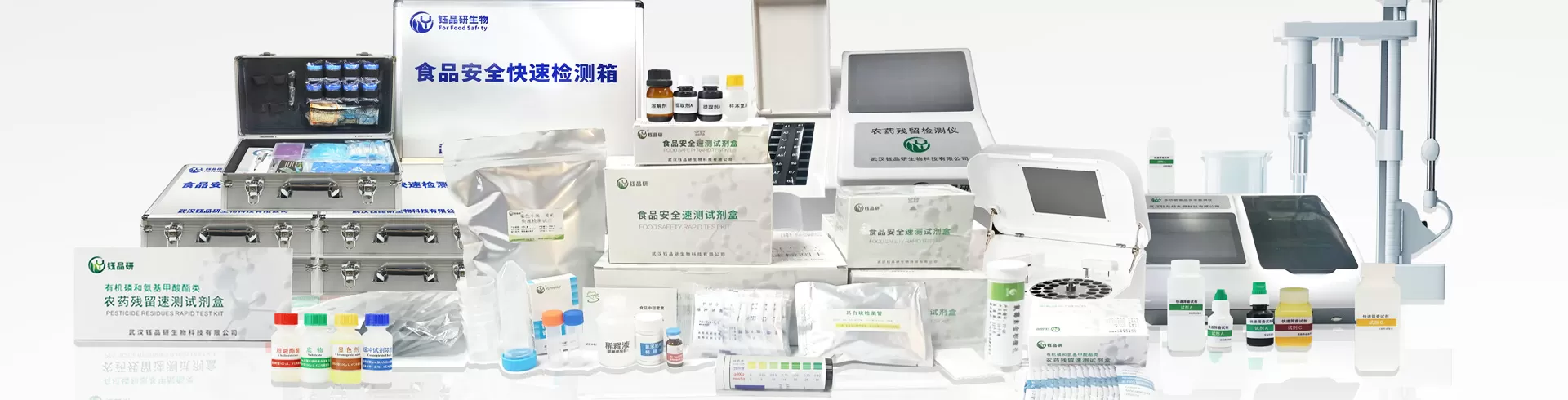
Wuhan Yupinyan Biological Rapid Detection of the Suitability of Reagents. In the actual self-test, the efficiency and accuracy of the substrate treatment process rely on the support of professional detection reagents. As a technical service provider in the field of food safety rapid detection, Wuhan Yupinyan Bio has developed a lomefloxacin rapid detection kit specially designed for complex substrates such as honey. By optimizing the antibody specificity and reagent formula, it can be efficiently combined with the above matrix processing techniques. For example, the extraction buffer matched with the kit can significantly improve the extraction rate of lomefloxacin and reduce the matrix effect; the special purification column can further reduce the interference of sugar and impurities in honey on the detection signal, ensuring the stability of the detection results.
To sum up, honey processing enterprises need to fully understand the challenges brought by the particularity of the substrate in the self-inspection of lomefloxacin residues, and optimize the detection process through scientific sample pretreatment and purification skills. Combined with the rapid detection reagents of Wuhan Yupinyan Bio, it can not only simplify the operation steps, but also obtain accurate results in a short time, providing strong support for enterprises to control product quality and ensure food safety. With the improvement of the industry's self-inspection ability requirements, the refinement of substrate processing skills and the adaptability of reagents will become the core direction for enterprises to improve the detection level.