With the rapid development of cold chain logistics, the circulation range of meat products continues to expand, but during the cold chain storage and thawing process, the risk of veterinary drug residues may accumulate with environmental changes, threatening food safety. Thawed meat samples may carry complex matrix components due to different processing methods. Traditional detection methods are time-consuming and rely on laboratory equipment, making it difficult to meet the needs of rapid screening. At this time, colloidal gold card rapid detection technology has become an important tool for on-site verification of veterinary drug residues in cold chain meat due to its advantages of simple operation and intuitive results.
Necessity of Detection of Cold Chain Meat After Thawing
Meat may use veterinary drugs during breeding, slaughter and transportation. If it is not completely metabolized before thawing or the residues exceed the standard, it may penetrate into the edible part with water after thawing. Veterinary drug residues (such as antibiotics, anti-parasitic drugs, etc.) exceeding the standard not only affect the quality of meat, but also lead to health risks such as drug resistance and allergic reactions after long-term intake. Therefore, rapid detection of meat samples after thawing can detect potential safety hazards in time and avoid entering the market. For cold chain meat processing enterprises and regulatory authorities, rapid detection technology can effectively shorten the risk investigation cycle and improve the efficiency of food safety supervision. Technical principle of
colloidal gold card detection of veterinary drug residues
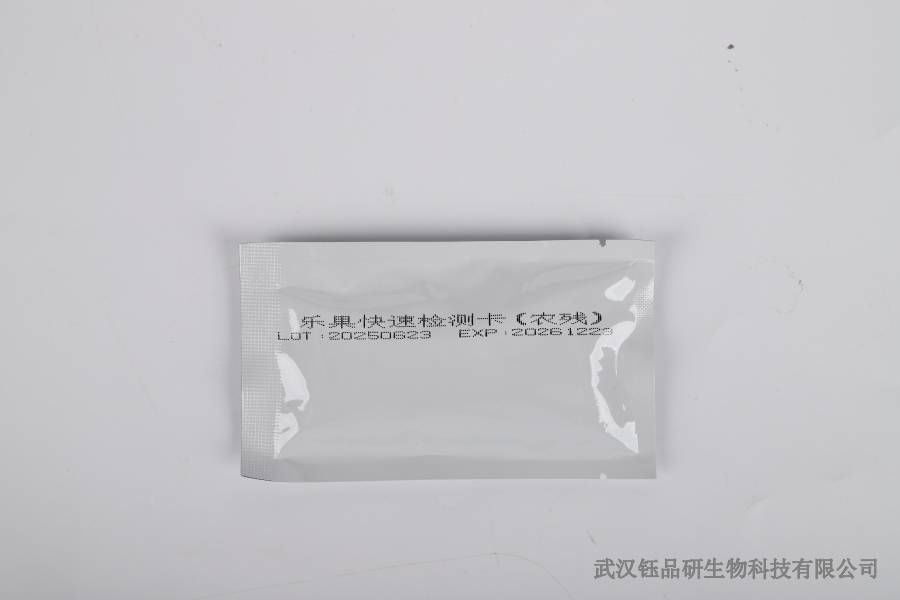
Colloidal gold card detection is based on the principle of immunochromatography. The core is to use the specific combination of colloidal gold-labeled antibodies and target antigens to form a visual colored ribbon. The test strip contains a detection line (T-line) and a quality control line (C-line) coated with a veterinary drug-specific antibody: when the veterinary drug residue in the test liquid binds to the colloidal gold-labeled antibody, if the concentration is sufficient, it will move along the test strip to the T-line and combine with the coated antibody to form a red band; if the concentration is insufficient or there is no residue, the T-line does not develop color, only the C-line develops color due to the binding of the quality control antibody to the colloidal gold marker. This "one-step" detection does not require complex equipment, and can be quickly judged by observing the color rendering results. The overall time usually does not exceed 15 minutes. Colloidal Gold Card Rapid Detection Operation Process
First, sample pretreatment: take the thawed meat sample, cut an appropriate amount (about 5g) of tissue, add 5mL of extraction buffer (configured according to product instructions), fully shake or homogenize, let stand for 1-2 minutes to dissolve the target. Subsequently, the treated sample solution is filtered or centrifuged to remove impurities (some colloidal gold card products have been equipped with a simple filtration device) to ensure that the detection solution is clear. Next, place the colloidal gold card flat, pipette 2-3 drops of supernatant and add it to the sample well to start the reaction timing. After the reaction is complete (usually within 10 minutes), observe the color development of the T-line and C-line on the test strip: if the C-line is clear and the T-line has no red band, it is determined to be negative (no veterinary drug residues); if the T-line is colored and the C-line is synchronized, it is determined to be positive (there is residue); if the C-line does not develop color, whether the T-line is colored or not, the detection is invalid and needs to be re-operated. advantages of rapid detection and practical application value
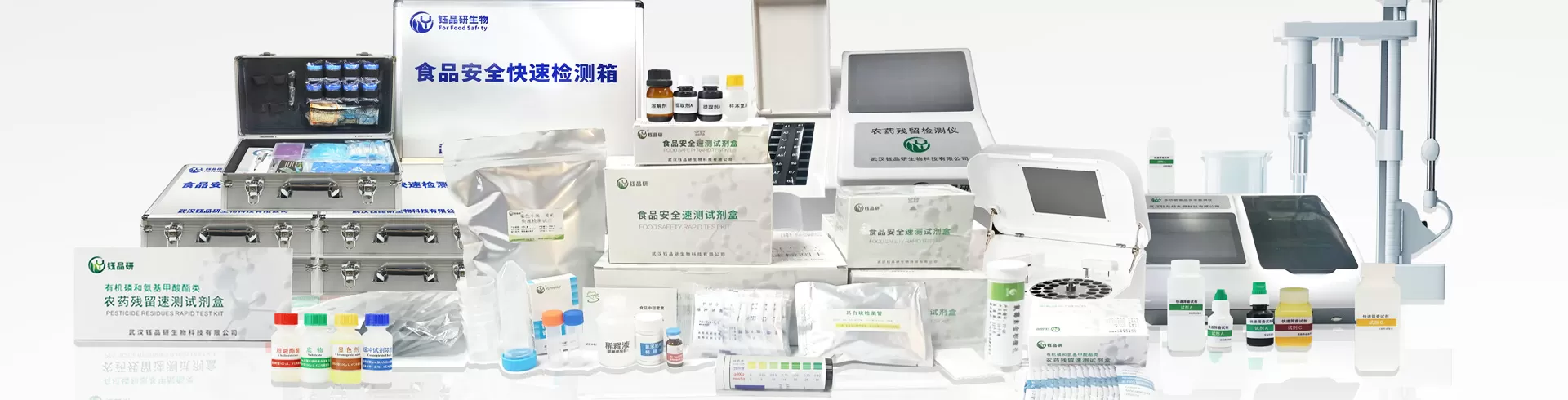
Compared with traditional detection methods, colloidal gold card technology has significant advantages: first, the operation threshold is low, no professional training can be completed, suitable for grass-roots supervisors or enterprises on-site self-inspection; Second, the detection speed is fast, from sample pre-processing to result interpretation can be completed within 30 minutes, to meet the needs of immediate decision-making; Third, the cost is controllable, the cost of single card detection is low, suitable for batch screening; Fourth, the stability is strong, colloidal gold-labeled antibodies are not easily affected by temperature and pH value, and can be stored for a long time at 4 ° C. As a professional food safety rapid detection reagent R & D and production enterprise, Wuhan Yupinyan Bio has always focused on the optimization of colloidal gold card series products. By optimizing the antibody coupling process and test paper card materials, improve the detection sensitivity and anti-interference ability, and provide reliable technical support for the safety supervision of cold chain meat and other foods. In practical applications, this technology has been widely used in the acceptance of raw materials in meat processing plants, random inspection in circulation links and rapid screening of import and export meat, effectively reducing the risk of excessive veterinary drug residues and protecting consumers' "safety on the tip of the tongue".

 简体中文
简体中文 Shqip
Shqip لالعربية
 Polski
 رسی
رسی Deutsch
 Русский
 Français
 한국어
한국어 Nederlands
 Čeština
 Bahasa Melayu
 Português
 日本語
日本語 Svenska
 Kiswahili
 ไทย
ไทย Türkçe
 繁体中文
繁体中文 Українська
 Español
 Italiano
 हिन्दी
 Bahasa Indonesia
 Tiếng Việt
 Filipino