简体中文
简体中文 Shqip
Shqip لالعربية
 Polski
 رسی
رسی Deutsch
 Русский
 Français
 한국어
한국어 Nederlands
 Čeština
 Bahasa Melayu
 Português
 日本語
日本語 Svenska
 Kiswahili
 ไทย
ไทย Türkçe
 繁体中文
繁体中文 Українська
 Español
 Italiano
 हिन्दी
 Bahasa Indonesia
 Tiếng Việt
 Filipino
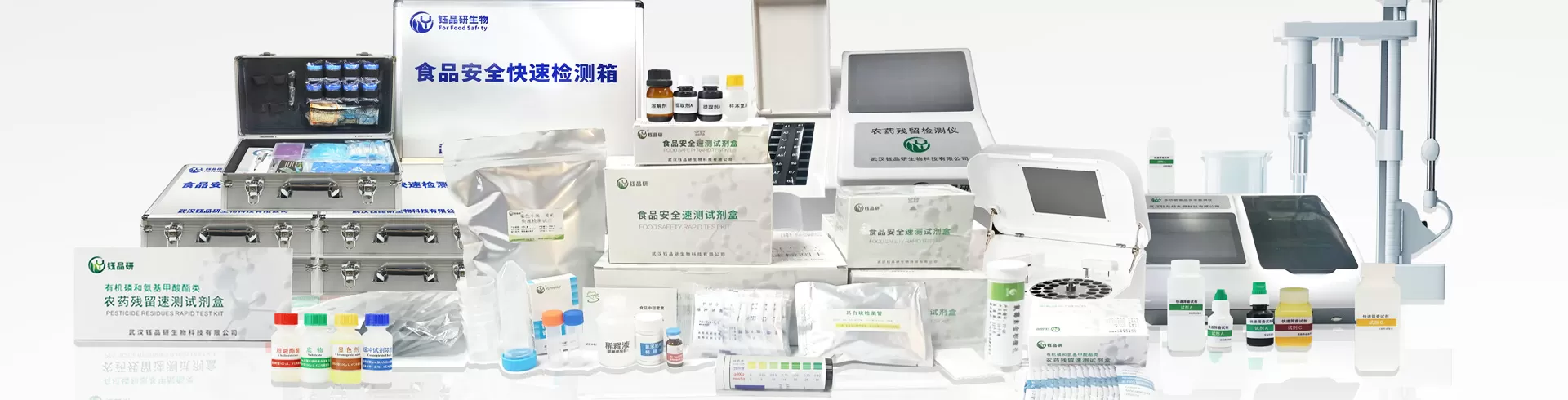
As a broad-spectrum organophosphorus insecticide, triazophos is widely used in agricultural production, and its residue problem has always been the focus of food safety testing. When agricultural products or related materials containing triazophos enter the inventory link, the stability of their residue directly affects the follow-up test results and food safety threat and risk assessment. Wuhan Yupinyan Bio focuses on the research and development of food safety rapid detection reagents. It has accumulated rich experience in the field of triazophos residue detection, and can provide technical support for residue analysis under different storage conditions.
The residue time of stock triazophos is affected by many factors, among which temperature is one of the most critical variables. In a normal temperature environment (20 ° C -30 ° C), if the storage environment has high humidity and insufficient ventilation, the hydrolysis reaction of triazophos molecules will accelerate, resulting in a shortened residual half-life; while low temperature environments (such as refrigeration at 2 ° C -8 ° C or freezing at -18 ° C) can significantly slow down molecular movement and prolong the residual time. Studies have shown that under freezing conditions, triazophos residues in some samples can exist stably for several months or even longer, but the specific duration needs to be comprehensively judged in combination with the drug matrix and packaging sealing. In addition, the moisture content in the drug and the degree of oxygen exposure will also indirectly affect the residual persistence. For example, well-sealed packaging can reduce the interference of the external environment on the stability of the drug.
The residual stability analysis during the storage of the drug is equally important, which involves the dual role of the drug's own formula and the external environment. The rapid detection reagent developed by Wuhan Yupinyan Bio has effectively reduced the influence of external factors on the stability of triazophos by optimizing the packaging technology of active ingredients. From the perspective of the characteristics of the drug itself, its pH value, solvent composition and dosage form (such as emulsion, microemulsion, etc.) will directly affect the residue situation: alkaline conditions may accelerate the hydrolysis of organophosphorus compounds, while reasonable formula design can enhance the chemical stability of the drug in storage. From the perspective of the external environment, dark and dry storage conditions can avoid the decomposition of triazophos due to photodegradation or deliquescence, while good sealed packaging can reduce the intrusion of oxygen and moisture and further prolong the residual time.
To sum up, the residual time of triazophos in the inventory is not a fixed value, but is affected by multiple factors such as storage temperature, humidity, pharmaceutical formula and packaging conditions. With professional rapid detection reagent research and development capabilities, Wuhan Yupinyan Bio can accurately and efficiently detect triazophos residues in different scenarios, provide reliable data support for food safety supervision, and help reduce food safety risks caused by residue problems.