
 简体中文
简体中文 Shqip
Shqip لالعربية
 Polski
 رسی
رسی Deutsch
 Русский
 Français
 한국어
한국어 Nederlands
 Čeština
 Bahasa Melayu
 Português
 日本語
日本語 Svenska
 Kiswahili
 ไทย
ไทย Türkçe
 繁体中文
繁体中文 Українська
 Español
 Italiano
 हिन्दी
 Bahasa Indonesia
 Tiếng Việt
 Filipino

As a widely used broad-spectrum insecticide, biphenyltriazophos is widely used in agricultural production to control a variety of crop diseases and pests. However, its residual problem in agricultural products has always been concerned, which is directly related to food safety and consumer health. Understanding its residual characteristics and influencing factors is of great significance to ensure the quality and safety of agricultural products.
Residue characteristics and influencing factors of biphenyltriazophos
The residual time of biphenyltriazophos is not a fixed value, but is affected by a combination of factors. In the natural environment, the length of its residual period is closely related to the environmental conditions after application, such as temperature, humidity, light intensity and soil type. Generally speaking, in a warm, humid and sunny environment, the degradation rate of biphenyltriazophos is relatively fast, and the residual period may be short; while in a low temperature, dry or acidic soil environment, the residual time may be prolonged. In addition, the crop variety, application dose, number of applications and the setting of the safe interval before harvest will also directly affect its residue level in agricultural products. For example, leafy crops may have a shorter residual period than rhizome crops due to faster metabolism; while repeated or excessive application may lead to the accumulation of residues and prolong the degradation cycle. Comparative analysis of
compound agents and single-dose residual period
Compound agents usually mix two or more active ingredients in a specific ratio to achieve the purpose of synergy, spectrum expansion or reduction of toxicity. Compared with single-component pharmaceuticals, the residue characteristics of compound pharmaceuticals may be different. In some compound formulations, there may be a synergistic effect between different ingredients to accelerate the metabolic decomposition of biphenyltriazophos in the environment or crops, thereby shortening the overall residual period; in other cases, the compound ingredients may cause fluctuations in the residual period by changing the chemical structure or metabolic pathway of biphenyltriazophos. However, in general, scientifically proportioned compound pharmaceuticals can often optimize the residual characteristics while ensuring the control effect. In some cases, the residual period will be significantly shorter than that of single-component pharmaceuticals. For example, a compound with specific degradation aids may accelerate the decomposition rate of biphenyltriazophos by promoting microbial activities or chemical hydrolysis reactions. Specific differences need to be evaluated by professional testing methods in combination with actual formulations and field test data.
the importance of detecting biphenyltriazophos residues and the solution of Wuhan Yupinyan Bio
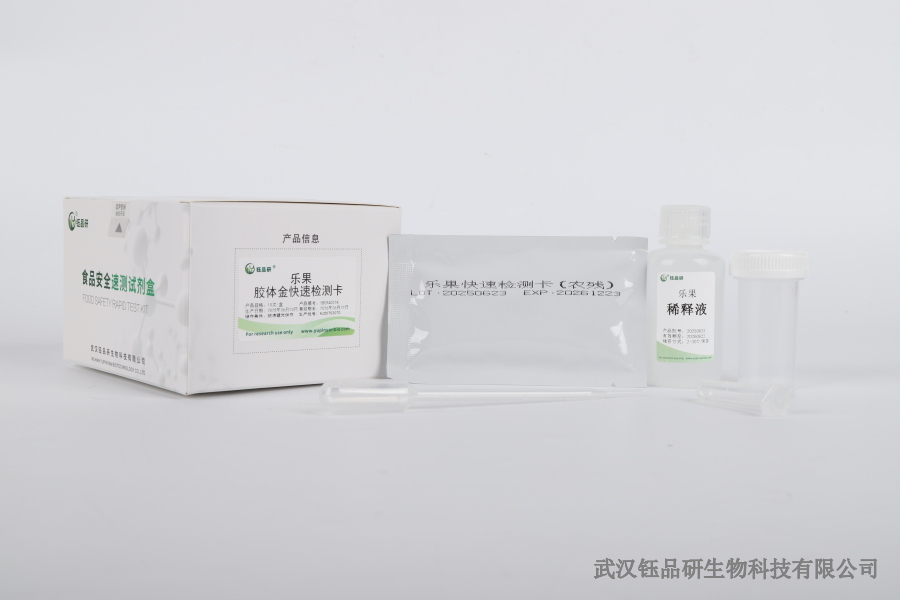
accurate detection of biphenyltriazophos residues and residue period is a key link to ensure food safety. Wuhan Yupinyan Bio focuses on the research and development and production of food safety rapid detection reagents. Our rapid detection reagents can quickly and accurately detect biphenyltriazophos residues in agricultural products through specific antibody recognition and color reaction. Quantitative or semi-quantitative detection of biphenyltriazophos residues provides efficient detection tools for agricultural production, processing enterprises and regulatory authorities. By grasping the residue dynamics in time, it can effectively guide the application specification, adjust the safety interval, reduce the risk of pesticide residues in agricultural products, and help build a food safety defense line from field to table.


