
 简体中文
简体中文 Shqip
Shqip لالعربية
 Polski
 رسی
رسی Deutsch
 Русский
 Français
 한국어
한국어 Nederlands
 Čeština
 Bahasa Melayu
 Português
 日本語
日本語 Svenska
 Kiswahili
 ไทย
ไทย Türkçe
 繁体中文
繁体中文 Українська
 Español
 Italiano
 हिन्दी
 Bahasa Indonesia
 Tiếng Việt
 Filipino
As a broad-spectrum organophosphorus insecticide, triazophos is widely used in agricultural production to control a variety of pests. With the increase of its use, the problem of triazophos residues in agricultural products has gradually attracted attention. Understanding the elimination time of triazophos residues is of great significance for ensuring food safety and formulating rational agricultural management measures. This paper will explore the difference in the elimination time of triazophos residues from the perspectives of natural degradation and manual intervention.
the elimination time of naturally degraded triazophos residues
Under the natural environment, the degradation rate of triazophos is affected by many factors, including soil type, humidity, temperature, light and microbial activity. In soil, triazophos is usually gradually decomposed through hydrolysis and microbial metabolism. Under normal circumstances, under suitable temperature and humidity conditions, it may take 2 to 6 weeks for the complete elimination of triazophos residues in soil; if the soil texture is more viscous or less breathable, the degradation time may be extended to 6 to 8 weeks. In water environments, the degradation rate of triazophos is relatively fast, and the half-life in natural water bodies is usually 1 to 4 weeks, depending on the flow rate of the water body and the microbial community structure. For crop surfaces, without special treatment, the natural degradation time of triazophos residues is about 1 to 3 weeks, but the degradation rate of different parts such as fruits and leaves will also vary due to differences in epidermal structure. In general, the natural degradation process takes a long time and the results are uncertain, making it difficult to meet the need for rapid intervention in actual production.
Elimination of triazophos residues under manual intervention
In order to shorten the elimination time of triazophos residues, manual interventions are often used in agricultural production. Common intervention methods include agricultural management measures and biodegradation technologies. For example, reasonable irrigation and drainage can improve soil permeability, promote microbial activity, and accelerate the degradation of triazophos; crop rotation systems can enhance the ability to decompose residual pesticides by changing the structure of soil microbial communities, and can usually shorten the elimination time of residues in soil to 1 to 4 weeks. In addition, the use of biological degradants (such as specific microbial inoculants) can also effectively accelerate the degradation process. The specific effect depends on the type of degradant and the way of use. In some cases, the residue elimination time can be shortened by 2 to 3 weeks.
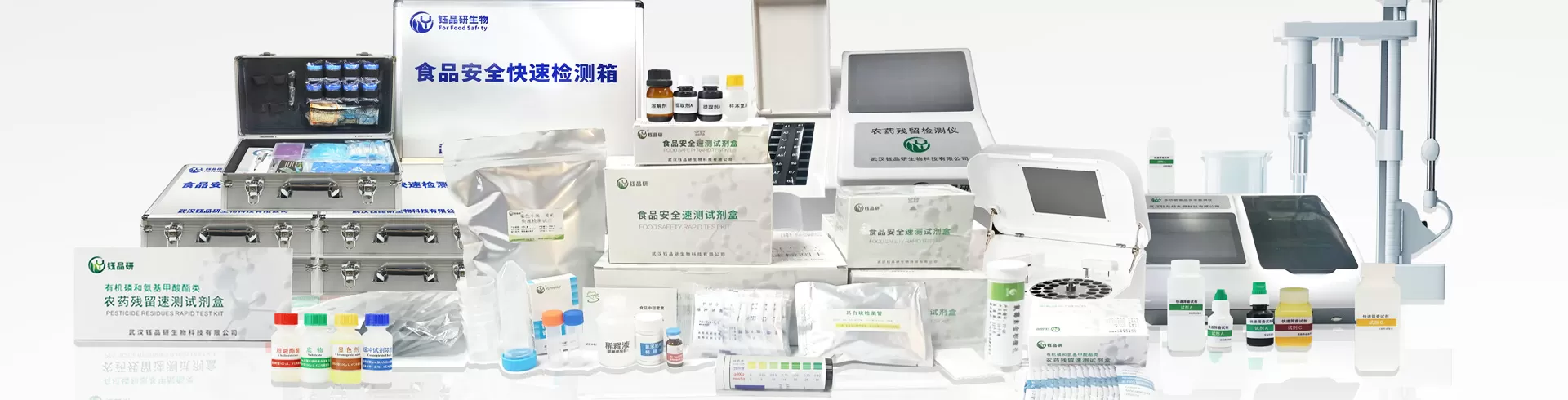
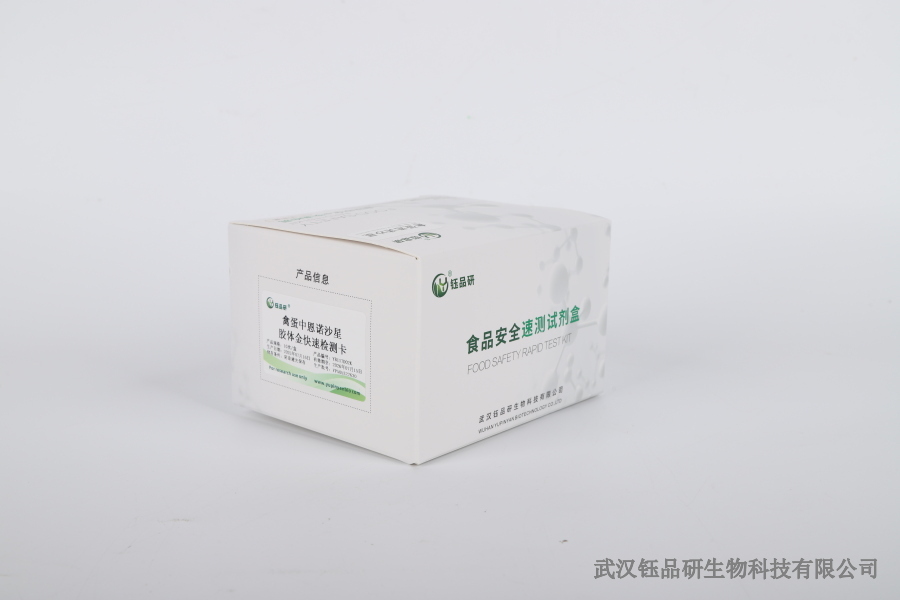
It is worth noting that in actual production, accurate detection of triazophos residues is the basis for formulating elimination plans. The food safety rapid detection reagent produced by Wuhan Yupinyan Bio, with its efficient and convenient characteristics, can help users quickly obtain residue data, providing a scientific basis for the selection and effect evaluation of subsequent interventions. Through this reagent, sample pretreatment and detection can be completed in a short time, and residue dynamics can be grasped in a timely manner, so as to adjust the manual intervention strategy in a targeted manner and further optimize the elimination time.
In summary, the elimination time of triazophos residues under natural degradation conditions is long, usually in weeks, and is greatly affected by environmental factors; and through reasonable manual intervention measures (such as agricultural management, biodegradation, etc.), combined with accurate detection technology, can significantly shorten the residue elimination cycle. Wuhan Yupinyan Bio has always been committed to the research and development of rapid food safety detection technology. Its products can provide strong support for agricultural production and food safety supervision, and help reduce the latent risk of pesticide residues to human health.


