简体中文
简体中文 Shqip
Shqip لالعربية
 Polski
 رسی
رسی Deutsch
 Русский
 Français
 한국어
한국어 Nederlands
 Čeština
 Bahasa Melayu
 Português
 日本語
日本語 Svenska
 Kiswahili
 ไทย
ไทย Türkçe
 繁体中文
繁体中文 Українська
 Español
 Italiano
 हिन्दी
 Bahasa Indonesia
 Tiếng Việt
 Filipino
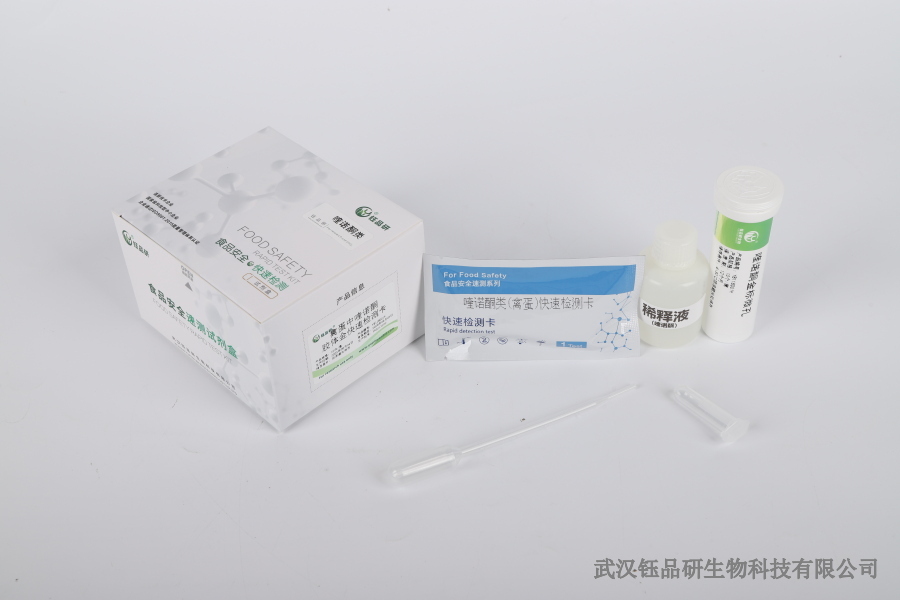
With the improvement of the quality and safety awareness of agricultural products, triazophos, as a common organophosphorus pesticide, has become an important part of ensuring food safety. Among many testing tools, there are significant differences in the application scenarios and accuracy of household triazophos testing strips and professional testing cards. Consumers and testing institutions need to choose suitable tools according to actual needs.
Household triazophos testing strips: suitable scenarios for convenient screening
Household testing strips are usually designed to be easy to operate and do not require professional equipment. It is suitable for ordinary consumers to conduct rapid preliminary screening in home kitchens or fields. For example, when dealing with fresh vegetables and fruits, housewives can quickly determine whether there is a risk of triazophos residues through test strips; small farmers self-test agricultural products before harvest to ensure pre-market safety; catering practitioners can also use test strips to conduct preliminary testing of suspicious samples when purchasing ingredients. The advantages of this type of test strip are that it is small and portable, the operation steps are simple (generally only need to add sample liquid, wait a few minutes to observe the results), and the price is close to the people, suitable for non-professional people.
professional test card: the accuracy advantage of accurate detection
professional test card is for professional testing institutions, quality control departments of food production enterprises or regulatory departments. The detection principle is more precise, usually using stricter reaction systems and higher purity reagents, which can achieve quantitative or semi-quantitative detection with a smaller error range. For example, in the raw material acceptance process of large food processing plants, professional test cards can quickly issue accurate triazophos residue values to ensure that the raw materials meet production standards; third-party testing agencies also rely on the high-precision results of professional test cards when issuing test reports. In addition, professional test cards often support a wider range of sample types (such as residue detection in substrates such as soil and water bodies), and can meet the needs of batch detection in complex scenarios.
accuracy difference: the technical threshold from screening to quantification
the accuracy of household test strips is mainly qualitative or semi-quantitative, and the test results are usually expressed in "negative/positive" or simple concentration range, which is mainly used to quickly exclude high-risk samples and avoid false positives. The professional test card can achieve more accurate concentration determination by optimizing the reagent formula and detection process. Some products can reach the detection limit of ppm level, and the results can be directly used as the key data for quality judgment. This difference stems from the technical positioning of the two: household products pursue "ease of use", while professional products focus on "accuracy" and "reliability", which need to be adapted to the laboratory-level operating environment and professional use.
product advantages
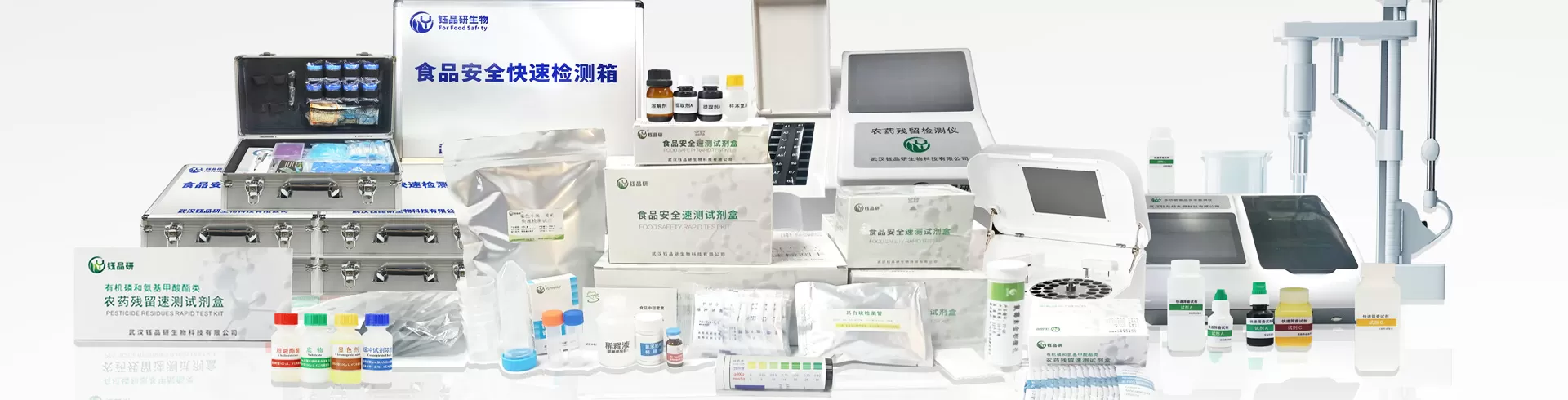
consumers or small-scale testing scenarios should give priority to household testing test strips as daily screening tools; while scenarios that require authoritative data such as enterprise self-inspection and regulatory sampling need to rely on professional testing cards. As an enterprise focusing on the research and development and production of food safety rapid testing reagents, Wuhan Yupinyan Bio's products cover household and professional testing fields. Test strips are characterized by "zero threshold for operation and intuitive results". Professional testing cards meet the strict needs of the industry in terms of accuracy and stability, and can provide reliable testing solutions for different scenarios.
No matter which tool you choose, the core of food safety testing is always to protect public health. Consumers and practitioners should use testing products reasonably according to their own needs, combine daily norms and professional testing data, and jointly build a food safety defense line.