简体中文
简体中文 Shqip
Shqip لالعربية
 Polski
 رسی
رسی Deutsch
 Русский
 Français
 한국어
한국어 Nederlands
 Čeština
 Bahasa Melayu
 Português
 日本語
日本語 Svenska
 Kiswahili
 ไทย
ไทย Türkçe
 繁体中文
繁体中文 Українська
 Español
 Italiano
 हिन्दी
 Bahasa Indonesia
 Tiếng Việt
 Filipino
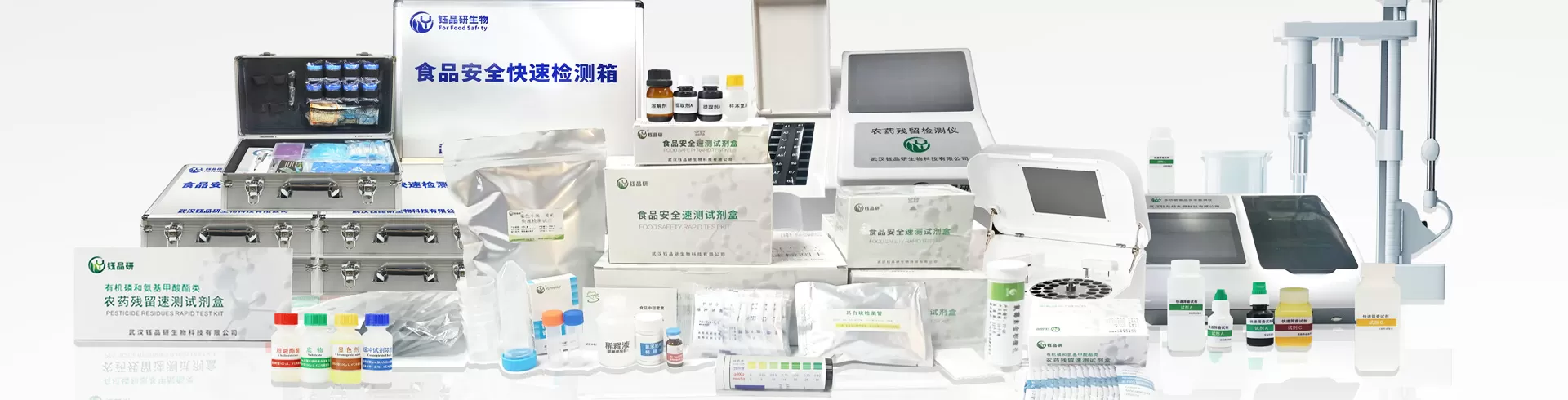
Triazophos, as an organophosphorus insecticide, is widely used in agricultural production, but excessive residues can pose a threat to food safety and human health. Therefore, it is crucial to establish a rapid and accurate detection method. Colloidal gold immunochromatography technology has become an important means for triazophos residue detection due to its advantages of simple operation, rapid detection and visual results. Wuhan Yupinyan Bio focuses on the research and development of rapid detection reagents for food safety. The triazophos colloidal gold detection reagent produced by it shows a wide detection range and stable detection ability in practical applications, and can be adapted to a variety of food substrates.
the core detection range of triazophos colloidal gold detection
triazophos colloidal gold detection reagent is mainly used for qualitative or semi-quantitative detection of triazophos pesticide residues in food, and its core detection range covers the residue levels of triazophos in various food substrates. Whether it is fresh agricultural products, processed foods or environmental pollutants, as long as there is a risk of triazophos residues, it is within the detection range. This technology can quickly determine the presence and approximate content of triazophos in samples through antigen-antibody specific binding reaction, using the color-developing characteristics of colloidal gold particles, providing effective support for food safety supervision and enterprise quality control.
the detection ability of adapting to a variety of agricultural substrates
In the field of agricultural products, triazophos colloidal gold detection reagent exhibits good For vegetables, leafy vegetables (such as spinach, lettuce), rhizomes (such as potatoes, radishes), nightshades (such as tomatoes, eggplants) and other crops can be detected; among fruits, the pulp, peel and juice of berries (such as strawberries, grapes), pomegranates (such as apples, pears) and stone fruits (such as peaches, apricots) can be used as testing samples. In addition, grains and straws of crops such as rice, wheat, and corn, as well as substrates such as beans and oilseed crops (such as soybeans and rapeseed), can be quickly screened for triazophos residues by colloidal gold detection methods, and the detection results are highly consistent with traditional instrument methods.
detection coverage in food raw materials and processed products
In food raw materials and processed products, triazophos colloidal gold detection reagent is also applicable. For food raw materials, such as dehydrated vegetables, flour, edible oil raw materials (soybean oil, rapeseed oil, etc.), sugar raw materials, etc., the raw material samples before processing can be directly tested; for processed products, including condiments (soy sauce, vinegar, sauce), snack foods (biscuits, potato chips), pickled products (pickles, pickles), canned food, etc., even after complex processing processes, as long as the triazophos residue is not completely destroyed, the reagent can still be effectively identified. This wide range of substrate adaptability makes this technology applicable to the whole chain of food safety monitoring from field to table.
detection adaptation of animal-derived foods and environmental samples
In addition to plant-derived foods, animal-derived foods are also important scenarios for triazophos detection. In livestock and poultry meat (such as pork, chicken), aquatic products (such as fish, shrimp) and their processed products (such as sausages and canned fish), if triazophos-containing feed or pesticide residues have been used, the reagent can be used to detect residues in animal tissues or processed products for early warning. In addition, if environmental samples such as soil, irrigation water, aquaculture water and other substrates need to assess triazophos pollution, the detection technology can also quickly provide preliminary screening results, providing a basis for source pollution control.
The triazophos colloidal gold detection reagent produced by Wuhan Yupinyan Bio ensures stable and reliable detection in different substrates by optimizing the preparation process of colloidal gold markers and antibody specific screening. Whether it is agricultural product cultivation, food processing or market supervision, the reagent can help reduce the risk of triazophos residues and protect the food safety line with the characteristics of "fast, accurate and convenient".