简体中文
简体中文 Shqip
Shqip لالعربية
 Polski
 رسی
رسی Deutsch
 Русский
 Français
 한국어
한국어 Nederlands
 Čeština
 Bahasa Melayu
 Português
 日本語
日本語 Svenska
 Kiswahili
 ไทย
ไทย Türkçe
 繁体中文
繁体中文 Українська
 Español
 Italiano
 हिन्दी
 Bahasa Indonesia
 Tiếng Việt
 Filipino
Triazophos, as an organophosphorus insecticide widely used in agricultural production, plays an important role in the prevention and control of vegetable pests, but excessive use can easily lead to excessive residues and latent risks to human health. In recent years, the problem of excessive triazophos in common vegetables such as small rapeseed and long beans has been found in the inspection of agricultural products in many places, which has aroused social attention to the quality and safety of vegetables.
Case analysis of excessive triazophos in small rapeseed and long beans. In the routine sampling inspection of agricultural product quality and safety in a certain area, a batch of listed small rapeseed was intercepted due to excessive triazophos residues. The test data showed that its residues exceeded the national standard limit. The investigation found that during the planting process of this batch of small rapeseed, in order to quickly control aphids and other pests, growers continuously used high-dose triazophos in the short term before harvest, and did not strictly abide by the requirements of the safety interval, resulting in excessive pesticide residues. Coincidentally, another batch of long beans sold to the market also detected excessive triazophos. After investigation, the root cause of the problem was that some bean growers mistakenly chose the highly toxic pesticide triazophos when they were preventing insects during the flowering period, and did not stop the drug according to the norms, resulting in residues when the beans were marketed. Such cases reflect that the irregular use of pesticides in vegetable planting is the main reason for excessive triazophos.
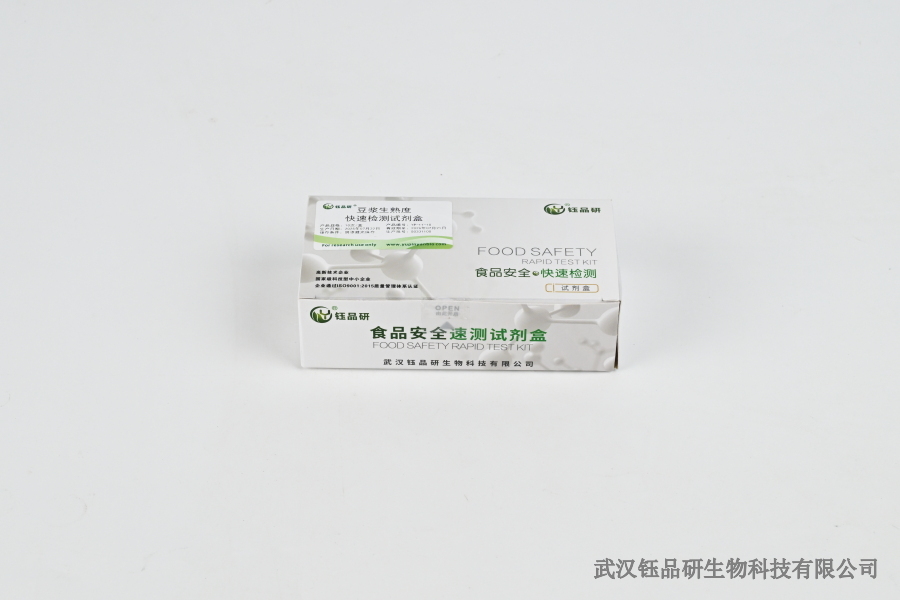
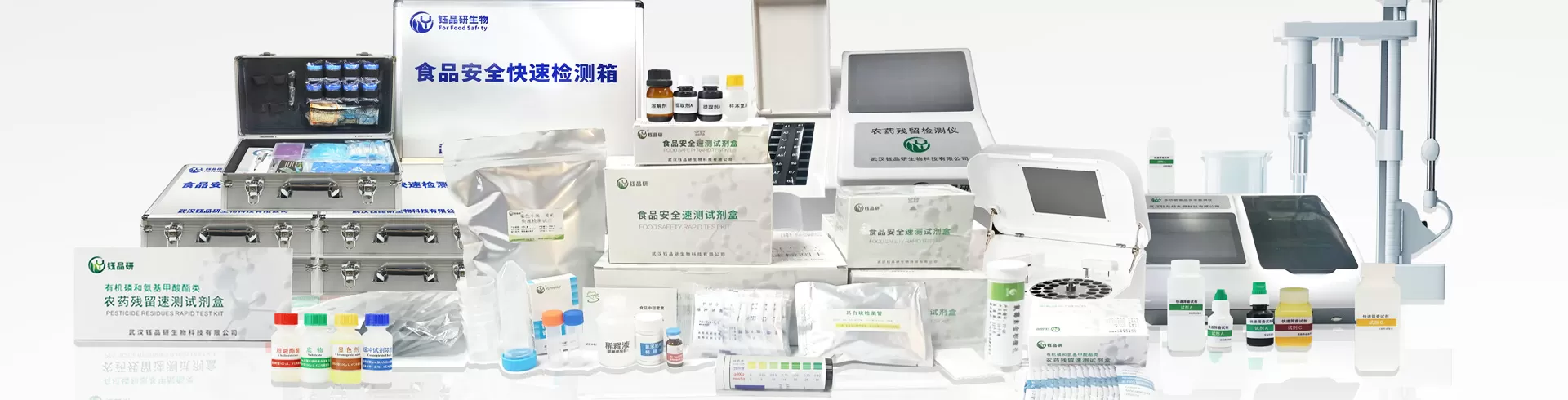
Triazophos Detection Method and Application of Wuhan Yupinyan Biological Rapid Detection Reagent. Although traditional triazophos detection methods such as gas chromatography have high accuracy, the operation is complicated and time-consuming, making it difficult to meet the needs of on-site rapid screening. As a professional food safety detection reagent R & D and production enterprise, Wuhan Yupinyan Bio has launched a food safety rapid detection reagent that can achieve rapid qualitative and quantitative detection of triazophos residues in vegetables. The reagent is based on the principle of immunochromatography or enzyme inhibition. Through simple sample pretreatment (such as extraction and filtration), combined with the specific reaction of the reagent, the detection result can be obtained within 15-30 minutes. No large-scale equipment is required, and the self-test can be completed by grass-roots detectors or growers. The reagent has high specificity and sensitivity, which can effectively identify trace triazophos residues and provide efficient technical support for vegetable quality and safety supervision.
Suggestions for coping with and prevention and control of excessive standard problems. For the detected excessive vegetables of triazophos, the recall procedure should be immediately initiated, prohibited from entering the market, and harmless treatment should be carried out according to regulations to avoid food risks. At the source of planting, it is necessary to strengthen the publicity of pesticide use norms, guide farmers to strictly follow the principle of "safety interval", choose low-toxic pesticides reasonably, and avoid the blind use of high-toxic agents. Regulatory authorities can rely on Wuhan Yupin Research Biological Rapid Detection Reagent to carry out regular sampling inspections of vegetable production bases and wholesale markets, and achieve regular screening of key varieties (such as small rapeseed and long beans), so as to detect and deal with the risk of exceeding the standard in a timely manner. Through the whole chain management of "detection-early warning-prevention and control", the problem of excessive triazophos residues in vegetables can be effectively reduced and the dietary safety of consumers can be guaranteed.
The solution to the problem of excessive triazophos depends on scientific detection technology and strict management measures. Wuhan Yupinyan Bio will continue to optimize the performance of rapid detection reagents, provide reliable tools for vegetable quality and safety testing, help build a food safety defense line from the field to the table, and protect the safety of the public's "vegetable basket".