简体中文
简体中文 Shqip
Shqip لالعربية
 Polski
 رسی
رسی Deutsch
 Русский
 Français
 한국어
한국어 Nederlands
 Čeština
 Bahasa Melayu
 Português
 日本語
日本語 Svenska
 Kiswahili
 ไทย
ไทย Türkçe
 繁体中文
繁体中文 Українська
 Español
 Italiano
 हिन्दी
 Bahasa Indonesia
 Tiếng Việt
 Filipino
As a traditional drink widely consumed around the world, tea has always attracted consumers' attention to its safety and quality. In the process of tea cultivation, triazophos is widely used as an organophosphorus insecticide to control pests such as tea leafhoppers and aphids. However, if used improperly or in excess, triazophos may remain in tea, which may pose a potential threat to human health. Therefore, establishing an efficient triazophos detection technology has become a key link in ensuring the safety of tea drinking.
application and latent risk
Triazophos has broad-spectrum insecticidal properties and is often used in agricultural production for pest control of tea, rice, fruit trees and other crops. Its mechanism of action is to inhibit the activity of acetylcholinesterase in pests, interfere with nerve conduction, and eventually lead to the death of pests. However, it is worth noting that triazophos has acute toxicity to the human body, and long-term low-dose intake may cause health problems such as nervous system damage, abnormal liver and kidney function. Therefore, the detection of triazophos residues in tea is directly related to the dietary safety of consumers.
Importance of tea testing and standard requirements
In recent years, with the strengthening of food safety supervision, the national testing standards for pesticide residues in tea have become increasingly strict. According to the "National Food Safety Standard, Maximum Residue Limits of Pesticides in Food" (GB 2763-2022), the maximum residue limit of triazophos in tea has been clearly stipulated, requiring testing institutions and production enterprises to strictly screen tea samples. The implementation of this standard is inseparable from the support of efficient and accurate detection technology, and rapid detection technology is the core tool to deal with the demand for batch detection.
the development status of triazophos detection technology
At present, triazophos detection technology is mainly divided into laboratory instrumentation analysis and on-site rapid detection two categories. Traditional instrument methods (such as gas chromatography-mass spectrometry, high performance liquid chromatography, etc.) have the advantages of high detection accuracy, but they require professional equipment and operators. The detection cycle is long and the cost is high, which is difficult to meet the needs of grassroots detection or on-site screening. In contrast, rapid detection technology has gradually become the first choice for triazophos screening in tea production and circulation due to its simple operation, short detection time and low cost. Its principle is mostly based on the specific binding reaction of antigens and antibodies, which can realize the qualitative or semi-quantitative detection of triazophos in samples.
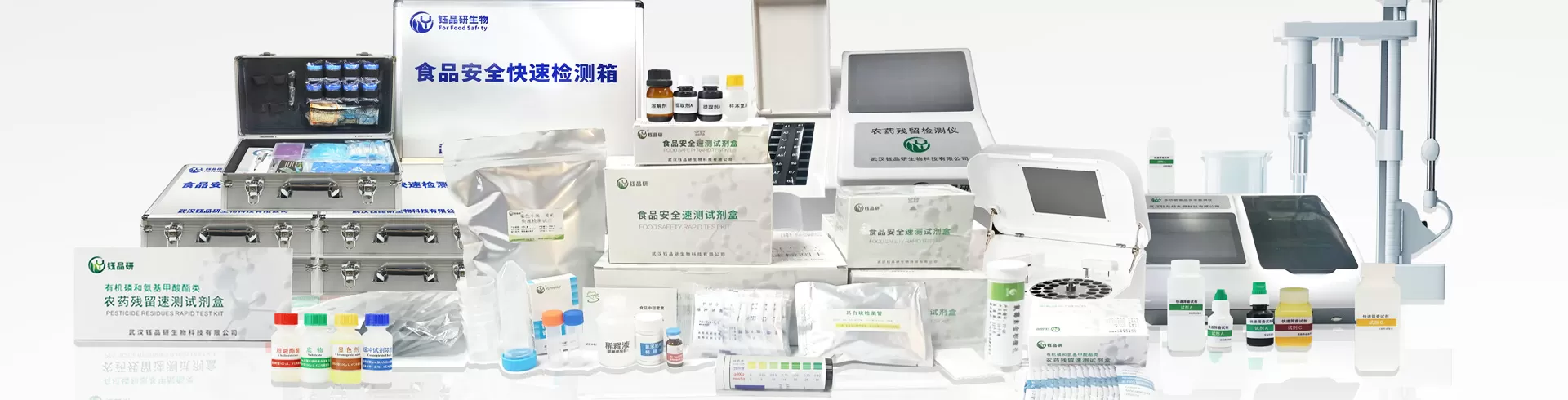
rapid detection plan of Wuhan Yupinyan Bio
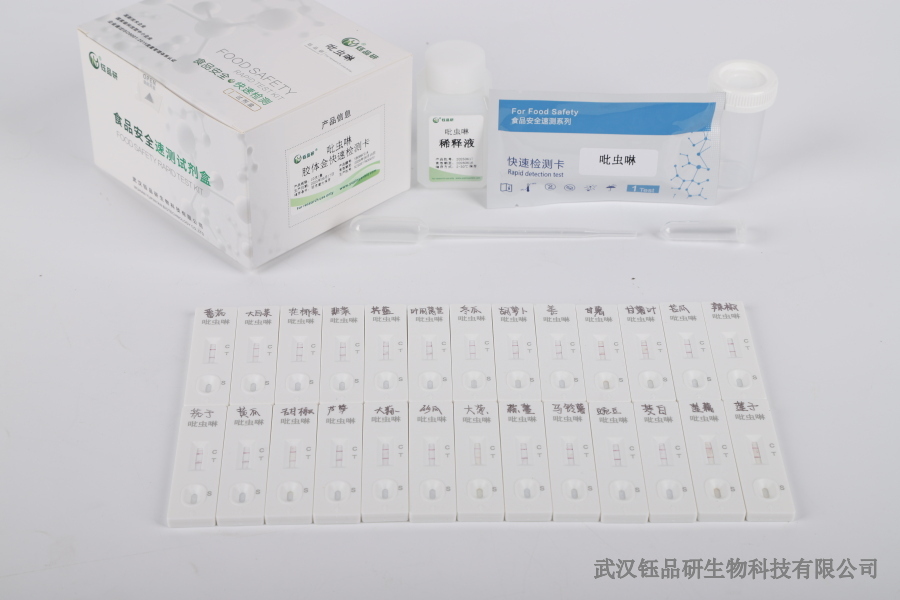
As an enterprise focusing on the research and development and production of rapid detection reagents for food safety, Wuhan Yupinyan Bio has launched a rapid detection reagent for triazophos in tea by virtue of its technical accumulation. The reagent uses colloidal gold immunochromatography technology to combine specific antibodies with antigens of triazophos residues to form visual detection results. The detection process does not require complex equipment, only simple pretreatment and reagent reaction, 10-15 minutes to complete the detection, and the result can be intuitively judged by the color strip. The reagent has high specificity and sensitivity, which can effectively distinguish whether the triazophos residue in tea meets national standards, providing a convenient and reliable detection tool for tea growers, processing enterprises and regulatory authorities.
the key significance of building a tea safety defense line
tea safety testing is not only an important part of food safety supervision, but also the foundation for protecting consumer health. Wuhan Yupinyan Bio's triazophos rapid detection reagent, with its high efficiency and accuracy, helps all links of the tea industry chain to achieve quality control. Through the application of rapid screening at the planting end, strict testing at the processing end, and sampling at the circulation end, unqualified tea products can be detected and intercepted in time, and the risk of triazophos residues can be reduced from the source, so that consumers can really drink safe and assured tea. In the future, with the continuous progress of detection technology, Wuhan Yupinyan Bio will continue to optimize product performance and contribute more technical strength to the field of tea safety testing.