
 简体中文
简体中文 Shqip
Shqip لالعربية
 Polski
 رسی
رسی Deutsch
 Русский
 Français
 한국어
한국어 Nederlands
 Čeština
 Bahasa Melayu
 Português
 日本語
日本語 Svenska
 Kiswahili
 ไทย
ไทย Türkçe
 繁体中文
繁体中文 Українська
 Español
 Italiano
 हिन्दी
 Bahasa Indonesia
 Tiếng Việt
 Filipino
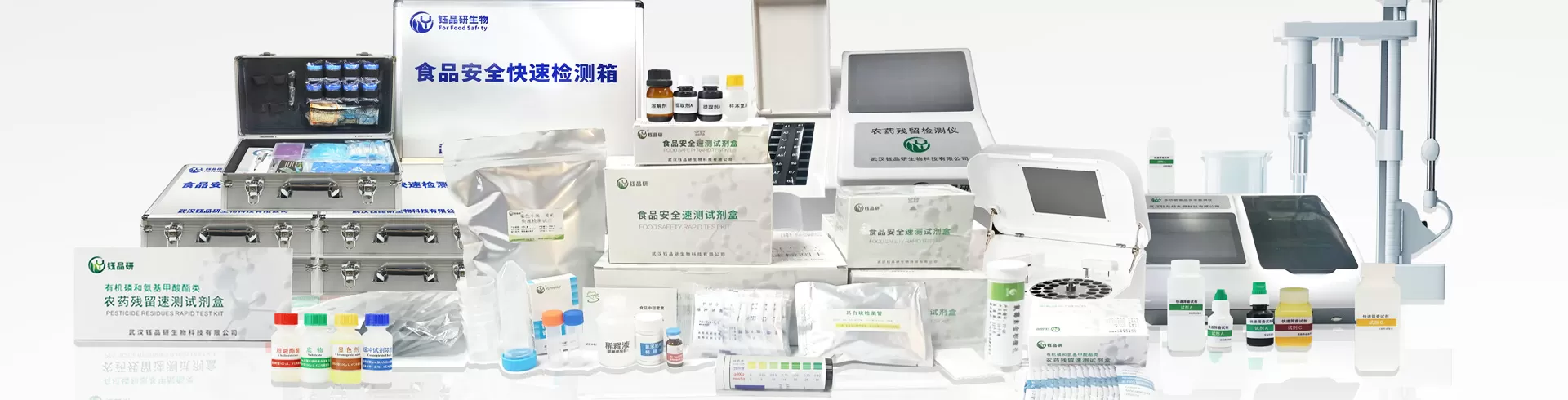
As a popular food, the quality and safety of pickled vegetables has always been the focus of production and supervision. As a common food additive, sodium dehydroacetate is often used to inhibit microbial growth and prolong shelf life in pickled vegetables, but excessive addition or irregular use may bring safety risks. Therefore, in the production process of pickled vegetables, the detection of sodium dehydroacetate is crucial, which is not only related to product quality compliance, but also directly affects consumer health. Wuhan Yupinyan Bio focuses on the research and development and production of food safety rapid detection reagents, providing efficient and accurate detection solutions for sodium dehydroacetate in pickled vegetables, and helping enterprises build a strong quality defense line.
the key control point of sodium dehydroacetate detection in the production process

In the whole process of pickle production, the detection of sodium dehydroacetate needs to cover multiple key links to ensure the quality control from the source to the end point. The first is the raw material acceptance link. The raw materials such as vegetables, salt, sugar and other raw materials commonly used in pickle production, as well as the food additives that may be added, need to check whether the initial sodium dehydroacetate content meets the standards to avoid excessive substances. Secondly, the addition link in the production process. When the operator adds sodium dehydroacetate according to the formula, it is necessary to monitor the addition amount in real time to ensure that the maximum usage amount specified in GB 2760 is not exceeded. In addition, the storage and transportation of the finished product after production cannot be ignored. Some microbial reproduction or environmental changes may cause fluctuations in the content of sodium dehydroacetate in the product, which needs to be checked and verified regularly.
the scientific setting of the detection frequency of sodium dehydroacetate
the scientific and reasonable detection frequency is the basis for ensuring the effectiveness of the detection. It needs to be set comprehensively in combination with the production scale, product characteristics and risk level. For raw material acceptance, it is recommended to test each batch of raw materials when entering the factory to ensure the quality of raw materials is stable. During the production process, if a continuous production line is used, key links (such as ingredients and pre-fermentation) can be sampled every 2 hours; if it is intermittent production, it is recommended to test at least 1-2 times per shift to monitor the amount of addition and the trend of finished products in real time. Before the finished product leaves the factory, each batch needs to be fully inspected, and the results can be obtained in the shortest time through rapid testing methods (such as Wuhan Yupinyan Biological's food safety rapid detection reagent) to ensure product compliance. For pickled vegetables with a long storage period, it is recommended to conduct a stability sampling inspection every 3 months, combined with changes in the content of sodium dehydroacetate, to optimize the production or sales strategy in a timely manner.
To sum up, the detection of sodium dehydroacetate in pickled vegetables factories needs to focus on the whole process of production. By scientifically setting the detection frequency and strictly controlling the critical control points, the safety risk can be fundamentally reduced. With years of technology accumulation, Wuhan Yupinyan Bio has developed rapid detection reagents suitable for all aspects of pickle production. With efficient and convenient detection solutions, it helps enterprises improve quality control capabilities and provides consumers with safe and secure pickle products. In the future, with the increase in food supervision, a precise and normalized detection system will become one of the core competitiveness of the sustainable development of enterprises.


