
 简体中文
简体中文 Shqip
Shqip لالعربية
 Polski
 رسی
رسی Deutsch
 Русский
 Français
 한국어
한국어 Nederlands
 Čeština
 Bahasa Melayu
 Português
 日本語
日本語 Svenska
 Kiswahili
 ไทย
ไทย Türkçe
 繁体中文
繁体中文 Українська
 Español
 Italiano
 हिन्दी
 Bahasa Indonesia
 Tiếng Việt
 Filipino
Malachite green and enrofloxacin: key detection objects for exported aquatic products
In recent years, although aquatic exports have maintained a growth momentum in international trade, they have frequently encountered reports of refusal to inspect by importing countries. Among the many residual substances, malachite green and enrofloxacin have become key detection objects for "customs clearance" of exported aquatic products due to their high hazard and strict control requirements. Once these two types of substances exceed the standard, they will not only lead to the return and destruction of the product, but also may damage the food safety reputation of the exporting country and bring huge economic losses to the enterprise.
Malachite green is a synthetic triphenylmethane dye. It has been used in aquaculture to prevent and treat water mildew, but it has strong carcinogenicity and teratogenicity. A small amount of residue can accumulate in the human body, causing irreversible damage to organs such as liver and kidney. The World Health Organization (WHO) lists it as a high-risk pollutant. Major importing countries such as the European Union and the United States have set very low residue limits. The detection of malachite green in China's exported aquatic products often becomes the "hardest hit area" notified by customs.
Enrofloxacin, as a broad-spectrum fluoroquinolone antimicrobial agent, is used in aquaculture to prevent and treat bacterial diseases. However, if the dosage is improper or the withdrawal period is insufficient, it is easy to remain in aquatic products. Long-term ingestion of aquatic products containing enrofloxacin may disrupt the balance of human intestinal flora, increase the risk of drug resistance, and affect the health of aquatic organisms. With the tightening of supervision in various countries, the residue limit of enrofloxacin continues to decrease, which has become a detection problem that export aquatic enterprises must overcome.
Precision Pre-inspection Program: The Core Means to Reduce Export Risks
Faced with the export obstacles caused by residual substances, the establishment of a fast and accurate pre-inspection program has become an urgent need for aquatic enterprises. Through efficient screening of products before export, enterprises can detect problems of exceeding standards in time, adjust breeding or processing processes, and avoid substandard products from entering the international market.
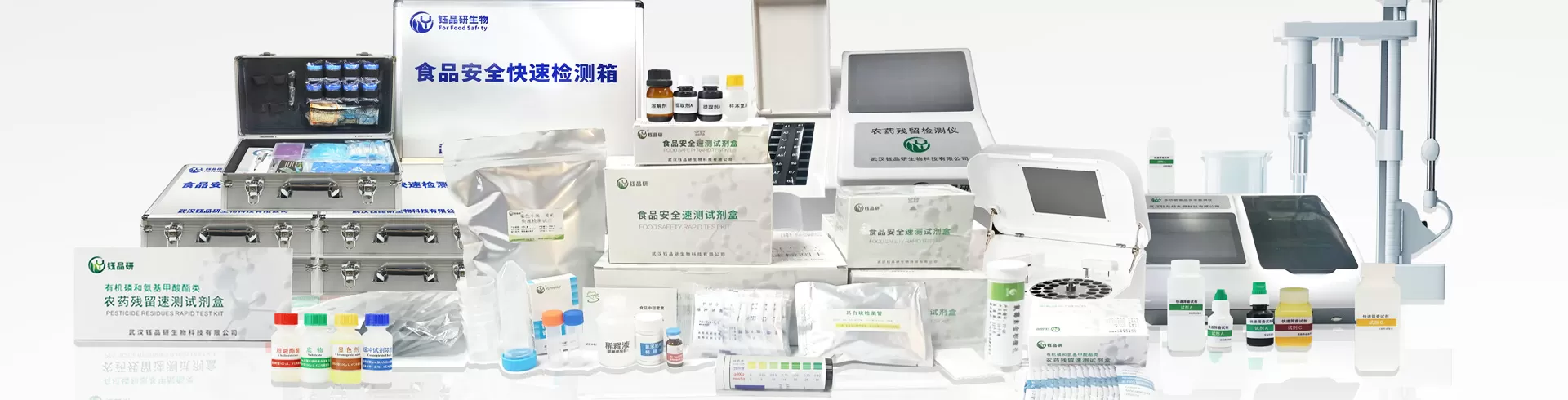
Wuhan Yupinyan Bio focuses on the field of rapid food safety detection. The rapid detection reagents of malachite green and enrofloxacin developed by it provide reliable technical support for export pre-inspection. This type of reagent adopts immunochromatography technology, which only needs to drop the sample treatment liquid into the detection card, and can complete the detection within 10-15 minutes by observing the color development results. The whole process does not require complex instruments, and the operation is simple and the detection speed is fast. The detection limit of the reagent is strictly lower than the standard of the importing country, ensuring the accuracy and reliability of the results, helping enterprises to quickly complete the quality control before export, and effectively avoid the residual risk.
Conclusion: Technology helps the safe export of aquatic products "go to sea"
In the current era of intensified competition in aquatic exports, accurate pre-inspection is the key to ensuring product safety and enhancing competitiveness. With its high efficiency and accuracy, Wuhan Yupinyan's rapid detection reagents have become the right-hand assistant for export pre-inspection of many aquatic enterprises, helping China's aquatic products enter the international market smoothly and achieve a leap from "qualified" to "high quality".


