
 简体中文
简体中文 Shqip
Shqip لالعربية
 Polski
 رسی
رسی Deutsch
 Русский
 Français
 한국어
한국어 Nederlands
 Čeština
 Bahasa Melayu
 Português
 日本語
日本語 Svenska
 Kiswahili
 ไทย
ไทย Türkçe
 繁体中文
繁体中文 Українська
 Español
 Italiano
 हिन्दी
 Bahasa Indonesia
 Tiếng Việt
 Filipino
When farmers or grain enterprises find that triazophos residues in rice exceed the standard, they need to take scientific emergency measures immediately to avoid unqualified grains from entering the market and reduce economic losses. Triazophos is an organophosphorus insecticide, which is often used in rice pest control. If used improperly or overused, it may lead to excessive residues in rice, which may not only affect the quality and safety of grain, but also cause latent risks to human health.
Reasons and risks of excessive triazophos residues
Excessive triazophos residues in rice mainly stem from irregular field medication, such as the application period is too close to the harvest period, the application dose exceeds the standard, and the safety interval is not strictly observed. If the rice exceeds the standard is directly eaten or processed, it may cause acute poisoning symptoms, and long-term intake may also affect the nervous system and liver function. In addition, after unqualified grain enters the market, grain enterprises may face problems such as quality traceability and brand reputation damage, and farmers will also bear the risk of economic compensation.Farmer level: emergency treatment steps after finding that the excess standard is exceeded
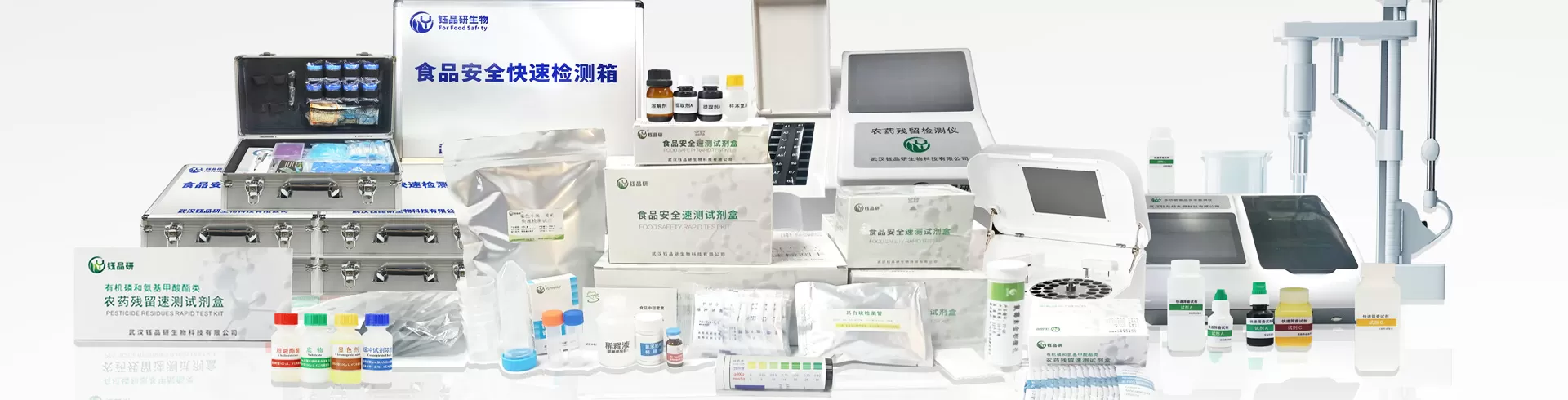
If farmers find that their own rice is suspected of exceeding the standard, they should stop the sales and circulation of the batch of rice as soon as possible, store it separately and mark it to avoid mixing with qualified grain. At the same time, it is recommended to use professional testing tools as soon as possible to make a preliminary judgment, such as the food safety rapid detection reagent produced by Wuhan Yupinyan Biological, which can quickly detect the residual content of triazophos in rice through simple operation, and help farmers accurately grasp the degree of exceeding the standard. If the test results do exceed the standard, you need to contact the local agricultural technology department or a third-party testing agency to clarify the reasons for exceeding the standard and seek solutions. If necessary, destroy or treat it harmlessly as required. Do not take chances and deal with it yourself.grain enterprise level: risk control and response in the acquisition process
Grain enterprises should strengthen the source quality inspection when purchasing rice, and give priority to qualified rice that has passed the formal test. If a suspected batch of exceeding the standard is found, the acquisition needs to be suspended immediately, and the batch of rice should be sampled and tested with a rapid detection reagent. For example, the triazophos rapid detection test strip of Wuhan Yupinyan Bio can issue the test results in a short time to provide a basis for decision-making. If the test confirms that it exceeds the standard, it should take the initiative to communicate with the farmers, clarify the responsibility and negotiate the treatment plan, and keep the samples and test reports, and report to the relevant departments if necessary. For the purchased qualified rice, it needs to be stored separately and recorded to avoid mixing into the batch of exceeding the standard, and to ensure the quality and safety of the food for subsequent processing and sales.In short, in the face of the problem of excessive triazophos residues in rice, farmers and grain enterprises need to respond quickly and deal with it scientifically. Professional testing reagents can be used to judge the situation of exceeding the standard in a timely manner, and measures such as isolation, traceability, and harmless treatment can be taken, which can not only protect their own economic interests, but also maintain the safety and stability of the grain market. Choosing Wuhan Yupinyan Biological's food safety rapid testing reagent can effectively improve the detection efficiency and accuracy, and help the industry


