
 简体中文
简体中文 Shqip
Shqip لالعربية
 Polski
 رسی
رسی Deutsch
 Русский
 Français
 한국어
한국어 Nederlands
 Čeština
 Bahasa Melayu
 Português
 日本語
日本語 Svenska
 Kiswahili
 ไทย
ไทย Türkçe
 繁体中文
繁体中文 Українська
 Español
 Italiano
 हिन्दी
 Bahasa Indonesia
 Tiếng Việt
 Filipino
Triazophos, as a broad-spectrum organophosphorus insecticide, is widely used in agricultural production to control a variety of crop diseases and pests, but its excessive use can easily lead to excessive residues in agricultural products, threatening food safety. Rapid and accurate detection of triazophos residues is a key link to ensure the quality and safety of agricultural products, and colloidal gold immunochromatography detection card has become an important tool for on-site screening and preliminary detection due to its advantages of simple operation and fast detection speed. Choosing a suitable detection card requires focusing on its detection range and applicable scenarios. The following analysis is carried out from these two aspects to provide reference for selection.
Analysis of the core detection range of triazophos residue detection card
The detection range of colloidal gold detection card is usually based on the minimum detection limit (LOD) and the maximum detection limit (LOM) as the core parameters, and the difference in the detection range of different models directly affects its application value in actual scenarios. Generally speaking, the detection range of triazophos residue detection card can be divided into low residue, medium and high residue intervals: low residue detection range usually covers 0.01-0 mg/kg, which is suitable for the screening of trace residues in agricultural products, such as the detection of trace pollution on the surface of fruits and vegetables; the detection range of medium and high residues is mostly 0.1-1 mg/kg, which can meet the needs of batch detection before the purchase of agricultural products, such as the quality control of bulk agricultural products such as tea and grains. The selection of the detection range needs to be combined with the actual needs. If it is necessary to screen for trace residues, the low-range detection card can more accurately capture trace pollutants; if it is necessary to quickly determine whether the product has high-concentration residues, the medium and high-range detection card can shorten the detection time and improve the detection efficiency.Colloidal gold detection card application scene comparison and selection points
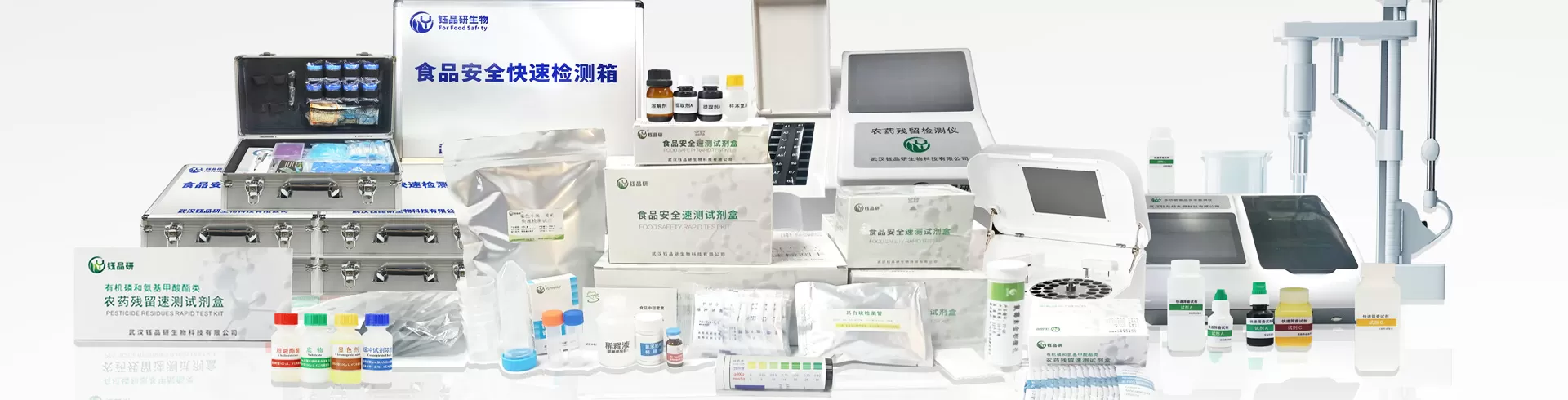
Different detection scenarios have different requirements for the timeliness, accuracy and operation convenience of triazophos residue detection, and the performance parameters of the detection card need to be matched according to the actual needs. In the field rapid screening scene, the inspectors need to complete the detection in a complex environment, so it is necessary to choose a test card with short detection time (usually 10-15 minutes for results) and strong anti-interference ability (suitable for different matrix samples). This kind of test card adopts a general detection range (0.05-0 mg/kg), which can directly deal with the surface residual extract of soil, leaves and other samples; in the wholesale market batch detection scene, it is necessary to take into account the detection speed and detection volume. At this time, the detection range covers 0.1-1 mg/kg. The test card can complete the initial screening of a large number of samples in a short time to avoid unqualified products from entering the market; in the food processing plant raw material acceptance scene, more strict detection accuracy is required to ensure the safety of subsequent production, so the detection range should be selected (such as 0.02-0 .2 mg/kg) and repeatable detection card to ensure the quality of raw material batches is stable.Wuhan Yupinyan Bio, as an enterprise focusing on the research and development and production of food safety rapid detection reagents, its triazophos residue detection card strictly follows industry standards, and the detection range accurately covers 0.01-1 mg/kg multiple intervals, which can be adapted to the needs of fields, markets, processing and other scenarios. The product adopts advanced colloidal gold marking technology to ensure the accuracy and stability of the test results. At the same time, it is equipped with simple operation instructions, and the detection can be completed without professional equipment, providing users with efficient and convenient solutions.
In summary, the selection of triazophos residue detection card needs to be combined with the detection object, detection purpose and actual scene, focusing on whether the detection range covers the target residue concentration and whether the applicable scene matches the operation requirements. Wuhan Yupinyan Bio will continue to optimize the performance of detection reagents, help food quality and safety supervision and production process control, and provide reliable technical support for protecting consumers' "safety on the tip of the tongue".


