简体中文
简体中文 Shqip
Shqip لالعربية
 Polski
 رسی
رسی Deutsch
 Русский
 Français
 한국어
한국어 Nederlands
 Čeština
 Bahasa Melayu
 Português
 日本語
日本語 Svenska
 Kiswahili
 ไทย
ไทย Türkçe
 繁体中文
繁体中文 Українська
 Español
 Italiano
 हिन्दी
 Bahasa Indonesia
 Tiếng Việt
 Filipino
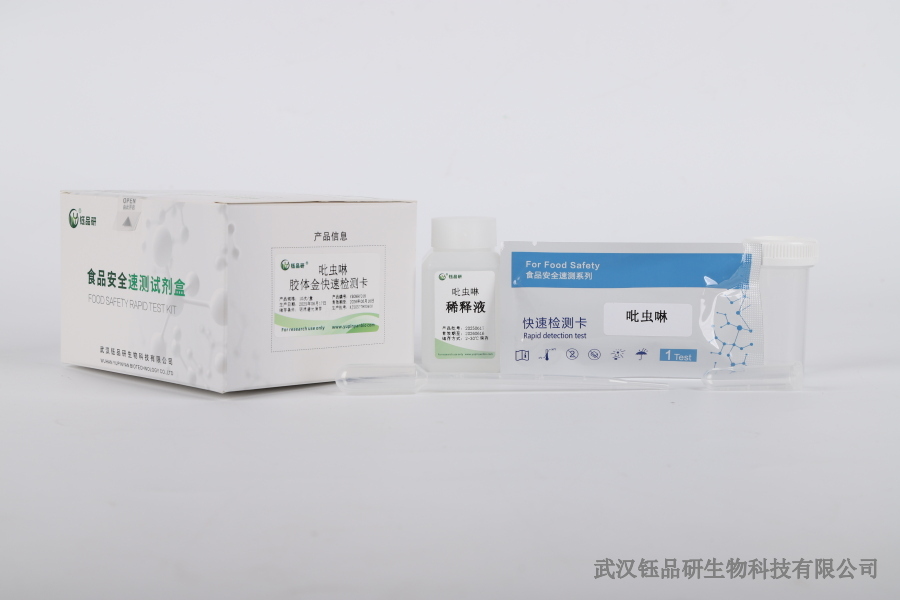
As a commonly used organophosphorus insecticide, triazophos is widely used in agricultural production, but its residue exceeding the standard may pose a potential threat to human health. Therefore, it is crucial to establish a scientific and standardized detection method. Our country has formulated a national standard detection method (GB) for triazophos, which provides an authoritative basis for food safety supervision. This paper will combine the food safety rapid detection reagent developed by Wuhan Yupinyan Bio to disassemble the step-by-step operation points of the national standard detection method for beginners, and help you get started easily.
Detection Principle and Standard Basis
Triazophos National Standard Detection Method (GB) Based on the general detection principle of organophosphorus pesticide residues, the qualitative or quantitative detection of triazophos in samples is realized through the specific binding of antigens and antibodies or the color development of chemical reactions. The rapid detection reagents developed by Wuhan Yupinyan Bio strictly follow the core technology of GB method to ensure that the detection principle is completely consistent with the national standard, and to ensure the accuracy of the test results. Before testing, it is necessary to confirm the type of test sample (such as vegetables, fruits, grains, etc.) and the applicable pretreatment process to ensure that the triazophos components in the sample can be effectively released.
the preparation work before testing
before triazophos testing, it is necessary to complete the triple preparation of reagents, instruments and samples. First, check whether the triazophos rapid detection reagents provided by Wuhan Yupinyan Bio are within the valid period, whether the packaging is intact, and avoid using expired or deteriorated reagents. Secondly, prepare the necessary instruments and equipment, such as pipette gun, centrifuge tube, test tube, constant temperature incubator, etc., and debug it to a suitable working state in advance. Finally, according to the sample type, pre-treatment is usually required to add the extraction solution (such as methanol-water mixture) after grinding the sample, remove impurities through shaking, centrifugation and other steps to obtain a clear solution to be tested to ensure that the follow-up detection is not disturbed.
specific detection operation steps
detection operation should be strictly carried out in accordance with the three-step method of "sample addition-reaction-observation". The first step is to take an appropriate amount of the treated sample solution and add it to the reaction tube. If the Wuhan Yupinyan biological supporting reagent is used, the corresponding volume of reagent A and reagent B can be added directly according to the instructions to ensure that the addition amount is accurate. The second step is to incubate the reaction tube in a constant temperature environment of 37 ° C for 15-30 minutes (the specific time is subject to the reagent instructions), during which the reaction tube should be avoided from shaking or being exposed to strong light to ensure that the reaction is fully carried out. The third step is to take out the reaction tube and observe the color change of the solution: if the color development results are consistent with the negative control, it is judged to be negative; if there is obvious positive color development (such as specific color depth difference), it needs to be further confirmed by the national standard method (such as gas chromatography).
results and precautions
results should be determined in combination with the control color card or instrument reading in the reagent instructions. If the color of the sample solution is exactly the same as the negative control, it can be confirmed that triazophos is not detected; if the color difference is obvious, the test needs to be repeated to eliminate the operation error. In terms of precautions, special attention should be paid to: First, the use of reagents is standardized. Wuhan Yupinyan biological rapid detection reagents should be used as soon as possible after opening, and the remaining reagents need to be sealed and refrigerated; Second, the operation environment is controlled. During the detection process, dust, moisture and other pollution are avoided to ensure that the reaction environment is clean; Third, the results are abnormal. If the sample is turbid, the reagent discoloration, etc., it needs to be re-sampled and operated strictly according to the process. If necessary, professional and technical personnel should be consulted.
Mastering the detection method of triazophos national standard can not Wuhan Yupinyan Bio has always been committed to providing efficient and accurate reagent support for food safety testing, helping inspectors to complete the testing work quickly and standardized. I hope the step-by-step teaching in this article can help beginners get started quickly and build a strong line of defense for food safety supervision.