简体中文
简体中文 Shqip
Shqip لالعربية
 Polski
 رسی
رسی Deutsch
 Русский
 Français
 한국어
한국어 Nederlands
 Čeština
 Bahasa Melayu
 Português
 日本語
日本語 Svenska
 Kiswahili
 ไทย
ไทย Türkçe
 繁体中文
繁体中文 Українська
 Español
 Italiano
 हिन्दी
 Bahasa Indonesia
 Tiếng Việt
 Filipino
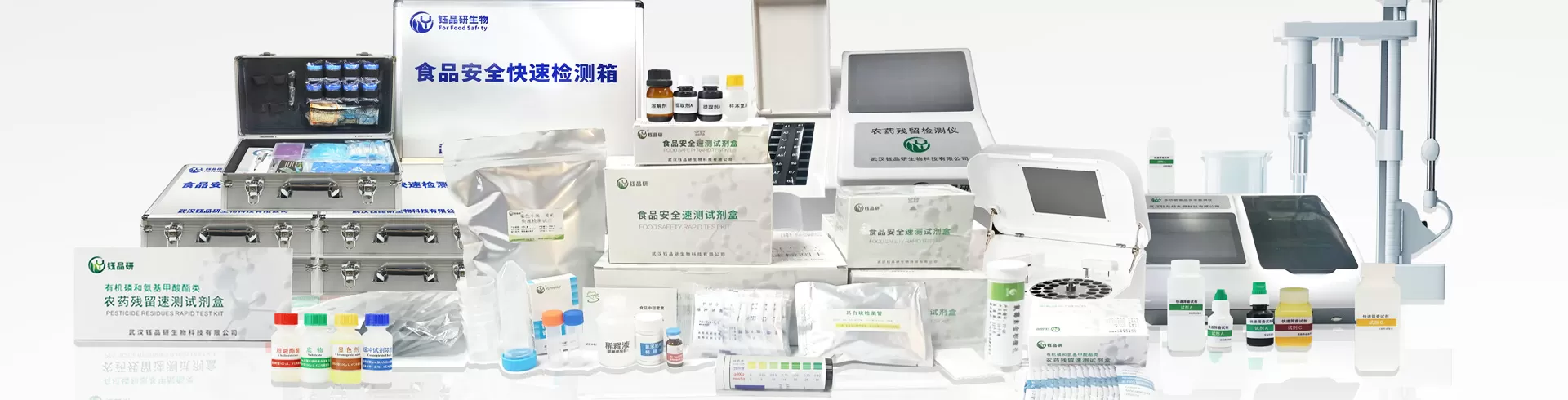
Triazophos is an organophosphorus insecticide widely used in agricultural production, and its residue detection is an important link to ensure food safety. Accurate detection results can provide a reliable basis for the quality supervision of agricultural products, but in the actual detection process, the generation of errors is often closely related to multiple operation links. Wuhan Yupinyan Bio focuses on the research and development and production of food safety rapid detection reagents. It is well aware of the impact of each link in the detection process on the accuracy of results. The following three dimensions of sample processing, instrument operation, and reagent storage deeply analyze the formation of triazophos detection errors.
The error impact of sample processing is mainly reflected in the standardization of pre-treatment. If the particle size of the sample is uneven during grinding, it will lead to uneven distribution of the target substance, which will affect the subsequent extraction efficiency. During the extraction process, if the oscillation time is insufficient or the temperature control deviates from the standard value, the triazophos residue may not be fully released, resulting in low detection results. During the purification step, if the purification column is improperly selected (such as the type of filler does not match the target) or the volume and flow rate of the eluent are controlled incorrectly, it is easy to introduce impurities to interfere with the detection signal. In addition, if the balance is not calibrated in the weighing process, the sample absorbs moisture or agglomerates, it will directly lead to weighing errors, which in turn affects the accuracy of the concentration calculation. Minor deviations in these operation details may significantly amplify the errors after accumulation, reducing the reliability of the detection results.
The errors in The calibration and parameter setting of the detection instrument are key factors: if the detector sensitivity of the gas chromatograph is not calibrated according to the standard, or the chromatographic column is not fully aged, it will lead to abnormal peak shape, drift of retention time, and affect the separation and quantification of the target. Improper setting of injection parameters (such as injection volume fluctuations, uneven injection speed), insufficient preheating time of the instrument, residual injection needle or undrained bubbles can directly interfere with the detection signal. For example, the previous sample may remain after the injection needle is not fully rinsed, resulting in deviations in parallel experimental results; incorrect setting of integration software parameters (such as excessive integration threshold) may miss low concentration target peaks, resulting in misjudgment of results. These operational errors not only affect the accuracy of a single detection, but also may lead to unstable reproducible experimental results.
The stability of the reagent storage link is crucial to the detection results. The food safety rapid detection reagents produced by Wuhan Yupinyan Bio have passed strict stability tests in the research and development stage, but if they are not stored as required in actual use (such as high temperature and excessive humidity), the reagent activity will decrease or the components will deteriorate. For example, enzyme reagents are prone to enzyme inactivation when placed in a high temperature environment for a long time, which reduces the specificity of the detection reaction; if the standard or reference substance is not stored properly, it may absorb moisture, decompose or be contaminated, change its concentration or structure, and cause the standard curve to deviate. In addition, if the reagent is not sealed or stored in the dark in time after opening, it is easy to react with air and light, causing non-specific signal interference, which in turn leads to systematic errors in the test results. Therefore, a standardized reagent storage process is the basis for ensuring the accuracy of the detection.
To sum up, the formation of triazophos detection errors is the result of the combined action of multiple factors such as sample processing, instrument operation, and reagent storage. Wuhan Yupinyan Bio has always aimed at "accurate detection and safety escort". By optimizing the reagent formula and strict quality control system, it provides reliable reagent support for food safety testing, helping testing institutions and enterprises to reduce errors in all links and ensure the accuracy and stability of test results.