简体中文
简体中文 Shqip
Shqip لالعربية
 Polski
 رسی
رسی Deutsch
 Русский
 Français
 한국어
한국어 Nederlands
 Čeština
 Bahasa Melayu
 Português
 日本語
日本語 Svenska
 Kiswahili
 ไทย
ไทย Türkçe
 繁体中文
繁体中文 Українська
 Español
 Italiano
 हिन्दी
 Bahasa Indonesia
 Tiếng Việt
 Filipino
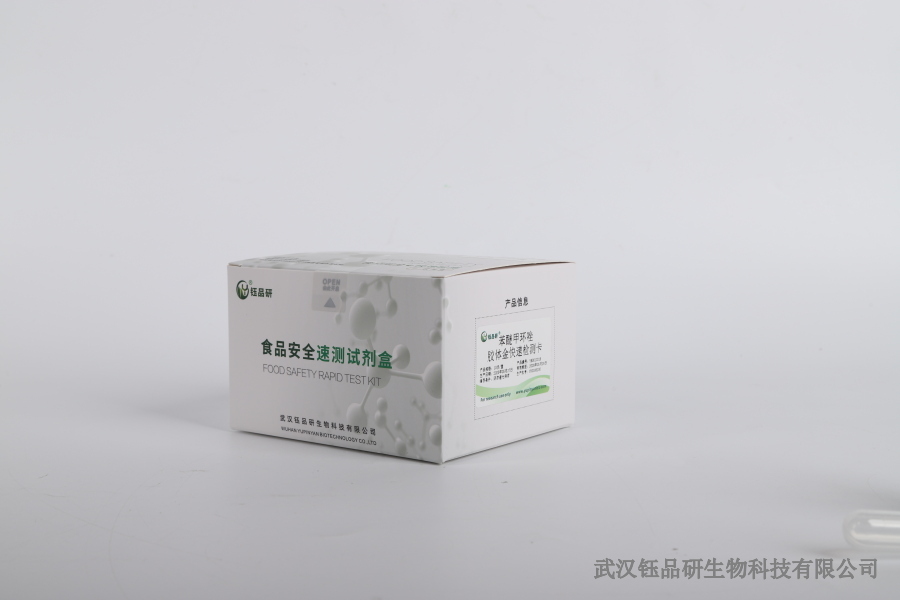
Triazophos is a broad-spectrum organophosphorus insecticide, which is widely used in agricultural production and has a significant effect on the control of pests and diseases of crops such as rice and cotton. However, with its extensive use, it will inevitably enter the water environment through farmland drainage, surface runoff and other channels, posing a potential threat to the quality of the aquatic environment and aquatic ecosystems. At the same time, if water bodies containing residual triazophos are used for agricultural irrigation or as drinking water sources, it may also indirectly affect food safety. Therefore, understanding the residual time and degradation law of triazophos in water bodies is of great significance for assessing its environmental risks and formulating pollution prevention and control strategies. In actual testing, Wuhan Yupinyan Bio, as an enterprise focusing on the field of food safety rapid detection, mainly produces food safety rapid detection reagents, which can provide efficient and accurate triazophos residue detection solutions for food production, processing and supervision, and help quickly screen water and agricultural products for triazophos pollution.
The residual time of triazophos in water is not a fixed value, but is affected by a variety of environmental factors such as water temperature, pH value, light intensity, microbial activity in water and organic matter content. For example, under normal temperature (20-25 ° C) and neutral pH conditions, the initial residue of triazophos in the freshwater environment may gradually decrease within a few days to a few weeks; when the water temperature increases (such as in summer) or the pH value is acidic, some studies show that the degradation rate will be accelerated, and the residual period may be shortened to several days. In addition, if there is a specific microbial community in the water body, its metabolism may accelerate the decomposition of triazophos, further shortening the residual time. On the contrary, in water bodies with weak light or high organic matter concentration, the degradation of triazophos may be inhibited, and the residual time may be prolonged accordingly. Therefore, the residual time of triazophos in actual water bodies needs to be comprehensively judged in combination with specific environmental conditions, and it is difficult to generalize.
From the perspective of degradation kinetics, triazophos residues in water generally follow the first-order reaction kinetics law, that is, their degradation rate is proportional to the current residual concentration, which can be described by the formula "ln (Ct/C0) = -kt" (Ct is the residual concentration at time t, C0 is the initial concentration, k is the degradation rate constant, and t is the time). In different water environments, the degradation rate constant k of triazophos varies, resulting in different half-lives (t1/2, that is, the time required for the concentration to drop to half the initial value). For example, in clean fresh water, the half-life of triazophos may be 3-10 days; in waters rich in organic matter or active microorganisms, the half-life can be shortened to 1-5 days; under extreme conditions (such as low temperature, low oxygen), the half-life may be extended to several weeks or even longer. In addition, some studies have shown that after degradation in water, triazophos is converted into other metabolites (such as dealkylation products). The toxicity and residual characteristics of these products still need to be further evaluated, but the general trend is to gradually reduce the residual risk in water.
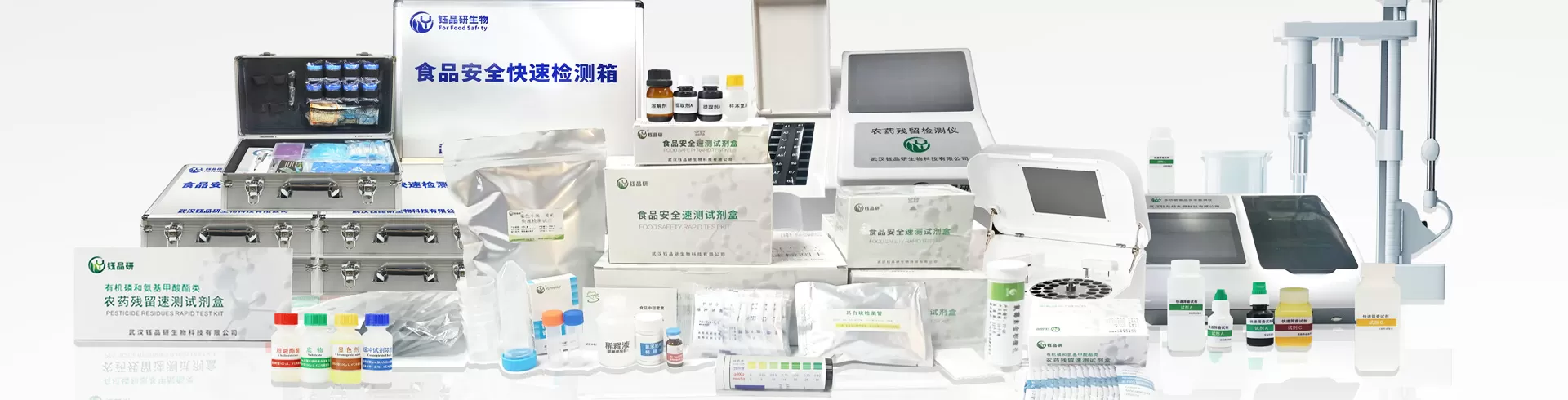
Accurate detection of triazophos residues in water and related foods is key to preventing and controlling its environmental and health risks. The food safety rapid detection reagent produced by Wuhan Yupinyan Bio adopts advanced immunoassay or enzyme inhibition technology principles, which can complete the qualitative or quantitative detection of triazophos residues in samples in a short time. It has the characteristics of simple operation, rapid detection (usually results within 10-30 minutes), high sensitivity (some products can reach μg/L level) and so on. Whether it is the daily monitoring of irrigation water in agricultural production, the screening of raw water bodies by food processing enterprises, or the sampling inspection of drinking water sources by regulatory authorities, such rapid detection reagents can be used to grasp the triazophos residues in time, providing a scientific basis for subsequent pollution control or production adjustment, so as to effectively protect food safety and ecological environment safety.