
 简体中文
简体中文 Shqip
Shqip لالعربية
 Polski
 رسی
رسی Deutsch
 Русский
 Français
 한국어
한국어 Nederlands
 Čeština
 Bahasa Melayu
 Português
 日本語
日本語 Svenska
 Kiswahili
 ไทย
ไทย Türkçe
 繁体中文
繁体中文 Українська
 Español
 Italiano
 हिन्दी
 Bahasa Indonesia
 Tiếng Việt
 Filipino
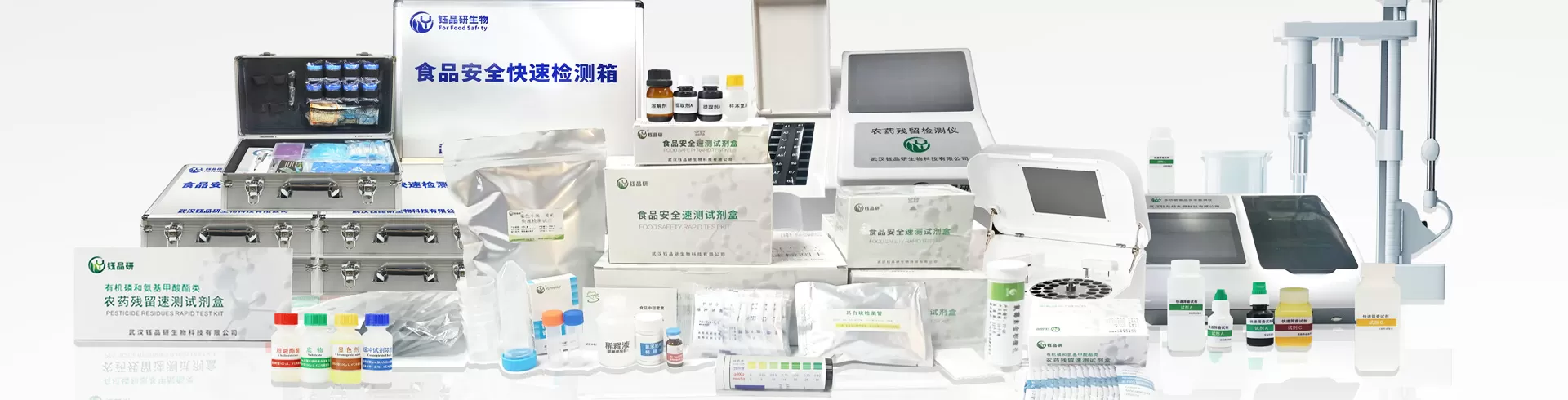
As an organophosphorus pesticide, triazophos is widely used in agricultural production to control various pests, but its residues may pose latent risks to human health and ecological environment. In the grass-roots food safety supervision, the rapid detection of triazophos residues is a key link to ensure the safety of agricultural products. Wuhan Yupinyan Bio focuses on the research and development and production of food safety rapid detection reagents. The triazophos rapid residue detection card launched by it has become a practical tool for grass-roots detection work due to its simple operation, short detection time and intuitive results. This article will explain the practical steps of the detection card at the grass-roots level to provide clear operation guidelines for grass-roots testing personnel.
the preparation work before the detection
the actual operation of the grass-roots detection, it is necessary to make sufficient preparations in advance to ensure the smooth detection process and reliable results. First of all, it is necessary to confirm that the detection environment meets the requirements, the temperature is controlled at 15-35 ° C, the humidity does not exceed 75%, avoid direct sunlight or severe temperature difference environment, and ensure that the detection card is under stable conditions.
Next, prepare the required items for testing: triazophos rapid residue detection card (provided by Wuhan Yupinyan Biological), samples to be tested (such as vegetables, fruits, grains, etc., need to be pretreated according to the detection standards in advance), sample extract (configured according to the test card instructions, if it is a solid sample, it needs to be purified by homogenization, centrifugation and other steps to obtain the extract), disposable dropper, forceps (for clamping the test card) and clean container.
In addition, inspectors need to familiarize themselves with the test card instruction manual in advance, check whether the test card packaging is intact and whether the valid period is within the specified range, and avoid using expired or damaged test cards. At the same time, clean and disinfect the operating tools to prevent cross-contamination of the sample.
the operation process of the triazophos rapid test card
After taking out the test card, strictly follow the instructions. First, place the test card flat on a clean and non-disturbing water platform to avoid uneven liquid diffusion due to tilt. Absorb the treated sample extract with a disposable dropper, suspend it vertically about 1-2 cm above the loading hole, and slowly add 2-3 drops (refer to the instruction manual of the test card for the specific number of drops) to ensure that the liquid completely penetrates the loading hole. Observe whether the liquid naturally diffuses to the reaction area, and avoid liquid overflow or bubble generation during this period.
After the sample addition is completed, place the test card in a normal temperature environment, and let the reaction stand for about 10-15 minutes (the time is subject to the instruction manual of the test card). Avoid touching or moving during this period to ensure that the reaction is sufficient. After the reaction is completed, immediately observe the results. At this time, if the color development of the C line (quality control line) is clear, it means that the test card is valid. You can continue to judge the T line (

result interpretation and precautions
The result interpretation should be strictly in accordance with the color development standards: if the C-line color is clear, the T-line has no obvious color development (or extremely light color), it is determined to be a negative result, indicating that the residual amount of triazophos in the sample does not exceed the threshold set by the detection card; if the C-line and the T-line are both colored, and the color depth of the T-line is equivalent to or deeper than the C-line, it is a positive result, suggesting that the sample may have triazophos residues, which needs to be further confirmed by other methods; if the C-line is not colored, whether the T-line is colored or not, it is determined that the detection is invalid, which may be due to the failure of the test card, operation errors or sample extraction problems.
attention should be paid during the operation: the sample should be fully homogenized and filtered before the test to avoid the residue blocking the sample hole and affecting the results; the action should be gentle when adding the sample to prevent the liquid from splashing out; the test card should be sealed and stored in a cool and dry place to avoid moisture or high temperature affecting the stability; when testing different batches of samples, ensure the use of new test cards and disposable tools to prevent cross-contamination; the grass-roots inspectors need to strictly follow the steps to avoid misjudgment of results due to operation errors.
Finally, the triazophos rapid residue detection card produced by Wuhan Yupinyan Bio provides reliable support for the rapid screening of food safety at the grass-roots level with its accurate detection ability and convenient operation process, and helps the grass-roots regulatory departments to grasp the pesticide residues in food in a timely manner to ensure the safety of the masses.


