
 简体中文
简体中文 Shqip
Shqip لالعربية
 Polski
 رسی
رسی Deutsch
 Русский
 Français
 한국어
한국어 Nederlands
 Čeština
 Bahasa Melayu
 Português
 日本語
日本語 Svenska
 Kiswahili
 ไทย
ไทย Türkçe
 繁体中文
繁体中文 Українська
 Español
 Italiano
 हिन्दी
 Bahasa Indonesia
 Tiếng Việt
 Filipino
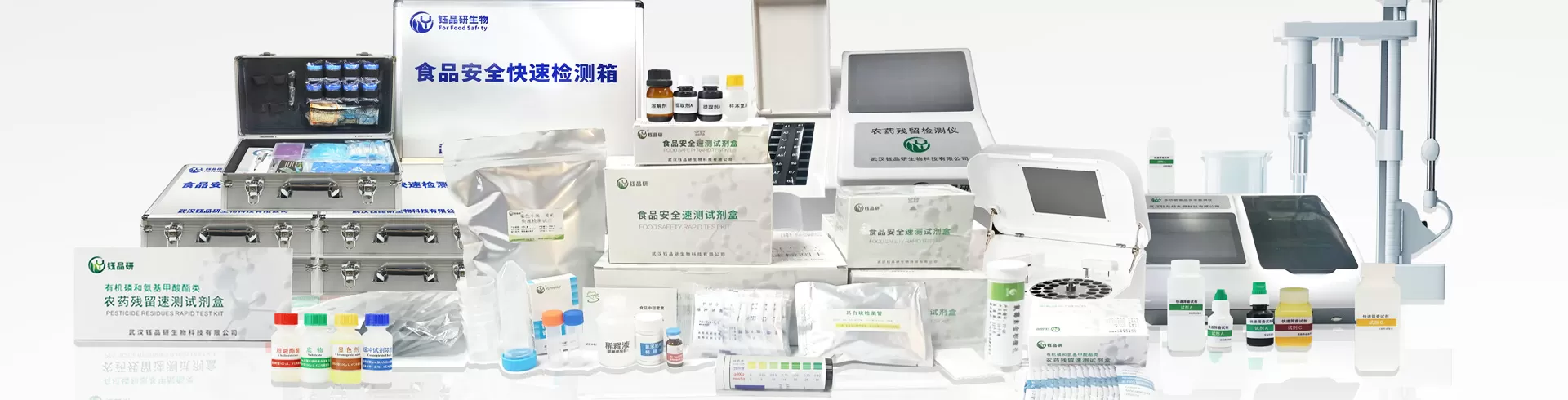
As one of the main food crops in our country, the quality and safety of corn has been widely concerned. Recently, the discussion on the problem of excessive phosphorus in corn has caused many consumers to worry, and even derived many false rumors. In order to help everyone understand this problem scientifically, we will compare and analyze common rumors and scientific facts based on the actual situation, and introduce the technical application of Wuhan Yupinyan Bio in the field of rapid food safety detection.
Common Myth 1: phosphorus is a highly toxic pesticide, and the detection of phosphorus in corn must be seriously excessive
Some rumors say that phosphorus is a "highly toxic pesticide". As long as the substance is detected in corn, it means that there is a serious risk of exceeding the standard. In fact, as an organophosphorus insecticide, the toxicity level of phthalate varies depending on the use scenario and dose. According to the agricultural industry standard, the acute oral LD50 (half lethal dose) of phthalate in rats is 13-21mg/kg, which is a moderately toxic pesticide, not "highly toxic". More importantly, our country has clear national standard restrictions on the residue of phthalate in corn (such as GB 2763-2022 "National Food Safety Standard, Maximum Residue Limit of Pesticides in Food"). As long as the test results do not exceed the standard value, corn is safe, and there is no conclusion that "it must be seriously exceeding the standard".
Common Myth 2: Corn should not be eaten as long as phosphos is detected
There is a view that once phosphos is detected in corn, it must be discarded regardless of the amount of residue. This statement ignores the essential difference between "exceeding the standard" and "residue". According to the standard, the maximum residue limit (MRL) of phosphos in corn is 0.02mg/kg (there may be slight differences between different varieties), as long as the residue is within this range, corn can be eaten normally. In addition, even if there are trace residues, the risk can be further reduced through reasonable processing (such as adequate cleaning, high temperature cooking). What really needs to be vigilant is "exceeding the standard" rather than "detecting", and the two should not be confused.
Common Myth #3: Phytophos residues can cause acute poisoning in humans
Rumor has it that "Phytophos residues in corn can directly cause acute poisoning in humans". This claim lacks scientific basis. Phytophos toxicity requires a certain dose to cause poisoning symptoms, and Phytophos residues in corn are usually well below the acute poisoning threshold. For example, adults may be at risk if they consume more than 0.1mg of Phytophos per day, but residues in ordinary corn are usually only below 0.01mg/kg, and the daily intake is well below the safe threshold based on normal consumption. Only long-term consumption of large amounts of severely exceeded corn may present a cumulative risk, but such situations are very rare under strict supervision.
Common Myth 4: All corn on the market may exceed the standard of phosphos
There are also rumors that "most corn on the market exceeds the standard of phosphos, and it is difficult to ensure safety". This statement does not match the actual situation. phosphos was once restricted to some crops due to its high residue characteristics. At present, it is mainly used for underground pest control of specific economic crops, and it needs to strictly follow the "safety interval" requirements (that is, the time interval between application and harvest). Regular growers and processing enterprises will strictly follow the standards to ensure that the residual amount of corn before marketing meets the requirements. In recent years, with the increase of supervision of the quality and safety of agricultural products, the excess corn has been basically intercepted in the circulation link, and consumers need not worry too much about "all corn exceeds the standard".
Wuhan Yupinyan Bio, as an enterprise focusing on the research and development and production of food safety rapid detection reagents, has always been committed to helping the quality and safety screening of agricultural products such as corn through technical means. The rapid detection reagents we developed can obtain test results in a short time through simple operation, help enterprises, testing institutions and regulatory authorities to quickly identify risks, and build a strong defense line for consumer table safety. Faced with the quality and safety of various agricultural products, scientific cognition and professional testing are indispensable, which is also the core driving force for us to continue to promote the progress of food safety detection technology.


