简体中文
简体中文 Shqip
Shqip لالعربية
 Polski
 رسی
رسی Deutsch
 Русский
 Français
 한국어
한국어 Nederlands
 Čeština
 Bahasa Melayu
 Português
 日本語
日本語 Svenska
 Kiswahili
 ไทย
ไทย Türkçe
 繁体中文
繁体中文 Українська
 Español
 Italiano
 हिन्दी
 Bahasa Indonesia
 Tiếng Việt
 Filipino
In the process of vegetable planting, triazophos, as a broad-spectrum organophosphorus insecticide, is often used to control a variety of pests. However, in recent years, the problem of excessive triazophos residues in vegetable testing in some areas has occurred from time to time, which not only affects the quality and safety of agricultural products, but also brings latent risks to consumer health. Combined with the practical experience of Wuhan Yupinyan Bio in the field of food safety testing, we analyze the reasons for the unqualified detection of triazophos vegetables from the two key angles of medication habits and safety interval.
The main manifestation of unqualified detection of triazophos vegetables
The unqualified detection of triazophos is usually manifested as the residue of triazophos in vegetable samples exceeding the national standard limit. According to the "National Food Safety Standard, Maximum Residue Limits of Pesticides in Food" (GB 2763), the maximum residue limit of triazophos in most vegetables is 0.05mg/kg to 0.2mg/kg (depending on the type of vegetables). When the test results exceed this range, it is judged to be unqualified. After such unqualified vegetables enter the market, if they are eaten by consumers for a long time, they may cause health risks in the nervous system, digestive system and other aspects. The influence ofmedication habits on the test results of triazophos
Unreasonable medication habits are an important factor leading to excessive triazophos residues. In order to pursue pest control effects, some farmers have the phenomenon of "overdose", that is, the single application dose far exceeds the recommended dosage of pesticide labels, resulting in a significant increase in the amount of medicine absorbed and accumulated by vegetables. In addition, "random mixing of pesticides" also increases the risk: if triazophos is used at the same time as other organophosphorus or pyrethroid pesticides, the residual amount may be difficult to control due to the superposition of action mechanisms or the interaction of metabolites. What's more, ignoring the "rotation principle" of pesticide use and using triazophos alone for a long time not only makes pests resistant, but also may lead to unqualified test results due to the accumulation effect of residues.the implementation of the safety interval is not in place is the key reason
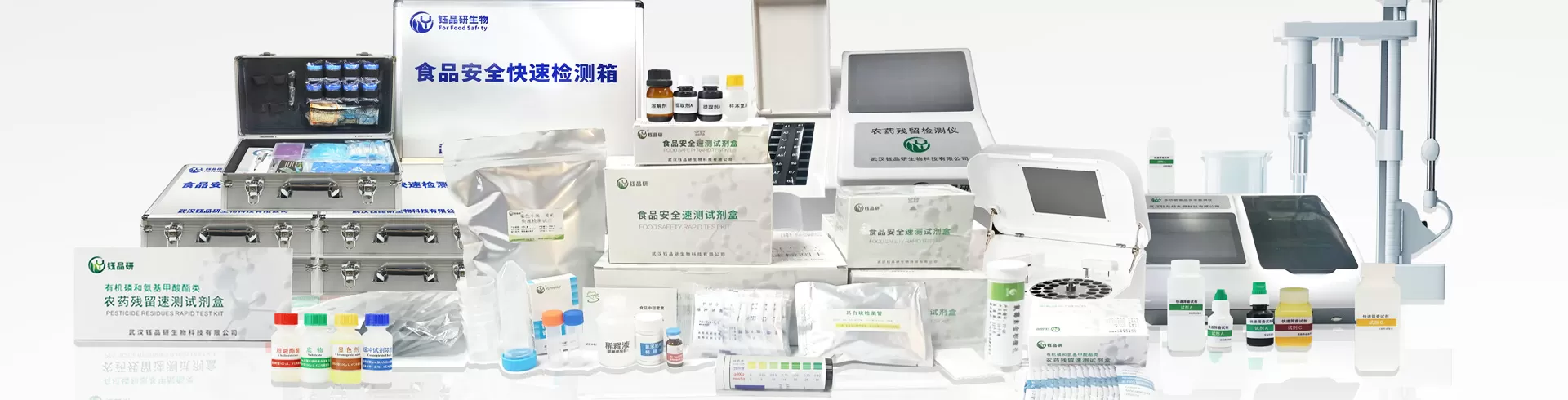
The safety interval (that is, the interval between the last application and the harvest of crops) is an important guarantee to ensure that the pesticide residue is up to standard. The degradation rate of triazophos in vegetables is affected by various factors such as temperature, humidity, soil conditions, etc. If farmers do not strictly abide by the safety interval regulations, apply medicine before the vegetables are close to harvesting, or prolong the degradation time due to weather changes, triazophos residues in vegetables cannot be naturally metabolized to the safe range. For example, the safety interval of some leafy vegetables is 7-10 days, but in actual production, some farmers may shorten the time to market to 3-5 days or even less, directly resulting in detection exceeding the standard.Wuhan Yupinyan Bio focuses on the research and development of food safety rapid detection technology, and has launched supporting rapid detection reagents for pesticide residues such as triazophos. With their ease of operation, rapid detection (usually results within 15-30 minutes), and high accuracy, these reagents can help farmers, planting bases, and regulatory authorities screen risky vegetables in a timely manner, providing a scientific basis for standardizing drug use habits and optimizing safety interval management. Through the rational application of detection technology, it can not only ensure the "safety on the tip of the tongue" of consumers, but also promote the development of the vegetable planting industry in a green and standardized direction.