
 简体中文
简体中文 Shqip
Shqip لالعربية
 Polski
 رسی
رسی Deutsch
 Русский
 Français
 한국어
한국어 Nederlands
 Čeština
 Bahasa Melayu
 Português
 日本語
日本語 Svenska
 Kiswahili
 ไทย
ไทย Türkçe
 繁体中文
繁体中文 Українська
 Español
 Italiano
 हिन्दी
 Bahasa Indonesia
 Tiếng Việt
 Filipino
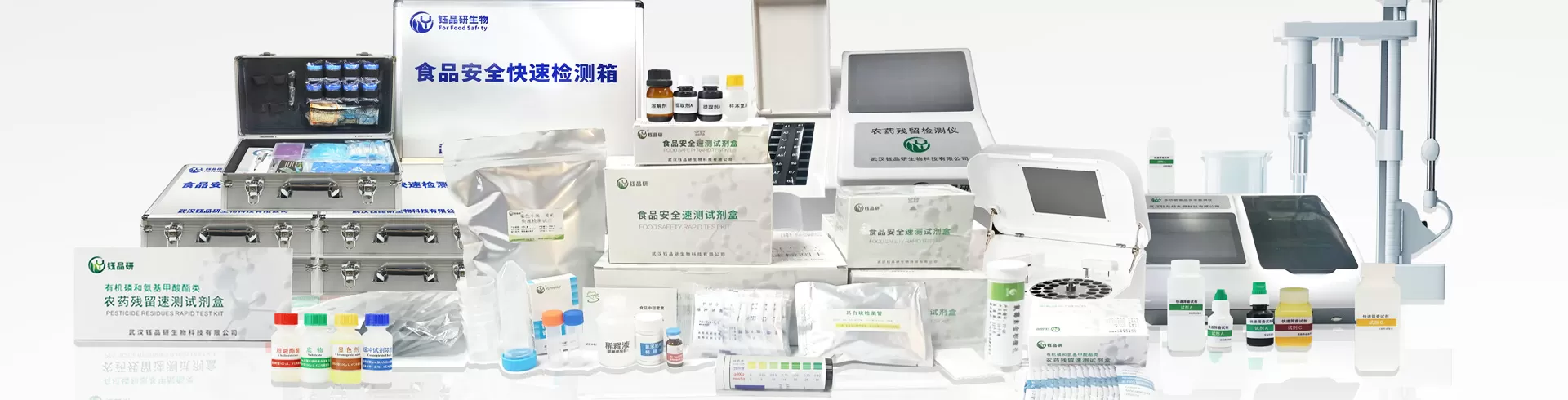
As an organophosphorus insecticide widely used in agricultural production, triazophos residue has always been the focus of food safety testing. When the laboratory conducts triazophos pesticide residue testing, how to improve the accuracy and stability of the detection through systematic ability verification and optimization measures is a key link to ensure the quality and safety of agricultural products.
ability verification: The "touchstone" of the quality of triazophos pesticide residue testing
ability verification is an important means for the laboratory to evaluate its own detection ability by participating in external or internal comparison tests. For triazophos pesticide residue testing, regular ability verification can effectively expose the shortcomings of the laboratory in method selection, operation process, data processing and other links. For example, when the results of a test item are not satisfactory, the laboratory can specifically troubleshoot the problem: is the sensitivity of the reagent insufficient, or there is a deviation in the pretreatment steps, or the instrument calibration is not in place? Through in-depth analysis of these problems, the laboratory can formulate more targeted improvement plans, so as to gradually improve the detection capacity.
the core strategy of triazophos pesticide residue detection capacity enhancement
1. Standardization of detection methods: Combining the actual needs of the laboratory with the feedback of capability verification, priority is given to mature and reliable detection methods. As a professional food safety rapid detection reagent supplier, the triazophos rapid detection reagent developed by Wuhan Yupinyan Bio can be compatible with a variety of pretreatment technologies (such as QuEChERS, solid phase extraction, etc.) to help the laboratory quickly build a standardized detection process and reduce the fluctuation of results due to method differences.
2. Refinement of operating specifications: Strictly formulate SOP (standard operating procedures) to clarify the operation details of each step from sample pretreatment to instrument analysis, such as the proportion of extraction solvent, oscillation time, centrifugal speed and other parameters to ensure the consistency of experimental operations. At the same time, regularly organize personnel training to strengthen the technical level of operators through simulation testing, on-site assessment, etc., to avoid operating errors affecting the accuracy of test results.
3. Improve the quality control system: Establish a whole-process quality control mechanism, including the verification of the validity of reagents and instrument performance before testing, the monitoring of parallel samples and standard collection rates during testing, and the review and report review of original data sources after testing. For example, during the capability verification period, the laboratory can further enhance the credibility of the test results by increasing the number of parallel experiments and using standard materials for calibration.
practical application and effect verification
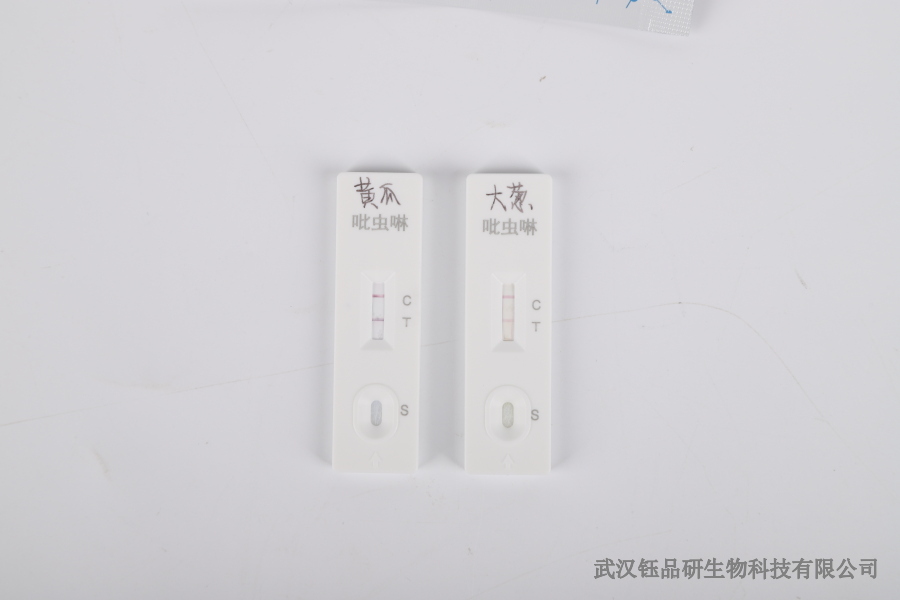
Through the implementation of the above strategies, the laboratory can achieve significant improvement in the detection ability of triazophos pesticide residues. For example, after participating in the triazophos capability verification, a laboratory introduced the special rapid detection reagent of Wuhan Yupinyan Bio to optimize the sample pretreatment steps, and the detection cycle was shortened by 30%. At the same time, the relative standard deviation of the test results was reduced from 5.2% to 2.1%, successfully passing the follow-up capability verification assessment. This practice shows that capability verification is not only a tool for testing the level of detection, but also a driving force for continuous improvement in the laboratory.
In short, the laboratory to carry out triazophos pesticide residue detection capacity enhancement, need to be guided by the ability verification, through standardized methods, refined operation and perfect quality control system, combined with professional rapid detection reagent support, can build a scientific and reliable detection capacity, provide solid data support for food safety supervision.


